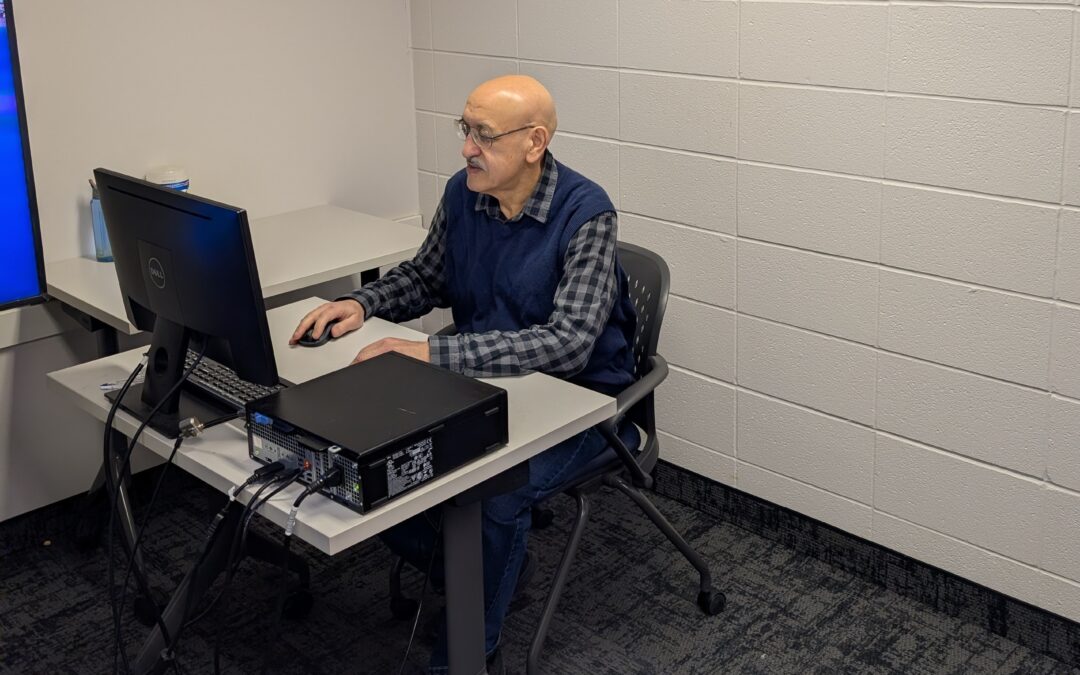
Photo: Dr. Arzu Sardarli / photo supplied
By: Danielle Dufour
Freelance Journalist
Dr. Arzu Sardarli, a professor of physics and mathematics, Indigenous knowledge, and science at the First Nations University, is heading up a research project to develop educational resources for Cree and Metis languages.
There were discussions at the First Nations University about the Indigenization of mathematics and science, as they received some complaints that what was being taught was colonized.
“All nations contributed to mathematics,” said Dr. Sardarli. “Mathematics is not colonized; the way of teaching mathematics and maybe the way of teaching science is colonized.”
This project will show how one can teach mathematics in other ways instead of just using examples developed by European nations.
“Within the project we try to use Indigenous elements for teaching some topics on mathematics,” said Dr. Sardarli. “Science courses as well.”
Another part of the project is to develop a mathematical dictionary of words and terms.
This project began years ago by Dr. Sardarli and his colleague Ida Swan, who is a Cree speaker.
They developed a predictionary of mathematical terms that was published in paper format and then converted to electronic format.
“Now we want to make it into audiobooks where anyone could download,” said Dr. Sardarli.
The goal is to invite students into these Indigenous educational programs that are taught by Cree and Metis speaking instructors that will teach mathematics and science classes based on Indigenous elements.
For example, Dr. Sardarli said, “They will use the Tipi elements to teach geometry … we can talk about heat and power using Indigenous examples.”
The research team also includes the program head, Reanna Daniels, an Indigenous language lecturer, and Ting Zhou, who will assist the team with the technological aspects of the project.
The topics that will be taught have been determined.
“We will develop lesson plans that will be sent to First Nation schools across Canada,” said Dr. Sardarli. “We will develop the project website, and all those materials will be freely available for any learner, not just Indigenous people.”
Five Cree and Metis speaking teachers, Elders, and knowledge keepers from Indigenous communities will be consulted and contribute to the project.
In the next phase, once the classes are scheduled, the educational students that participate in these classes will go out to their own communities to teach and share their knowledge.