
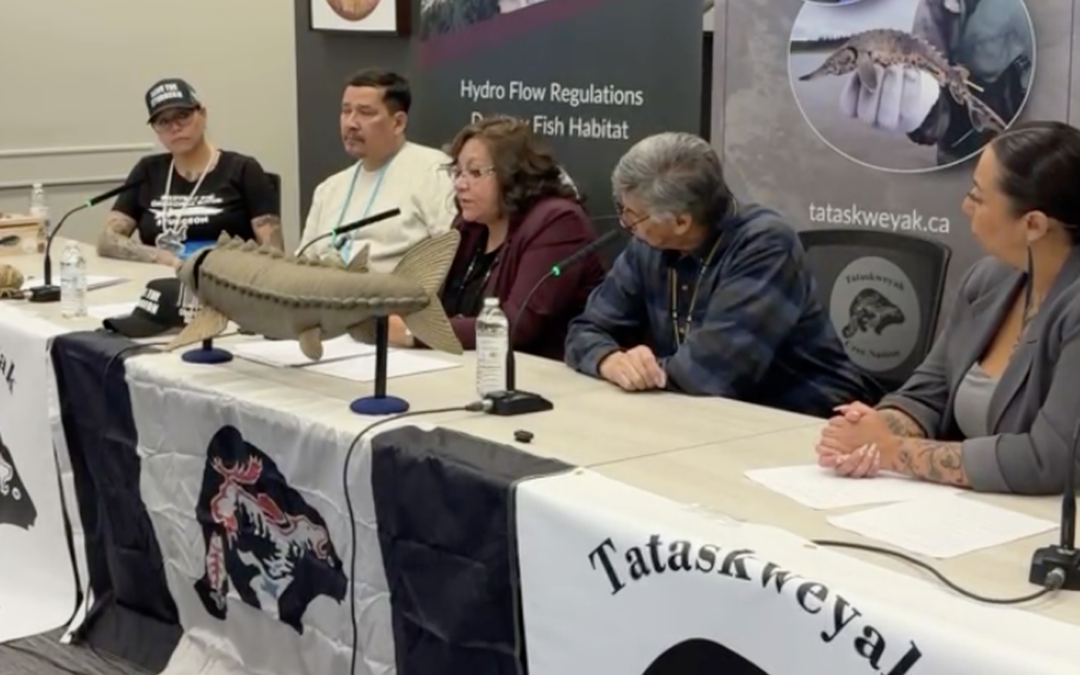
Photo: Tataskweyak Cree Nation says new independent research confirms Manitoba Hydro’s Churchill River Diversion has caused decades of environmental harm, particularly to sacred lake sturgeon. They are calling for changes to water management, stronger regulatory oversight, and shared stewardship rather than an end to hydro operations. / Supplied photo
By Steven Sukkau
Local Journalism Initiative Reporter
Winnipeg Sun
Tataskweyak Cree Nation says independent scientific research confirms decades of environmental damage to the lower Churchill River caused by Manitoba Hydro operations, particularly impacts to lake sturgeon populations.
At a news conference Tuesday at the offices of the Assembly of Manitoba Chiefs, the First Nation released findings from multi-year studies conducted by biologists and hydrologists examining the effects of the Churchill River Diversion.
The research concludes Manitoba Hydro has the technical capacity to operate the diversion in a way that better aligns with natural river flows and protects fish habitat, while still generating electricity, community leaders said.
Chief Doreen Spence told reporters the diversion, which has operated since the mid-1970s, holds back up to 90 per cent of the water that historically flowed along the lower Churchill River, rerouting it south to the Nelson River system.
“The diversion operates against the natural rhythm of the river,” Spence said. “That disruption has devastated the river ecosystem and significantly reduced sturgeon populations that are central to our culture, food systems and treaty rights.”
Lake sturgeon, known as namêw in Cree, are considered a sacred species by Tataskweyak Cree Nation and have historically sustained community members for generations. Elders and knowledge keepers at the event said sturgeon numbers and size have declined sharply since hydro development began.
Spence said the research, initiated in 2018, confirms long-standing concerns raised by community members and elders and provides scientific evidence supporting changes to hydro operations.
Tataskweyak Cree Nation is not calling for hydro development to cease, she said, but is urging Manitoba Hydro to manage water flows in closer alignment with natural seasonal patterns.
“We are asking for shared stewardship,” Spence said. “Hydro can continue to operate, but it must do so in a way that respects the river, the fish and our treaty relationship.”
The First Nation is also calling on the province to require updated environmental assessments before renewing licences under the Water Power Act, and on the federal Department of Fisheries and Oceans to enforce protections under the Fisheries Act. Leaders noted the diversion has operated for decades without federal authorization specific to fish habitat impacts.
Senator Mary Jane McCallum, in a recorded message played at the event, described the environmental effects of hydro development as a form of environmental and geographic racism, saying northern First Nations have borne disproportionate costs for electricity consumed in southern communities.
“Treaties must be upheld,” McCallum said. “First Nations must be included in all decisions regarding our land, water and resources.”
Tataskweyak Cree Nation said it plans to continue public outreach, including billboard campaigns and an online information portal, to raise awareness of the findings and press for operational changes.