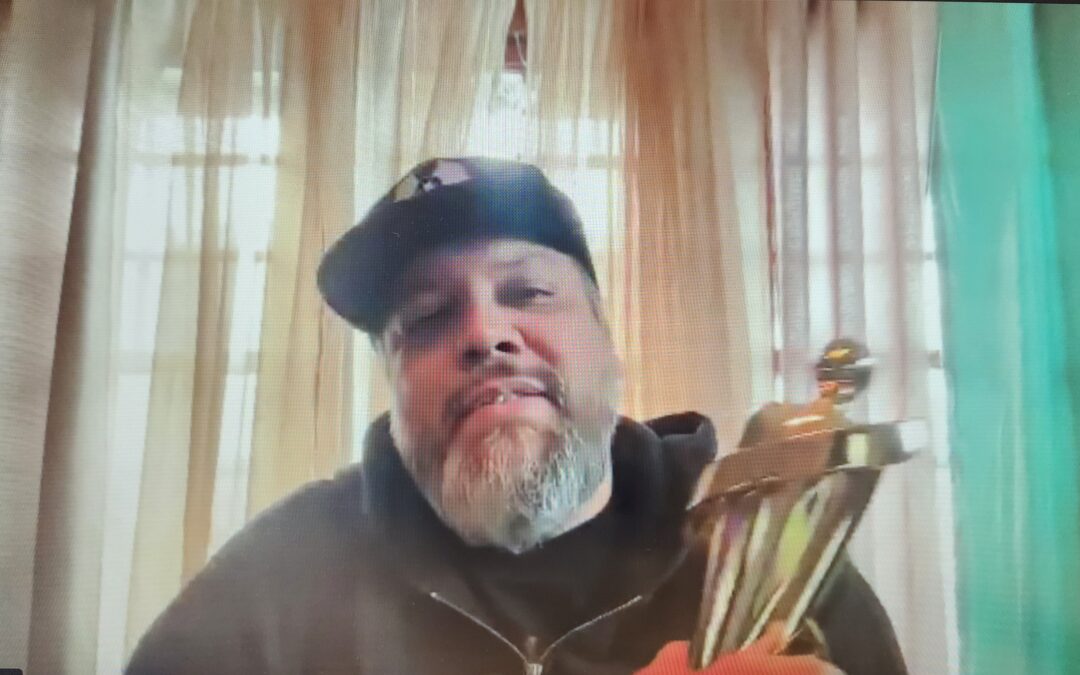
Photo: Screenshot of webinar with DJ Shub / Danielle Dufour MBC Freelance Journalist
By Danielle Dufour
MBC Freelance Journalist
Shub, widely known as DJ Shub, is a Mohawk DJ and music producer and a member of the turtle clan of the Six Nations of the Grand River.
He has released a new album called “Heritage – Part One.”
This Juno Award winner has been creating and producing music for over 11 years, blending Indigenous drum beats with mainstream music.
“I think it’s creating those bridges,” said Shub. “I like to put the culture right in your face…respecting the music…paying homage to the drummers and artists I work with.”
On January 20th, the University of Regina held the Voices of Impact webinar featuring Shub.
He talked about how he followed his passion and found a way to make money from it.
Influenced by his older brother, who was a DJ, Shub followed suit. His brother even bought him his first turntable.
Shub fell in love with vinyl, and he used what he had to start and kept practicing.
“I had to do it the old-school way,” said Shub.
Shub released his first beats on cassette tapes.
In 2009, the Indigenous electronic group A Tribe Called Red from Ottawa invited Shub to join them.
They played at Electric Powwow club nights once per month, geared towards First Nations and students, and created a comfortable space to enjoy these events.
“I got chills,” said Shub. “To hear our music and see our people just loving it. I thought this is amazing.”
Powwow drums were used for the beats.
“This was revolutionary and honored our culture and songs,” said Shub.
After that weekend of DJ’ing, he tried different things as he incorporated drums and produced Electric Pow Wow Drum in 2013.
The group heard it and asked Shub to join the crew permanently. Then he moved to Ottawa.
“It was a big move for me at the time, I had to make a good choice,” said Shub. “I had a good job with Pepsi. My son was just born… do I take that leap of faith, everyone was like, you are going to regret it if you don’t.”
He DJ’d at clubs and started making music on the extended play (EP) album that was released.
Shortly after that, the group got management from out of Montreal.
“I’m thankful every day I get up; I am still doing this,” says Shub. “Not too many people get lucky to do what they want to do.”
Shub has been fortunate to have a lot of support during his career.
“My grandfather told me, ‘Don’t be afraid of change; be afraid of not changing,’” said Shub. “When it comes down to it, it’s your decision, and the unknown is very scary.”
When it comes to success, Shub stays grounded by the people he surrounds himself with.
“I am lucky enough to have a family, a wife, kids, and a dog,” said Shub.
His management team takes care of things, allowing him to work as an artist.
“I’ve had people reach out and ask me how to do this,” said Shub. “The first thing I ask them is if they have management, and once you hire the right people, get them to hustle for you.”
Shub noted the hardest part is finding those right people because, as he put it, “There are lots of sharks that aren’t doing a good job, so you have to be careful who you trust.”
“I found my management through my old booking agent,” said Shub. “It worked out good.”
Giving back to his community has been an important part of his journey.
“Community means everything; it’s where you come from, that’s your heritage,” said Shub. “You can lose focus on that sometimes, but my community grounds me and has my back.”
Growing up off of the reservation, his family moved to Fort Erie, and the community built a friendship centre.
“Being taught about our culture, at the time it didn’t seem important but later it was,” said Shub. “Respecting boundaries, this helped out later in life.”
Shub decided long ago to not choose a side of the Indigenous or non-Indigenous world.
“Being able to walk both sides has been the best for me and what I do,” said Shub. “The music I make is sort of that way; it hits people differently and speaks to them, to combine the two worlds.”
Inspiration came from a combination of listening to music and attending live music shows, in particular hip-hop artists Run-D.M.C. and The Fat Boys.
“I was a little fat kid, and when I saw the cover (of The Fat Boys), I was like, ‘That is my stuff,’” said Shub.
When creating music, he tries to write a song or two a day.
“It usually starts with drums,” said Shub. “Getting the meat and potatoes done and putting the rest together.”
Right now, Shub is creating a song that will run for the Junos.
“For me personally, my performance has to be just as big as my music,” said Shub.
Shub has found music to be a tool for healing.
“Music is medicine, music makes you forget things,” said Shub. “It was one of those things I didn’t know I needed, like when I made Pow Wow Step.”
Shub is hopeful for the future of our youth.
“Youth now are not afraid to voice their opinions or take action; they are strong and eager to listen,” said Shub.
Shub hopes to leave a legacy where the door is left open for other artists to get into the space and offered some advice.
“Be original, don’t be afraid, take risks, and surround yourself with positive people,” said Shub. “To get the best out of you, surround yourself with the best people and support.”
Although Shub has already established his team, he did his best to surround himself with first nations people, but his manager is not because at the time, there wasn’t a lot of Indigenous managers at the time.
“I’ve taught them so much about the culture and how to be around the culture,” said Shub.
Some highlights that stand out in his career include being a Disco Mix Club (DMC) world DJ Champion, where he got to represent Canada two years in a row, winning in 2007 and 2008.
In 2022, Shub won a Juno Award for Contemporary Indigenous Artist of the Year.
“As a solo artist, that moment was my moment, the biggest part of my career,” said Shub.