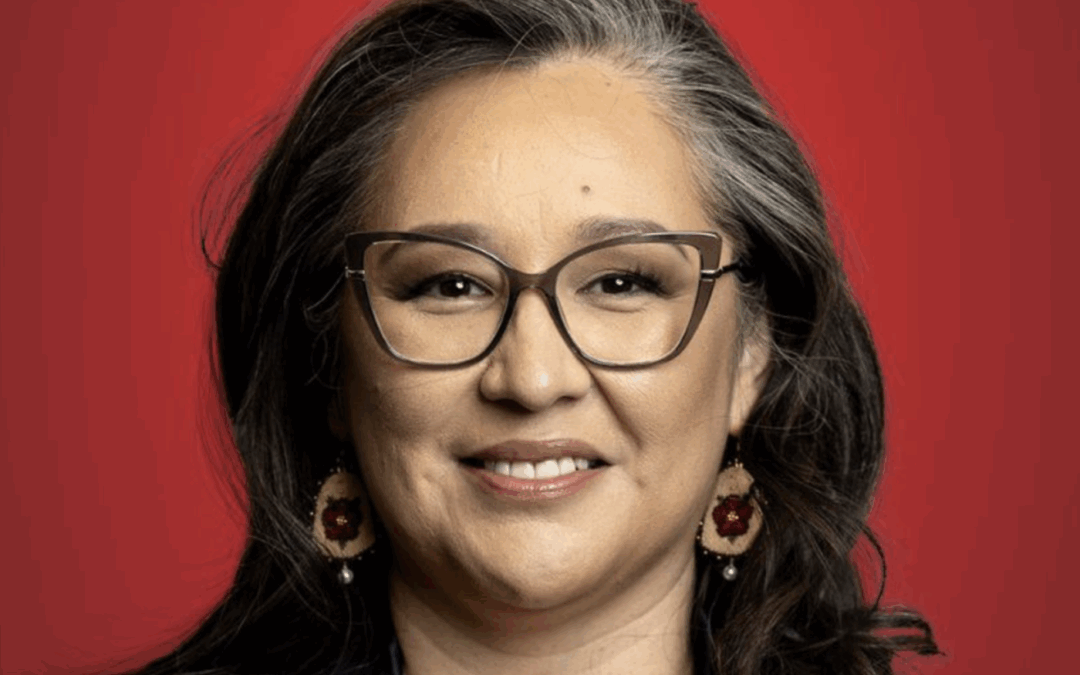
Photo: Indigenous services minister Mandy Gull-Masty said she’s hopeful about the government’s proposal for long-term reform.
By Eve Cable
Local Journalism Initiative Reporter
The Eastern Door
With just days remaining before a court-ordered deadline for the federal government and First Nations organizations to submit proposals for reform of the on-reserve child welfare system, Indigenous Services minister Mandy Gull-Masty is confident there’s a path forward.
“I’m trying to create a structure that is going to align with improving the consistency of service delivery, ensuring that we’re reflecting the reality of the actual families that are using the services,” said Gull-Masty, who is Cree and is the first Indigenous person to serve as minister of Indigenous Services.
The proposals are part of an order from the Canadian Human Rights Tribunal (CHRT) to come up with a plan to reform the on-reserve child welfare system – last year, the Assembly of First Nations (AFN) rejected a $47.8 billion long-term reform deal, with advocates from organizations like the First Nations Child and Family Caring Society claiming that more needed to be done to ensure no child gets left behind in the deal.
Plans will be submitted from the federal government and from the National Children’s Chiefs Commission, which is made up of advocates and First Nations leadership. The Commission works with each AFN region to identify its needs and will incorporate that into its proposal.
That plan and the federal government’s proposal will both be evaluated to identify a way forward.
Gull-Masty said the government is aware of the different types of problems faced by different communities concerning child welfare.
“It’s different because they’re different people,” Gull-Masty said. “The context of the laws that they’re trying to establish or work with within their community based on the capacity that they have are different, so I’m trying to find the path to respect what the tribunal is seeking to do, and I’m also trying to make sure that I respect nations for who they are.”
The deadline for proposals is on Monday – Gull-Masty said that right now, the government can’t share details of what their ideas are for reform, but she’s confident in what her team has compiled. Gull-Masty acknowledged that it’s understandable for communities to have a hard time trusting the federal government on child welfare issues, but said that her own understanding of the topic as an Indigenous person signals a renewed commitment to moving forward with concrete action for reform.
“I think that I have a very different lens when looking at this file because I come from a nation where we had a specific relationship with the government, we had a specific authority over what we were doing,” she said.
“It worked for us because it was designed by us, it was meeting our needs, it was managed by us, and that is what I believe should be the objective when you’re offering long-term reform to First Nations across Canada.”
Going forward, Gull-Masty said she would be interested in any possibility of the government collaborating with the commission to create a plan that draws on the best parts of both proposals.
“I want to be respectful of the tribunal, but I also don’t want the tribunal to envision this plan as one approach that is going to work for everybody in the country,” she said. “There are too many different nations with different orientations to what they do in terms of cultural practices, of traditional beliefs, of language use, of trying to protect their identity, and that needs to be incorporated into a national framework.”
Plans will be evaluated by the tribunal after Monday’s submissions, and Gull-Masty said she is looking to hear what communities think of the government’s proposals.
“Ultimately, communities decide for themselves what the relationship is with the government, and ultimately, communities are going to decide if they accept the tribunal’s decision,” she said.