
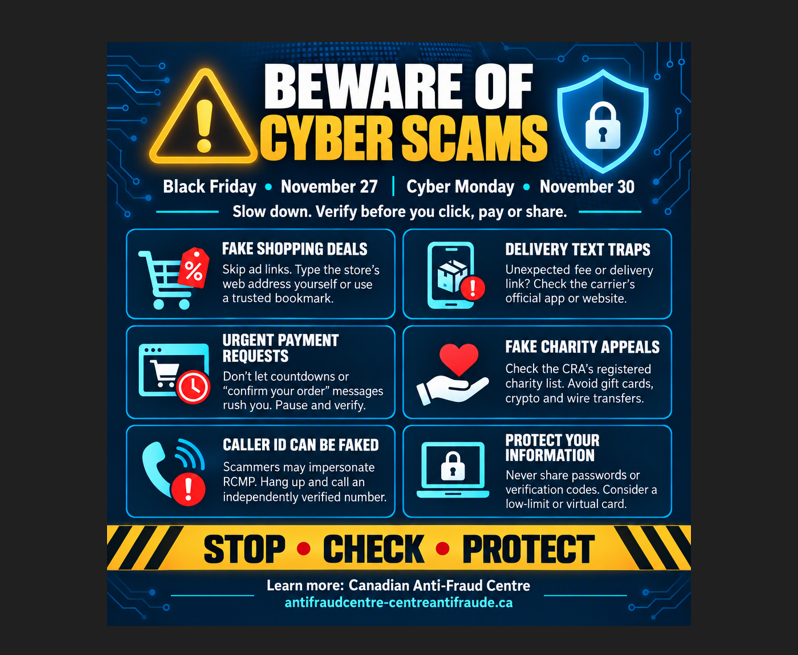
Photo: AI generated poster warning about Cyber Scams
By: Carol Baldwin
Local Journalism Initiative Reporter
Wakaw Recorder
Black Friday, this year, is November 27th, followed immediately by Cyber Monday on the 30th, and scammers are already hard at work trying to trick as many shoppers as possible. Fake stores with too-good prices, delivery texts, QR codes on flyers, and fake “order confirmation” messages have already been circulating, awaiting the unwary. The simplest protection is to never buy anything through an advertisement or link; instead, go to the store’s website by typing in the address or using a saved bookmark.
Black Friday scams are often successful because time pressure and message overload do most of the work. Countdown clocks and low stock messages pressure people to act quickly to grab the deal, and in the flurry of Black Friday deals, it is easy to forget and click that message that says confirmation of an order is needed. At the same time, inboxes fill with order updates and delivery alerts, so fake emails and texts blend in, and sophisticated scammers use AI-written copy, making it easy to believe it is a legitimate page.
Since many people will be waiting for at least one parcel to be on its way at this time of year, the delivery text scam containing a message that a parcel is being held awaiting the payment of a small fee or that a parcel could not be delivered makes it believable even for the most careful shopper. Open the delivery carrier’s own app or website, or the retailer’s order page and check the parcel status there.
Some red flags to heed include: a link to “confirm”, “reschedule”, or “pay”; the sender is a random mobile number; a short deadline to take action; and any payment request. Canada Post does not send unsolicited messages asking for card numbers, account details or passwords, and does not charge to track or release a delivery. When a delivery is attempted, Canada Post leaves a notice card; it does not email.
Scammers do not limit themselves to shoppers. They are infamous for taking advantage of people’s desire to help others. They use names that resemble real nonprofits, ask for payment by means such as gift cards or wire transfers, which are hard to trace or dispute, and vanish. Fraudsters may pose as charitable organizations at any time of the year, but are especially active during emergencies and the giving season.
To avoid fake charity scams, do not donate without verifying first. Always verify charities through the Canada Revenue Agency’s registered charity list. Make donations by credit card, not crypto, wire transfers, or gift cards, and be wary of appeals from organizations that can not clearly explain their mission, governance, and use of funds. Another safety measure is to use a virtual, low-limit, or reloadable card for online shopping and charitable donations so that in the event of a security breach or scam, fraudsters will not gain access to personal bank accounts or high-limit credit cards.
Saskatchewan RCMP have also received multiple reports from the public, saying they are receiving calls that appear to come from an RCMP detachment. Scammers can manipulate caller ID to display a legitimate phone number, making it more likely that people will answer the call and believe the scam. In this latest scam, the caller attempts to get personal information by saying that there is suspicious or fraudulent activity being done in their name.
If a shopping deal sounds too good to be true, it probably is, and the pressure to make an immediate payment or divulge personal information likely warrants further careful investigation.
Learn more about fraud from the Canadian Anti-Fraud Centre at antifraudcentre-centreantifraude.ca