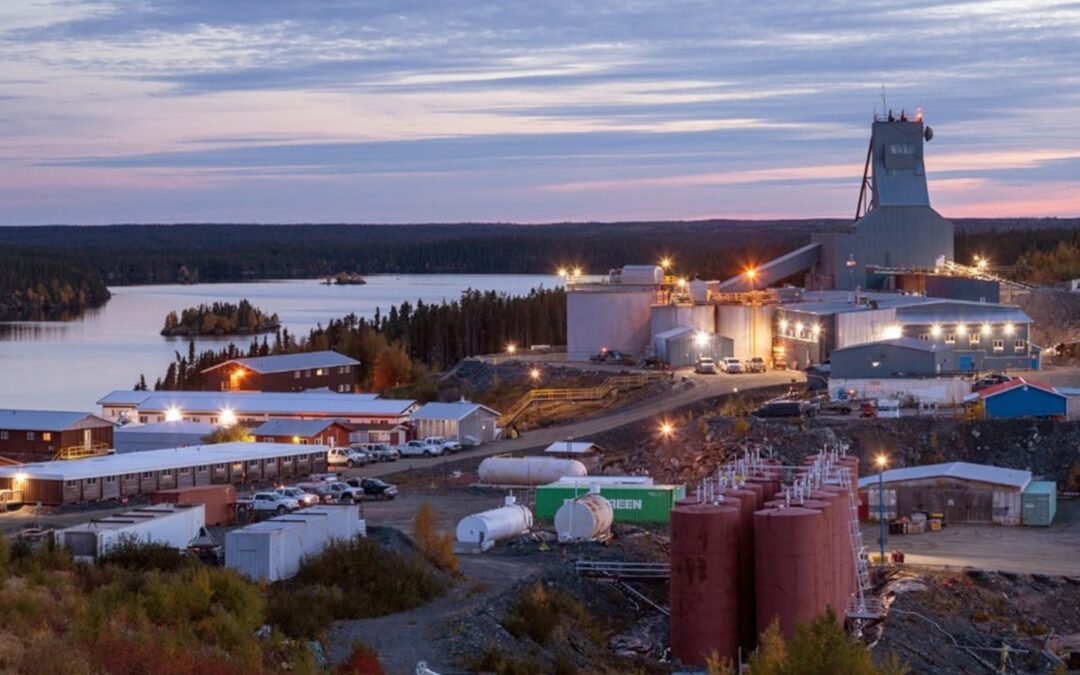
Photo: The project remains in the early assessment stage.
By Nicole Goldsworthy
Local Journalism Initiative Reporter
SaskToday.ca
SSR Mining is continuing environmental assessment work and community engagement on a proposed new underground gold project near its existing Seabee Gold Operation, with the company saying the development could help extend the life of its northern Saskatchewan operations into the next decade.
The proposed development, currently known as the Porky Project, is located approximately seven kilometres from the operating Santoy gold mine at the Seabee operation. According to the Government of Saskatchewan, the project is approximately 125 kilometres northeast of La Ronge. The proposed Porky underground mine would produce about 1,200 tonnes of ore per day.
“We are looking for a new name, which will be determined in consultation with people in the area,” said Leanne Jarocki, sustainability and community relations advisor with SSR Seabee Gold Operation
Jarocki said the proposed project is separate from SSR Mining’s exploration activities near Amisk Lake.
“The proposed ‘Porky’ project being assessed near our existing operations at SGO is completely unrelated to exploration activities near Amisk Lake,” she said. “Those two properties are very far apart geographically.”
If developed, the project would extract gold ore only, with grades and scale expected to be similar to those currently being mined at the Santoy operation, Jarocki said.
The project remains in the early assessment stage.
“We have done enough sampling to understand that there might be potential, and we are now moving through an environmental assessment (EA), which is conducted under the oversight of the province of Saskatchewan,” Jarocki told SaskToday.
The Government of Saskatchewan said the project is formally subject to an environmental assessment under The Environmental Assessment Act.
According to SSR Mining, the assessment includes environmental, social and cultural baseline studies examining potential project effects. Areas under review include water quality, fish habitat, hydrology, wildlife populations, rare plants, wetlands, soils, heritage resources and traditional land use.
The company said “valued components” are used to guide the assessment process. These are informed by regulatory requirements, previous studies, Indigenous knowledge, land-use information and feedback from communities and stakeholders.
SSR Mining said it is engaging with communities throughout the region as part of the environmental assessment process.
The Seabee operation is located within the traditional territories and homelands of the Lac La Ronge Indian Band, Peter Ballantyne Cree Nation and Métis Nation-Saskatchewan.
The company is also engaging with municipalities and communities including La Ronge, Air Ronge, Pelican Narrows and Sandy Bay, along with other stakeholders.
Community meetings were held earlier in October in Sandy Bay, Deschambault Lake, Pelican Narrows and Denare Beach. A meeting for Peter Ballantyne Cree Nation members in Prince Albert is scheduled for Nov. 4, with additional meetings planned later this year and into 2027.
Jarocki said the meetings are intended to both share information and gather local knowledge that can inform the review process.
“We share information about the proposed project, introduce ourselves, let people know about the EA process and learn about their concerns and interests,” she said. “It’s also important that we understand traditional land use in the area so that we can assess any potential impacts to Aboriginal and Treaty rights.”
According to SSR Mining, early feedback from residents has centred on employment opportunities, training and environmental protection.
“Early feedback has included questions and interests in jobs, training opportunities, and ways to minimize environmental impacts, which are all part of what’s required to study through the EA process,” Jarocki said.
Community feedback will help identify and prioritize issues studied during the assessment.
“Input from communities is used to help us make sure we are studying the things people care about and are concerned about,” she said.
The company said the next step will be sharing back with communities how their input has been incorporated into project planning. SSR Mining expects to provide that update in late January or February 2027.
The company plans to submit its environmental impact statement to the provincial government in spring 2027.
If SSR Mining decides to proceed and receives the necessary approvals, early surface work could begin in 2027, with additional construction potentially continuing in 2028 before mining operations commence.
If approved and developed, the project could extend the life of the existing Seabee-Santoy operation into the next decade, according to SSR Mining.
While employment numbers have not yet been determined, the company said existing workers at the Santoy mine could transition to the new operation. SSR Mining added that it prioritizes hiring workers and businesses from local communities where it operates, although it is too early to estimate the number of new jobs or contracts that could result from the project.
“If it moves forward, this proposed project could possibly extend the life of our existing operations,” Jarocki said. “Keeping northern workers employed, supporting local businesses and generating tax revenue is always good news for northern Saskatchewan’s economy.”
The Government of Saskatchewan said the proposed mine would make use of much of the existing Seabee Gold Operation infrastructure, helping support the continued use of the processing plant and associated services while reducing the need for some new facilities.