
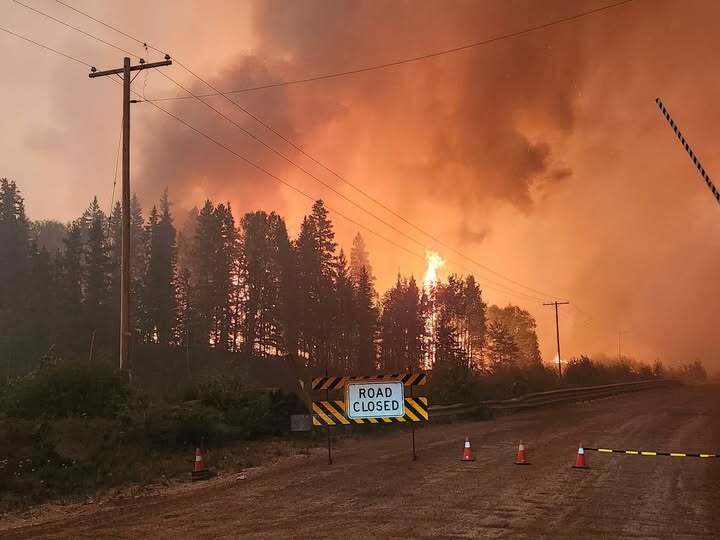
As northern Saskatchewan faces increasingly intense and unpredictable wildfire seasons, the Prince Albert Grand Council is calling for stronger government partnerships, enhanced hands-on training, and greater recognition of Indigenous Traditional Knowledge in wildfire management.
PAGC Grand Chief Brian Hardlotte has joined First Nations leaders, researchers, emergency officials, and wildfire specialists in Saskatoon this week for the 2026 Wildland Fire Canada Conference.
The national gathering runs until Friday serves as a platform to share the lived experiences of northern First Nations, where severe fires have increasingly forced evacuations, threatened infrastructure, and strained emergency response systems.
Building Stronger Frameworks
Grand Chief Hardlotte emphasized that changing fire behavior requires closer coordination between Indigenous leadership and provincial and federal governments. He highlighted a memorandum of understanding signed this summer between PAGC, the Meadow Lake Tribal Council, and the Saskatchewan Public Safety Agency (SPSA).
The agreement aims to strengthen cooperation, involve Elders in strategic planning, improve firefighting practices, and establish a broader long-term wildfire strategy.
“We’ve always had a good working relationship,” said Grand Chief Hardlotte, noting that Elders have witnessed dramatic shifts in fire behavior over the past 30 to 40 years that must inform future suppression and prevention efforts.
SPSA President and Fire Commissioner Marlo Pritchard echoed the need for collaboration, noting that the growing complexity and cost of wildland fires demand unified strategies among all levels of government and First Nations emergency leaders.
A Call for Hands-On Training
Matthew Charles, a veteran firefighter and instructor from La Ronge with nearly 30 years of experience, warned that shifting climate conditions are making fires spread faster than ever.
Charles urged governments to take a proactive approach to deploying trained local Type 3 crews and questioned whether short classroom courses adequately prepare recruits for the harsh realities of the fireline.
“You can sit in a classroom for one week and come out certified, but you still don’t know how to fight fire,” Charles said. “You got to be out there learning hands-on.”
He advocated for a return to immersive wilderness training camps—similar to those used in the 1970s—where young recruits learn directly from experienced crews and Elders.
For Charles, the path forward relies on shared wisdom.
“That’s my message to everybody: learn from one another so we can deal with these fires more efficiently.”
(Photo courtesy of PAGC)