
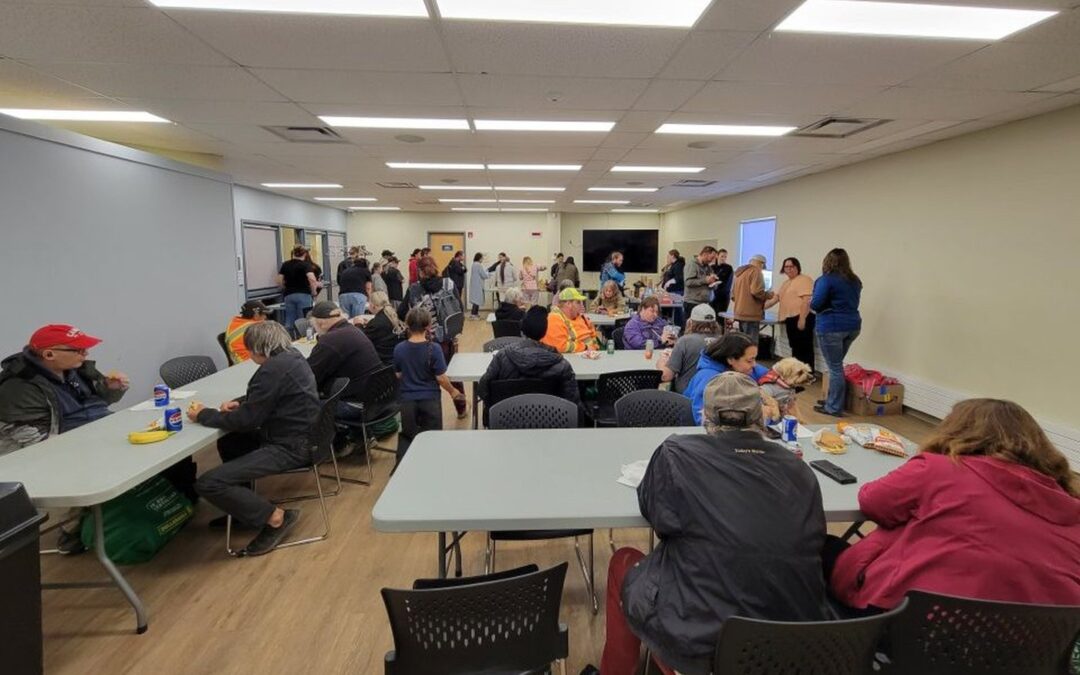
Photo: Community organizations marked World Homeless Day. / Andrea Moss, Local Journalism Initiative Reporter, SaskToday
By: Andrea Moss
Local Journalism Initiative Reporter
SASKTODAY.ca
Community organizations marked World Homeless Day ahead of the Oct. 10 observance with a barbecue and homelessness count Oct. 5 aimed at helping Yorkton better understand the growing need for housing and support services.
The event, held at the Yorkton Public Library, offered free hamburgers and food hampers while organizers conducted a point-in-time count of people experiencing homelessness in the city. The information gathered will be used to help guide future planning and services.
The event was organized by SIGN Housing Support, with support from the Saskatchewan Health Authority and funding for the count provided through the federal government.
While results from this year’s count are not yet available, Martha Gares, program manager with SIGN Housing Support, said service providers have seen growing demand.
“I think the situation has definitely gotten worse,” she said. “We seemingly get a little bit busier every year with more people experiencing homelessness, so we’re expecting to see a higher number this year.”
Gares said investing in housing and support services would not only help people regain stability but could also reduce long-term costs.
“If we had better supports and systems in place, it would cost less money overall and we could actually see people getting to independence again,” she said.
Yorkton’s first point-in-time count was conducted two years ago and this year’s count marks the first follow-up effort.
“Yorkton is a rural community, so actually the first one took place just two years ago, and now this is the first follow-up that we’ve done,” Gares said.
This year’s effort focused on counting individuals experiencing homelessness rather than conducting the more extensive survey completed during the previous count. Participants answered a series of brief questions about their demographics, housing situation and where they stayed the previous night.
“Homelessness can really look different for people,” Gares said. “They might be staying at an emergency shelter, a women’s shelter, a motel.”
She attributed the growing number of people experiencing homelessness to a combination of rising living costs, a shortage of affordable housing and gaps in mental health and addictions supports.
“A lot of everyday Canadians are struggling with cost of living and wages and even provincial income benefits or federal income benefits not keeping up with inflation,” Gares said.
She said Yorkton has several low-income housing providers but not enough units to meet demand, particularly for adults between 18 and 55 years old.
“In Yorkton, the housing is only for families and seniors,” Gares said, referring to Saskatchewan Housing Corporation units. “Because we see so much homelessness from the 18-to-55 population, they actually can’t even be housed through the Saskatchewan Housing Corporation here.”
Jordan Catton, a community paramedic with Medavie Health Services West, said he has witnessed a significant increase in homelessness during his years working in the region.
“Within the last five years, it has increased exponentially just due to costs, inflation and low access to housing,” Catton said.
Catton works in a withdrawal management program launched in June that helps people access support for addictions, housing and other services. The program accepts referrals from health-care providers, social workers, addictions counsellors and self-referrals.
Many of the people he works with are also experiencing housing insecurity or homelessness.
“We meet people where they’re at,” Catton said. “Blue collar, white collar, no collar, doesn’t matter.”
The program serves Yorkton and surrounding communities within roughly 100 kilometres of the city.
Catton said barriers such as lack of access to phones, internet service and banking services can make it difficult for people to secure housing or connect with available supports.
“There’s just too many barriers for them to overcome to get these services,” he said.
The community paramedic model allows staff to work with clients over a longer period than traditional emergency responses.
“It’s from day one until they get to a secure place in their life, we can help them with that, help them navigate that,” Catton said.
Gares said addressing homelessness will require action from all levels of government, including increased investments in affordable and supportive housing.
“We’d love to see increased low-income housing, financial benefits for folks leaving homelessness,” she said. “For a lot of folks there isn’t really a clear path out.”
For residents who encounter someone experiencing homelessness, Catton encouraged compassion.
“They are dealing with enough in their life and they don’t need anybody piling on with anything negative,” he said.
The information collected during the count will help community agencies and governments better understand the scope of homelessness in Yorkton and identify gaps in housing and support services.