By Chantel Downes
Local Journalism Initiative Reporter
Lakeland This Week
“I did not go to the residential school, but the residential school came into my life through my mom, through my brothers, and through my sisters,” Martial said.
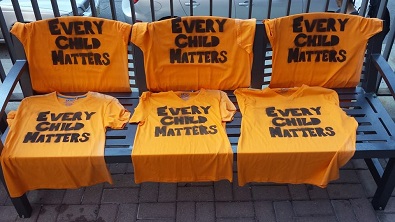
As Orange Shirt Day and the National Day for Truth and Reconciliation approach on Sept. 30, the Cold Lake First Nations member and employee shared how residential schools affected her family across generations, and how they are working to ensure that pain is not passed on.
Martial holds a bachelor’s degrees in Dene and education, as well as a master’s degree in Indigenous studies and language. She now works with the Cold Lake First Nations’ language and culture program.
Her mother was a residential school survivor, while two older brothers and two older sisters attended Blue Quills residential school in St. Paul.
Martial spent much of her early childhood living with her grandparents and barely knew her mother or older siblings. When she was about six years old, she was told she would live with her parents and was introduced to brothers and sisters who felt like strangers.
Although she did not attend residential school herself, she recognizes its influence in the way she was raised. Her mother demanded that household chores be completed perfectly and used corporal punishment to discipline her children, practices Martial believes were learned at residential school.
“In the early years, it was difficult for her to even show us love, to tell us she loved us.” Martial said. “And I never heard that word love from her until I grew up.”
Martial’s siblings also carried the effects of their experiences. One sister could not fully recall what had happened to her, but seeing a candle triggered an emotional response. Her brothers carried anger and rarely spoke about what they endured.
When Martial’s surviving brother attended the family’s first Orange Shirt Day gathering, he was unable to remain at the event. The family later gathered around a fire at her sister’s home and gave him space to speak.
“He was hurt, he was angry, and he was sad, and he was all these emotions. And I remember us sitting together as a family, and it was difficult to hear, and we cried, and we just offered each other support, and to get through these tough times,” Martial said.
Those conversations allowed the family to begin confronting the pain rather than continuing to carry it silently. Martial said the healing process has helped reduce the anger and hurt family members held onto.
That history also shaped how Martial raised her own children. She promised herself that she would not use corporal punishment, and she worked to express the love that earlier generations had difficulty putting into words.
Her late husband’s mother had also attended residential school and rarely told her children she loved them. Martial said her husband initially found it difficult to say those words but gradually began expressing them to her and their children.
Martial now sees her children creating an even more nurturing environment for their own families by spending time with them, arranging activities, and making sure they know they are loved.
“I had to break a lot of those cycles, and now I see how my children turned it even more, where their kids are very important. They do things with their kids,” Martial said.
Martial’s own education helped her understand how residential schools affected other Indigenous families and communities. Some of her studies took her inside the former Blue Quills residential school, which now operates as an Indigenous-run university.
While sitting in a third-floor classroom one fall, Martial heard wind blowing through an aging window and looked toward the highway. She began thinking about the children who had been confined inside the building, including her own siblings.
Unlike those children, Martial could leave the building whenever she wanted.
“I didn’t want to feel that feeling anymore. I had a choice. I could walk out that day. I didn’t have to stay in there. I could walk out and go home,” Martial said.
Her brothers had told her they would look toward that same highway and cry because they desperately wanted to return home. Sitting near the window gave Martial a glimpse of the loneliness they had described and strengthened her determination to continue her education.
Despite the hardship her mother experienced and the pain that affected their relationship, Martial remembers her as someone who worked hard and became increasingly affectionate later in life.
“But I feel sad for my mom who’s left this world now. But you know, she tried. She worked so hard. She was such a loving mom at the end,” Martial said.
Martial continues writing down her experiences and family history in the hope that her children and grandchildren will one day read them. She would eventually like to turn the stories, knowledge, and lessons gathered throughout her life into a book.
For Martial, she hopes sharing those experiences can help families release pain they were once expected to carry alone. She also hopes greater awareness will encourage people who have not yet confronted their experiences to begin healing.
Orange Shirt Day, she said, cannot be treated as a single annual observance.
“It’s going to take time to heal, but it’s starting now. It’s starting with the awareness of these orange shirt days. It’s not just one day. It’s all year round. It’s forever now.”