Hatchet Lake Denesuline First Nation has reached a Treaty Land Entitlement settlement with the federal and Saskatchewan governments.
Chief Bartholomew J. Tsannie, federal Secretary of State for Rural Development Buckley Belanger, and Saskatchewan Minister Responsible for First Nations, Métis and Northern Affairs Eric Schmalz announced the agreement today.
“This settlement has been a long time coming for the people of Hatchet Lake Denesuline First Nation. Our ancestors entered into Treaty 10 with the understanding that its promises would be honoured, including the land that was owed to our people. Today, we honour the generations who carried this claim forward and whose determination brought us here. This agreement gives our Nation an opportunity to invest in our community and create a stronger future for our children and grandchildren,” said Chief Bartholomew J. Tsannie, Hatchet Lake Denesuline First Nation.
The settlement addresses a claim that Hatchet Lake Denesuline First Nation did not receive all of the reserve land promised under Treaty 10, signed in 1907.
“Treaties are promises, and for too long, the promises made to Hatchet Lake Denesuline First Nation under Treaty 10 were not fully honoured. This settlement cannot undo that history, but it recognizes the wrong that was done and takes a meaningful step toward righting it. I’m proud that Canada is fulfilling its responsibility and helping create new opportunities for Hatchet Lake to invest in its land, its community, and its future,” explained Buckley Belanger, Secretary of State (Rural Development).
Under the agreement, the First Nation will receive $29,602,664 in compensation and may apply to add up to 28,118 acres to its reserve lands through the federal Additions to Reserve process.
“Reaching this settlement together, we help support Hatchet Lake Denesuline First Nation in a meaningful way with new opportunities for community development, investment and long-term growth. Saskatchewan continues working with First Nations and the Government of Canada to strengthen relationships and support a stronger future for Indigenous communities across our province, while honouring outstanding obligations,” said Eric Schmalz, Minister Responsible for First Nations, Métis and Northern Affairs.
Officials say the settlement supports reconciliation and will provide opportunities for community development, infrastructure investment, and economic growth.
In 1992, 25 First Nations, along with the federal and Saskatchewan governments, signed the Saskatchewan Treaty Land Entitlement Framework Agreement to resolve outstanding treaty land entitlement obligations.
Since then, an additional 12 treaty land entitlement agreements have been reached with individual First Nations.
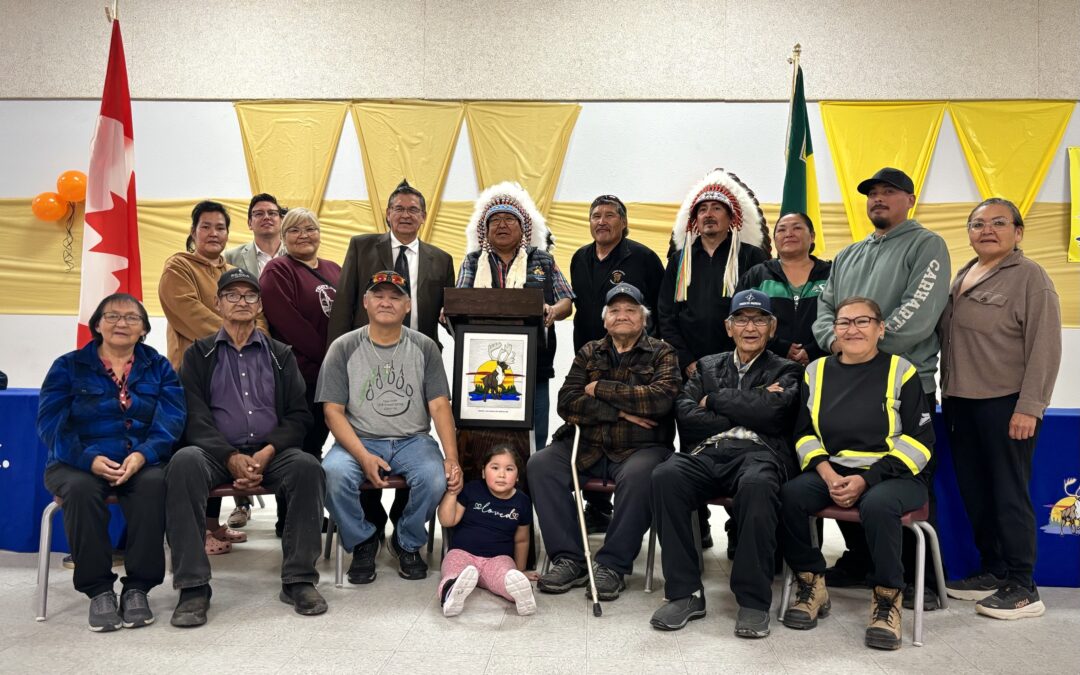
(TOP PHOTO – Hatchet Lake community members pose for a photo following the announcement. Photo provided)