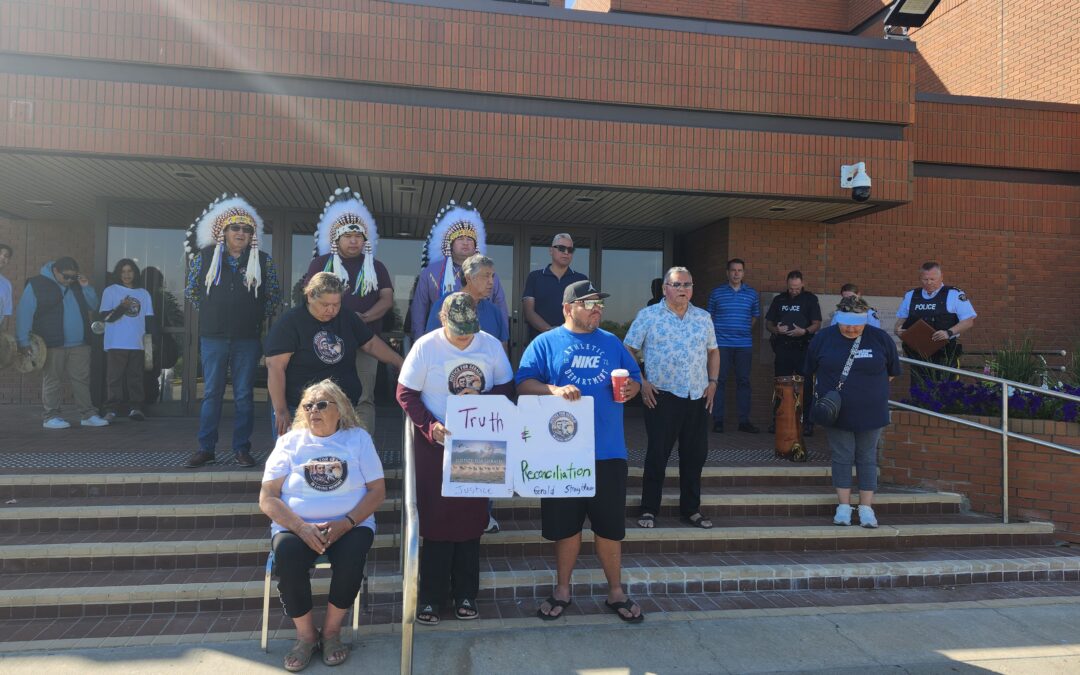
Photo of: the family of Gerald Straightnose and Chiefs.
Photo by: Danielle Dufour
Family members of Gerald Straightnose made a 250-kilometre journey, “Justice for Gerald” walk, from Kamsack to Regina seeking answers and accountability 14 months following his death while in Royal Canadian Mounted Police (RCMP) custody.
“We demand a meeting,” said Gerald’s mother, Seraphine Straightnose upon arriving at the RCMP headquarters in Regina. “This is enough. We want answers.
On June 3, 2025, Straightnose willingly turned himself in to members of the RCMP detachment in Kamsack and around 7 p.m. on June 5, he was found unresponsive in his cell.
The family began the walk in Kamsack on August 24, 2026, and met with RCMP at the headquarters in Regina on August 27th, along with Federation of Sovereign Indigenous Nations (FSIN) Vice Chief Edward (Dutch) Lerat, Chief Alvin Musqua Jr. of Keeseekoose First Nation and Chief Dustin Brass of the Key First Nation, among others.
The walk centered on the family’s calls for greater transparency surrounding the circumstances of Straightnose death and the progress of the investigation being conducted by Saskatchewan’s Serious Incident Response Team (SIRT).
RCMP Superintendent Kirk Badger, the South District Operations Officer said, “I acknowledge and I respect the distance you have traveled and the concerns that you have brough forward. As discussed with Janice and family, I am committed to meeting with the individual families and the representatives in Kamsack to hear and listen to their concerns.
The Saskatchewan Serious Incident Response team (SIRT) is investigating the death of Mr. Straightnose while in custody of the RCMP. We want all available facts gathered and examined through an independent and impartial investigation process, which is why SIRT has taken carriage of the investigation. As you all know, during an active investigation, we are unable to discuss further details of respect for the integrity of that investigation.
We recognize the importance of public trust and accountability. To the family, friends and to the communities that we serve, we understand that all of you…are seeking answers as we are as well. I am confident and I am hopeful that the SIRT findings will provide those answers for all of us.”
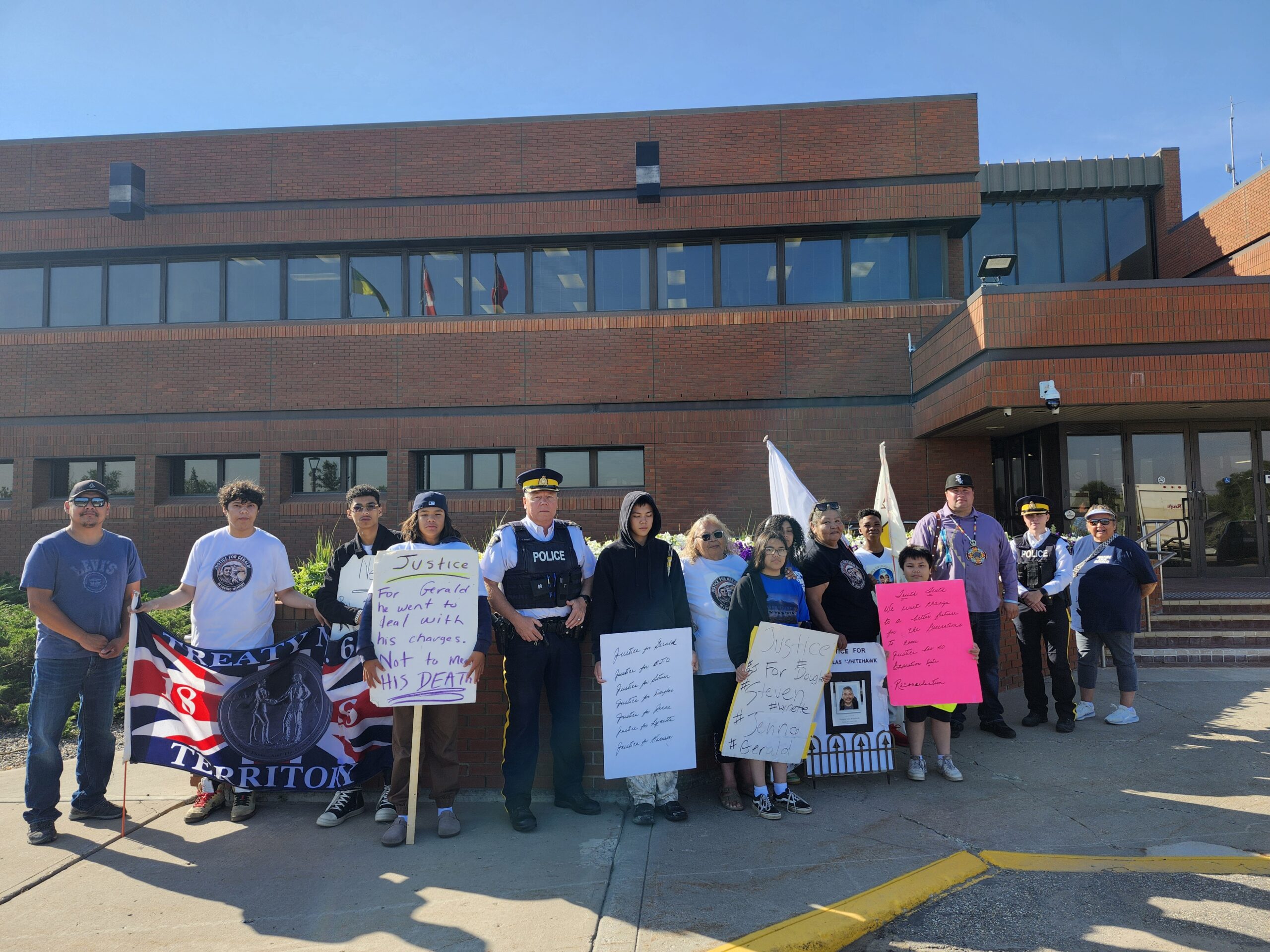
Photo: the family of Gerald Straightnose that walked from Kamsack to Regina (Photo credit: Danielle Dufour)
After the meeting, the family came out to thank and address the supporters at the rally knowing they are leaving without answers.
“We talked about change in the RCMP detachment in Kamsack,” said Gerald’s aunt Thelma Severight. “We talked about how we need our people to be treated like humans, we need them to be respected, and we need the police to respect us and our relatives, so this doesn’t happen to anybody in the police station anymore.
The family stated they will continue to bring awareness of these issues until they get answers on what happened to Gerald in that cell.
“If only they knew the amount of pain our family carry’s,” said Janice Straightnose, Gerald’s sister, in a Facebook story. “My brother may have struggled in addiction, but it didn’t mean that we didn’t love him.”
Chief Alvin Musqua Jr. of Keeseekoose First Nation was there to support the family and said, “I understand the investigation is still going, I think that the family should expect the report in the next 90 days.”
They also discussed the First Nation people having their own provincial watchdog. Chief Musqua Jr. would like to see FSIN and the Chiefs identify an independent watchdog and said, “To police the police. I understand SIRT does a lot of the investigations and the majority of the time, in my opinion, a lot of these investigations come back, there’s no wrong doing.”
Chief Musqua Jr. said they discussed about opportunities for more frequent cultural aware training for the RCMP but also training for them to identify the signs of active addiction and active withdrawals for those detained.
“We’re looking for meaningful steps of action,” said Chief Brass. “We’re entering 151 years since the signing of treaty. That signing of treaty we agreed to be served and protected by the RCMP of this land on our own land, and still today, we walk all the way to Regina in recognition that, that failure is still happening to our people and we’re still facing that.”
Chief Brass said that Chiefs in his area have committed to sitting down with the RCMP to discuss ways they can work together to create meaningful change for their communities.
“I’m looking at the children, it’s a long, long way to walk just to have your voice heard,” said Chief Brass. “It’s a little disappointing to sit and just be in the lobby to have this conversation. They knew we were coming; they should have set up for it. I get that they have protocol, for safety reasons to get into a boardroom, but they should have made those clearances or met us off sight…that’s the respect that we’re looking for.”