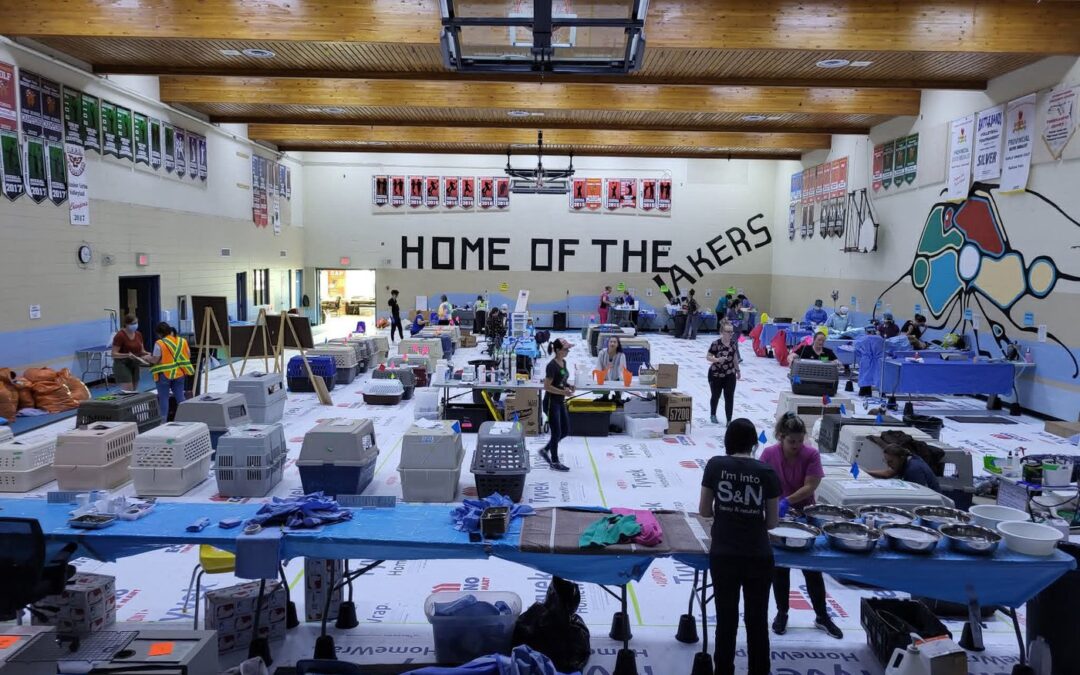
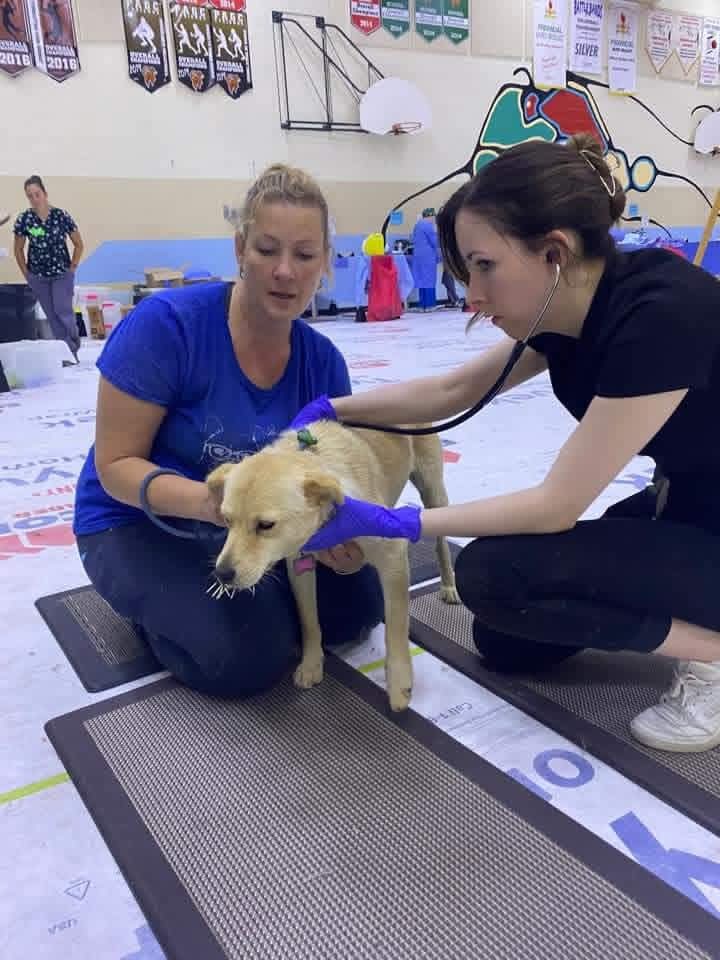
Photo: The program has provided emergency medical funding for an average of 15 to 25 pets annually. / Courtesy of Sturgeon Lake First Nation
By: Nicole Goldsworthy
Local Journalism Initiative Reporter
SaskToday.ca
Sturgeon Lake First Nation (SLFN) is calling on the Saskatchewan Veterinary Medical Association’s (SVMA) Practice Standards Committee to reconsider its decision denying an application for a temporary onsite veterinary clinic, saying the ruling threatens a long-running program that has improved animal welfare and community safety.
The committee cited the availability of veterinary clinics within 150 kilometres of the community when denying the application, according to SLFN. The Nation argues that measuring distance alone does not reflect the realities of accessing veterinary care in northern and Indigenous communities.
SaskToday requested comment from the Saskatchewan Veterinary Medical Association but did not receive a response before publication.
“Our partnership with Canine Action Project works,” said Chief Christine Longjohn. “It is trusted by our members, grounded in our community’s needs and supported by more than a decade of results.”
The nation is asking the committee to approve the temporary clinic, which would continue a partnership with the Canine Action Project (CAP) that began in 2015.
According to SLFN, the program has helped humanely manage dog populations while improving community safety through preventive veterinary care. Between January 2025 and March 2026, the program responded to 328 requests from residents, facilitated 45 spay and neuter procedures, helped 33 animals receive urgent veterinary care and removed or rehomed 63 animals.
The Prince Albert Grand Council has also expressed support for Sturgeon Lake First Nation’s request, recognizing the importance of accessible veterinary services for First Nations communities.
“A clinic on a map is not the same as accessible care,” said Chief Longjohn. “Financial hardship, limited transportation and systemic inequities do not disappear because a clinic exists within a prescribed radius.”
The Nation argues that many families cannot realistically transport one or more animals long distances for veterinary care despite clinics being located within the prescribed distance.
“The SVMA has said its decision is intended to protect the public,” said Chief Longjohn. “We share that goal. That’s exactly why this clinic should proceed. Prevention is one of the most effective ways to protect animals, families and the wider community.”
SLFN also says meaningful reconciliation requires institutions to recognize systemic barriers and work alongside First Nations to support practical, community-driven solutions.
Meagan Schmitz, co-executive director of the Canine Action Project, said the organization expected to treat about 150 animals during a three-day clinic, including dogs and cats requiring spay and neuter surgeries, as well as wellness appointments for already sterilized pets.
Those wellness services would have included health examinations, vaccinations, parasite prevention and microchipping.
According to CAP, the partnership has also:
-Removed and rehomed 1,050 cats and dogs from Sturgeon Lake First Nation between October 2015 and July 31, 2026.
-Completed more than 375 spay and neuter surgeries since 2015.
-Provided emergency medical funding for an average of 15 to 25 pets annually.
-Distributed approximately 8,500 pounds of pet food in the community each year.
Schmitz said the absence of the clinic could lead to more roaming dogs, unplanned litters and the spread of preventable diseases and parasites.
“Female dogs in heat pose a safety risk to the community as male dogs will form packs, more unwanted/unplanned litters being born, preventable diseases and parasites such as parvovirus, distemper, mange, worms, lice & fleas will have the ability to spread. Risk of zoonotic (transfer from animals to humans) disease such as scabies, worms and rabies. Increased strain on animal rescues and SPCAs due to unmanaged pet populations.”
Schmitz said transporting animals to existing veterinary clinics, as suggested by the SVMA, would not provide the same level of service.
“Our onsite clinics are high-volume and based on a cost-recovery model, the nation covering all the expenses. The SVMA suggested that CAP volunteers transport animals to and from established veterinary clinics. While we appreciate this as an option, and has been done regularly throughout our partnership with SLFN, it presents significant financial and logistical challenges.”
She said transportation costs, combined with paying individual clinics for each procedure, would significantly increase expenses while allowing far fewer animals to receive care.
Schmitz also said regional veterinary clinics are already operating at capacity.
“Veterinary clinics in the surrounding area are operating at capacity and do not have the ability to absorb the caseload of animals we anticipated to see at our onsite clinic. It will take months to schedule 100 spay/neuter surgeries.”
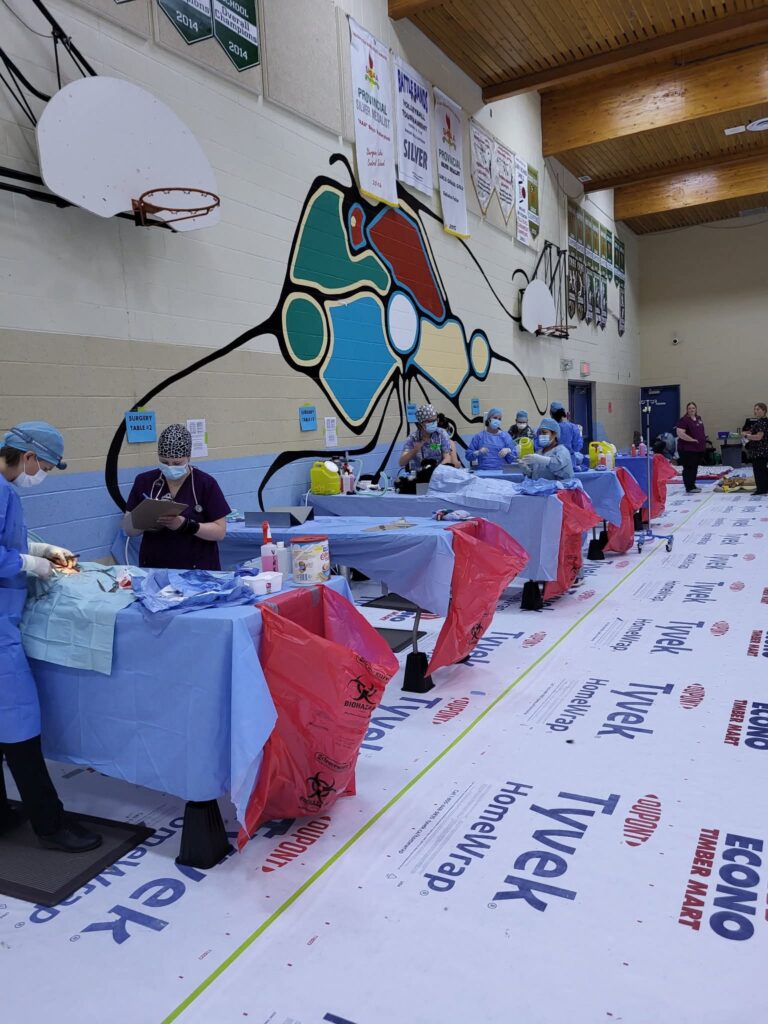
The program has provided emergency medical funding for an average of 15 to 25 pets annually.
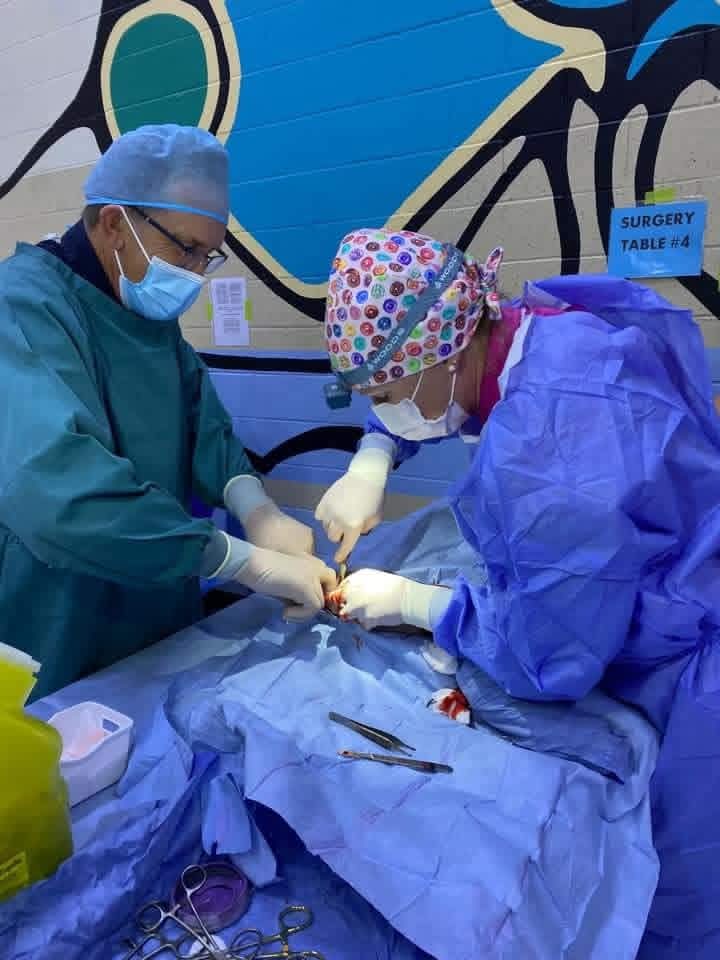
The program has completed more than 375 spay and neuter surgeries since 2015.
The Canine Action Project, said the organization expected to treat about 150 animals during a three-day clinic,