BY: Danielle Dufour
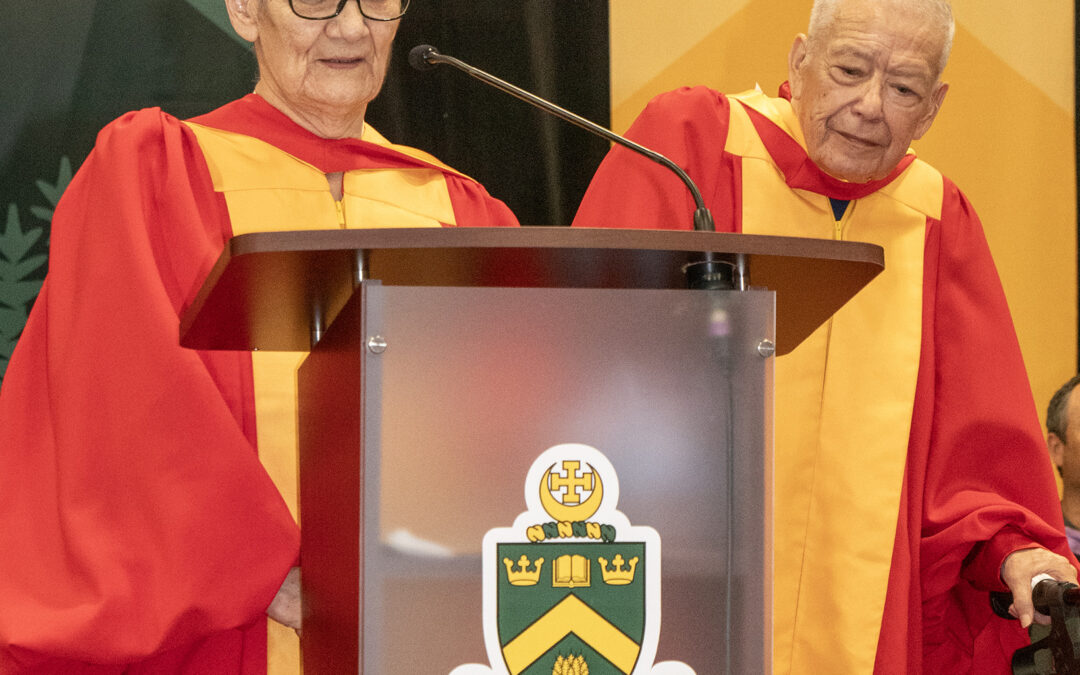
On Wednesday, June 17th the University of Regina recognized former Chief and Senator of the Federation of Sovereign Indigenous Nations (FSIN) Solomon Sanderson and his wife Elsie Sanderson with Honorary Doctor of Laws degrees.
Both Soloman and Elsie Sanderson have dedicated their lives to advancing Indigenous governance, preserving traditional knowledge, strengthening communities and creating opportunities for future generations.
This year the university is graduating around 2,500 students.
“They bring judgement, I hope empathy, compassion, the commitment to learn from each other and to realize that in the world where people feel more loneliness and greater interaction with their phones, that human interaction, understanding and connection is more important today than it’s been in recent times,” said Dr. Jeff Keshen, President and Vice-Chancellor of the University of Regina.
Dr. Keshen said 13 per cent of the university population is Indigenous.
“We see more role models for Indigenous youth and more professions, graduating in science and business and health studies,” said Dr. Keshen. “I think the future is incredibly bright. Sol and Elsie are examples.”
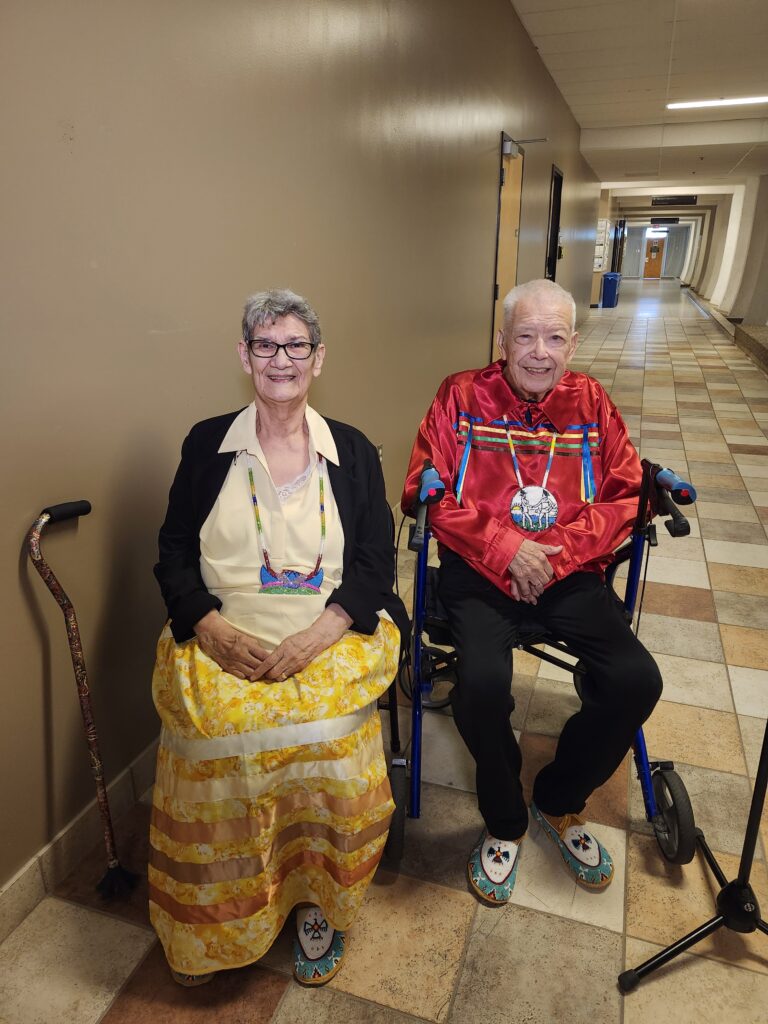
(Elsie and Solomon Sanderson before receiving their Honorary Degrees. Photo by Danielle Dufour)
Solomon Sanderson began his career in Indian politics when he was 15 years old.
“It’s very exciting,” said Solomon Sanderson about receiving this honorary degree. “This October 18th it’ll be 70 years involved in Indian nations business and everything that we have achieved is quietly put in place, a lot of people don’t know what has been really done to move things forward.”
In 1972, Sanderson was Chief of James Smith First Nation and assisted in creating the Indian Control of Indian Education Policy. A year later, he established the first school in Canada that was First Nation-controlled.
“We examined the steps available for our people employed in education, and we found that six Indians were employed in education province wide. Five Indians in university and teachers’ college, and one graduate a year from Grade 12 province wide. That was in 1972,” said Solomon Sanderson. “If we didn’t know what we did, you wouldn’t see the thousands now graduating from university and high school, and many of our people now employed, like 28,000 just in Saskatchewan alone being employed in education.”
He was a founding leader of the Assembly of First Nations and serves as a senator the Federation of Sovereign Indigenous Nations (FSIN).
His wife Elsie Sanderson is an Indigenous educator and cultural knowledge keeper, worked alongside her husband shaping Indigenous education and policy.
“They were part of the team that helped realize First Nations University of Canada,” said Dr. Jacqueline Ottmann, President at First Nations University of Canada, in a social media post. “Sol and Elsie have dedicated more than half a century to advancing Indigenous rights, revitalizing Indigenous knowledge systems, and strengthening Indigenous institutions – such as ours – that empower future generations through education.”
When Solomon was young, two Elders took him aside and gave him some advice.
“You’re going to be making plans for us. I want you to know you have to know their history and our history. If you don’t know that, you’ll be making plans that create obstacles for the next generation. The plans you make have to be designed so that they can build on your plans, so that’s what I’ve been doing,” said Solomon Sanderson.
“The ancestors would be very proud of what’s been done today,” said Solomon Sanderson. “There is so much to be done.”
(Top Photo: Elsie and Solomon Sanderson at the University of Regina Spring convocation. Photo supplied by the University of Regina)