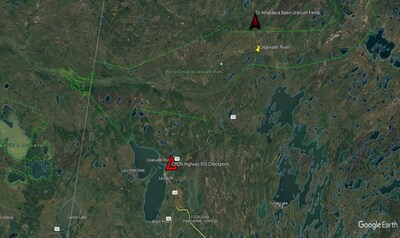
The Clearwater River Dene Nation says it will establish an Industry Monitoring Checkpoint on Highway 955 north of La Loche beginning in August.
The announcement of the checkpoint comes as uranium exploration activity continues to increase across Saskatchewan’s western Athabasca Basin.
The checkpoint will be staffed by uniformed and deputized Clearwater River Dene Nation Guardians on reserve land.
Companies, contractors and other industry representatives travelling into the Nation’s traditional territory will be asked to identify the company they represent, the general location and nature of their work, the expected duration of their activities and provide appropriate contact information.
The Nation says the information will help maintain a clearer understanding of industrial activity throughout its traditional territory while improving communication with industry.
Chief Teddy Clark said the initiative is a response to the growing pace of uranium exploration.
“For too long our Nation has had no reliable way of knowing who is entering our Territory, where companies are working or how often industrial activities are occurring,” said Chief Clark. “That situation is no longer acceptable.”
Clark said the monitoring system is intended to improve accountability while protecting the Nation’s lands, waters, Treaty rights and the safety of people who use the land.
The Clearwater River Dene Nation emphasized it is not opposed to responsible uranium exploration or mining development and says it has developed constructive working relationships with several companies operating within its traditional territory.
However, the Nation says the rapid expansion of exploration activity and existing consultation practices have created uncertainty over who is conducting work and the cumulative impact of industrial development across the region.
“This monitoring system is a practical, lawful and responsible response that will improve accountability while helping protect our lands, waters, Treaty rights and the safety of land occupancy users within our Traditional Territory,” Clark said.
(TOP PHOTO – A provided Google Earth snapshot of the planned monitoring checkpoint)