Photo: Courtesy of HarperCollins
By: Lucas-Matthew Marsh
Local Journalism Initiative Reporter
Iori:wase
Derek Montour set out to write his first book, Everyday Reconciliation, with an ambitious goal: to answer all the questions settlers are too afraid to ask.
“That’s what this book is all about,” Montour said. “Trying to help [non-Indigenous] people have better relationships with Indigenous people.”
Across 296 pages, Montour and co-author Elin Sandberg Miller present readers with a comprehensive guide to Reconciliation — addressing everything from whether it’s appropriate for settlers to wear regalia to the land-back movement.
The book is structured around six distinct themes. Montour and Miller take turns sharing their perspectives on each theme, written through a series of personal essays, before coming together at the end of each chapter to write a guidebook.
“We talk about land, we talk about education, we talk about trauma, so there’s different areas that we delve into that are really part of Indigenous life,” Montour said.
For Miller, the idea for the book grew out of her own search for practical resources on Reconciliation after she immigrated to Canada.
“I read the 94 Calls to Action, which are excellent, but they are directed at governments and churches,” Miller said. “Non-Indigenous Canadians, those are the people we are targeting. Indigenous people [are] living with this.”
The two met when Montour appeared on Miller’s podcast, Everyday Reconciliation, back in 2020 — for an episode on Indigenous Veterans Day.
“I was in the Canadian military,” Montour said, recalling how his experiences during the 1990 Oka Crisis became the opening of Everyday Reconciliation.
Feeling their conversation was “incomplete”, Miller suggested they turn this podcast episode into a book. At first, Montour hesitated to take on the project (for good reason).
“I put a lot of my life out there,” Montour said.
As the narrative unfolds, he delves deeper into his past traumas — growing up isolated from the Longhouse in a family struggling with substance abuse disorder — culminating in Montour’s climactic confession: how, as a teenager, he was sexually assaulted.
“I reached a point where I thought suicide was the only option,” Montour said. “I was 26, my dad had died, I’d gotten another DUI and I didn’t want this life anymore.”
But through the “grace of the Creator,” Montour turned his life around. In Everyday Reconciliation, Montour also reflects on his journey following “the good path,” participating in 12-step programs, therapy and traditional Kanien’kehá:ka healing circles, experiences that ultimately led him towards activism.
“I used to be always asking: why did this have to happen to me?” Montour said. “Until finally, something clicked, and I was able to say, why not me?”
For Montour, these are the lessons that Everyday Reconciliation offers to Indigenous readers.
“I think it’s important that Indigenous people see themselves in all of our respective journeys,” Montour said. “Even though [my] words are not the same as yours, you can find similarities.”
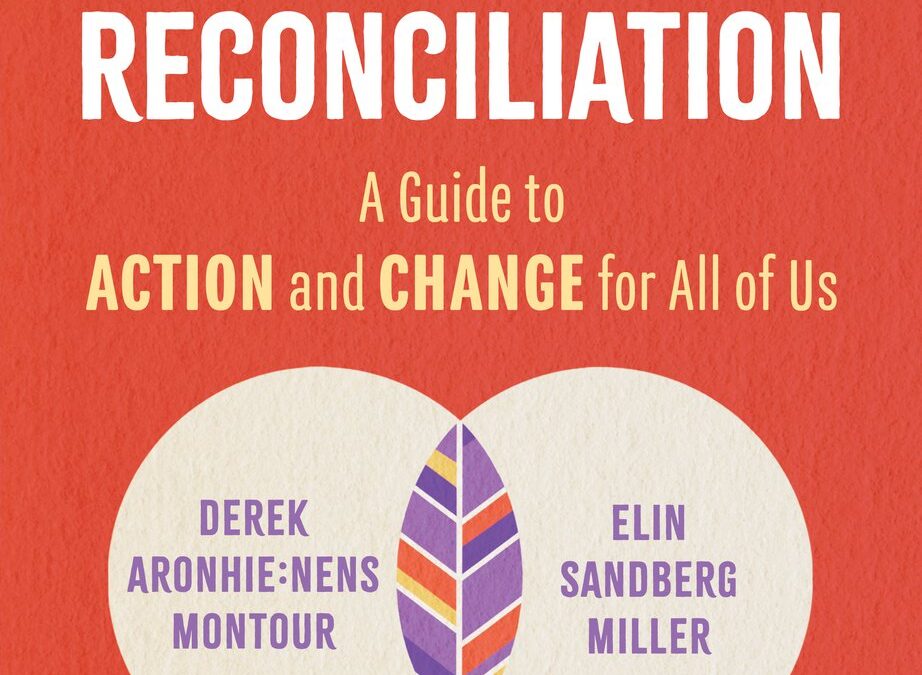
Everyday Reconciliation: A Guide to Action and Change for All of Us was published by HarperCollins on June 2. The book is available through Amazon, Indigo Books and Audible.