
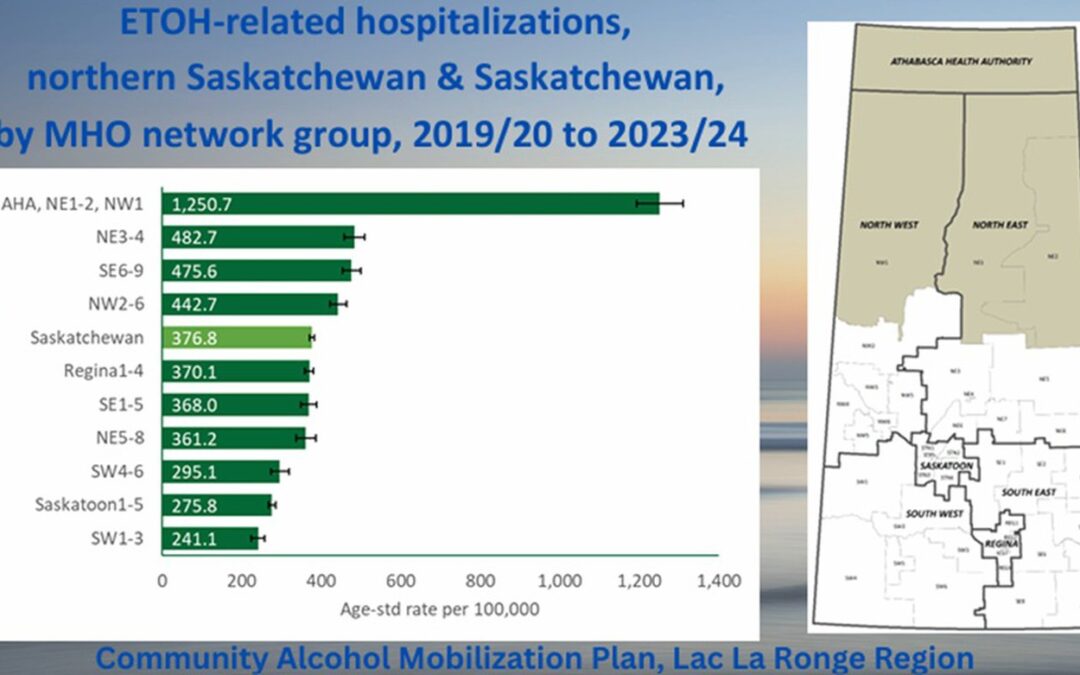
Photo: Alcohol was involved in 2,239 visits, representing almost 15 per cent of all emergency department visits during that period.
By: Nicole Goldsworthy
Local Journalism Initiative Reporter
SaskToday.ca
A new study presented to La Ronge council is providing the clearest picture yet of alcohol-related health harms in the tri-community area, revealing that nearly one in every seven emergency department visits at the La Ronge Health Centre involved alcohol.
Community partners shared the findings during the May 25 council meeting as part of the Community Alcohol Mobilization Plan (CAMP), a partnership involving the Town of La Ronge, Village of Air Ronge, Lac La Ronge Indian Band, community organizations, service providers and government agencies.
The report examined two years of emergency department data from May 2022 to May 2024 and found that alcohol was involved in 2,239 visits, representing almost 15 per cent of all emergency department visits during that period.
Researchers noted the pattern remained consistent across both years, suggesting alcohol-related emergencies are not the result of short-term fluctuations but rather a persistent and ongoing challenge in the region.
By comparison, visits involving other drugs accounted for nearly four per cent of emergency department visits.
“This tells us that alcohol-related harm is not a short-term spike or a one-time issue,” the report states. “It is a persistent and predictable part of emergency care in our region.”
The study was conducted through a partnership between CAMP, the Saskatchewan Northern Alcohol Strategy (NAS), Northern Medical Services at the University of Saskatchewan and the Saskatchewan Health Authority. The research team included Dr. Jeff Irvine of Northern Medical Services and Saskatchewan Health Authority epidemiologist Brian Quinn.
According to the report, the project was designed to provide local, evidence-based information to support community discussions and planning around alcohol-related harms.
Researchers emphasized that emergency departments serve as more than hospitals in northern communities. They often function as the front line for crisis response, mental health care, injury treatment and public safety concerns, making emergency department data an important indicator of broader community challenges the report said.
The study found alcohol-related emergencies occurred most frequently on weekends, particularly Fridays, Saturdays and Sundays. Visits also peaked during late-night and early-morning hours, while daytime periods saw significantly fewer alcohol-related presentations.
Researchers said these predictable patterns create pressure points for health-care staff, emergency medical services, police, shelters and outreach organizations.
The data also highlighted a strong connection between alcohol use and injuries or violence.
Alcohol was involved in 75 per cent of assault-related emergency visits, 71 per cent of hypothermia and exposure cases and 62 per cent of intentional self-harm incidents. Alcohol was also commonly linked to motor vehicle collisions, falls and poisonings.
The report noted that alcohol-related harm extends beyond intoxication and illness, increasing the risk of injury, violence and crisis situations.
Demographic data revealed that men accounted for approximately 60 per cent of alcohol-related emergency department visits. The highest rates were recorded among men aged 25 to 44 and women aged 19 to 24.
The report suggests that prevention programs, youth initiatives and violence-prevention efforts should include targeted supports for young women and girls.
The report suggests opportunities for relationship-based outreach, case management, culturally grounded harm-reduction approaches and stronger coordination among health and social service providers.
The report states the data does not prove that any single policy, retail change or enforcement measure caused the observed patterns. It also does not capture all alcohol-related harms occurring in the community, only those resulting in emergency department visits.
Researchers noted in the study that alcohol-related harms are influenced by a range of factors, including housing instability, poverty, trauma, access to services, family supports and the continuing impacts of colonialism.
For CAMP and its partners, the study establishes a local baseline that can be used to measure future progress and guide community-led responses.
Among the report’s recommendations are expanding community conversations around alcohol-related harms, increasing supports during weekends and late-night periods, strengthening prevention programs for youth and young women, improving services for people with repeated emergency visits and incorporating additional information from first responders and people with lived experience.
The report concludes that meaningful change will require sustained collaboration among community organizations, governments, health-care providers and residents.
Rather than serving as an endpoint, researchers said the study provides a starting point for ongoing efforts to reduce alcohol-related harms and improve community wellness across northern Saskatchewan.