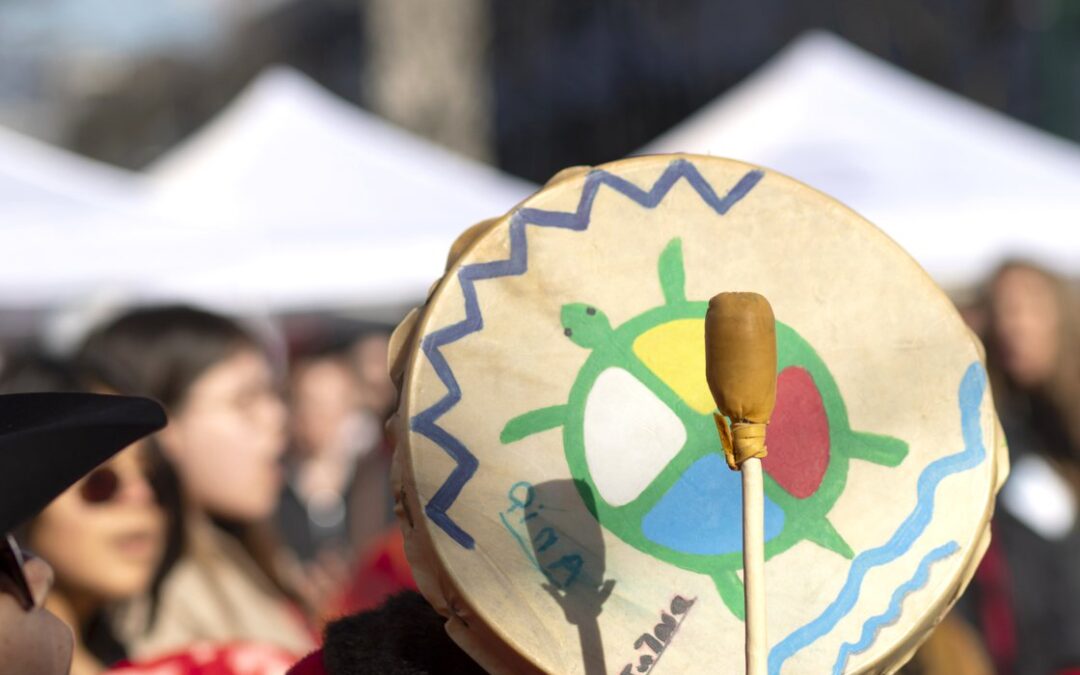
Photo: The month of June is National Indigenous History Month in Canada, with June 21 designated as National Indigenous Peoples Day. Writer Jathinder Sandhu explores the Indian Act.
By: Jathinder Sandhu
Local Journalism Initiative Reporter
Megaphone Magazine
The Indian Act of 1876 has been used as an “instrument of oppression” against Indigenous peoples throughout history, according to Bob Joseph, author of 21 Things You May Not Know About The Indian Act.
As Canada marks National Indigenous History Month (June) with June 21 designated as National Indigenous Peoples Day, it is important to remember that this legislation is not something in our country’s distant colonial past. It still remains the foundational legal framework for addressing Indigenous Peoples and issues in Canada.
Today, despite undergoing many amendments since 1876, the Indian Act still shapes political and socio-economic reality for many generations of Indigenous Peoples. A federal law, it sets the legal framework for the government’s relationship with First Nations people, bands and reserve land.
Throughout the application of the Indian Act, violation of terms and conditions often resulted in fines or jail time. It is truly disturbing that there are Indigenous elders today who lived through and experienced being denied the right to vote in Canada. Voting was only given to Indigenous Peoples in 1960.
Joseph — who is a member of Gwawaenuk Nation and a hereditary chief — outlines facts such as the loss of Indian status and treaty rights if Indigenous men obtained a university degree or became ordained clergy. An Indigenous woman would lose her status (legal recognition, rights to live on reserve and band resources) if she married a white man. Whereas before 1985, a non-Indigenous woman marrying a status man could gain status.
Long before European contact, Indigenous Peoples had a highly sustainable and effective governance of themselves. Joseph states how each nation had its own distinct political institution, leadership system, economy, tradition, language, culture and autonomous control over its territories and resources. But this all changed when European-style elections were introduced for chief and council for Indigenous communities. The dismissal of Indigenous forms of government usurped traditional political structures and did not reflect or consider their needs and values.
The Indian Act created reserves for Indigenous Peoples as means of containment and control, while providing settlers full access to fish and game, water, timber and mineral resources that were used to sustain Indigenous life and culture.
Then there was a permit system to control Indigenous Peoples from the ability to sell products from farms. Without the consent in writing, they could not sell, barter, exchange or give to any person any grain, crop or other products grown on reserve land.
Indigenous Peoples were prohibited from entering pool halls because the government deemed that “frequenting” these venues was misuse of time and money that led to the neglect of families and assimilation into white society.
The Indian Act also pushed to rename individuals using European names (much like Black slaves in the U.S.) for the purpose of registering them. The federal government’s policies during the 19th century were concerned mostly with assimilation. This meant renaming of entire populations for the purpose of registering Indigenous Peoples to eradicate traditional ties.
Settlers found many names “confusing” and “difficult” to pronounce. Before the renaming process, Indigenous Peoples had neither Christian names nor surnames. Joseph states they had “hereditary names, spiritual names, family names, clan names, animal names or nicknames.” In some cultures, hereditary names were considered “intangible wealth and carried great responsibility and certain rights.” None of this was recognized or respected during the renaming process.
The government made the potlatch and other cultural ceremonies illegal. Potlatch was central to cultural life of coastal peoples. They were held to pass names, titles and responsibilities to a chief of the eldest heir. The potlatch allocated wealth, established rank, marked a passing of the head of household and observed weddings and births. With it being illegal it all went underground. Both the government and missionaries viewed the potlatch as wasteful and against assimilation.
Joseph points out how the concept of establishing rank by one’s ability to share wealth rather than establishment of rank by holding wealth was alien to Europeans. He notes that in the more than 70 years that potlatch law was in effect, almost three generations of Indigenous Peoples grew up deprived of the cultural fabric of their ancestors. Thousands of irreplaceable ceremonial masks, robes, blankets and other potlatch items are lost forever.
Before European contact, women were often key to the family system. In communities that identified as matriarchal societies, there was great honour and respect bestowed upon women. They held important roles in community government and spiritual ceremonies, and were generally revered for the sacred gifts given to them by the Creator.
Joseph points out how the Indian Act “disrespected, ignored and undermined the role of women in many ways.” The dissolution of women’s roles — along with the abuses of the residential school system — has been a substantial contributing factor to the vulnerability of Indigenous women today.
However it was the creation of residential schools was by far the most devastating of the government’s policies. It caused immense human suffering to First Nations, Inuit and Métis communities.
Forcibly removing children from their parents proved devastating. It forbade students from speaking their language and practising their traditional religion. Many abuses occurred in residential schools. The Truth and Reconciliation Commission estimates that at least 6,000 of the 150,000 children who attended the schools between 1870 and 1997 either died or disappeared — many from disease, malnutrition and broken hearts. The legacy of the residential school system reverberates today. The last residential school closed down in Nunavut in 1997.
While Duncan Campbell Scott, deputy superintendent of the federal Department of Indian Affairs, said he aimed to“get rid of the Indian problem,” the Indian Act has not achieved its goal of cultural genocide. Today, Indigenous culture is resilient and is openly celebrated by Indigenous and non-Indigenous people alike. According to the 2021 census, the Indigenous population is one of the fastest-growing segments in Canada, increasing by 9.4 per cent between 2016 and 2021. This rise is attributed to high fertility rates, longer life expectancies and stronger self-identification.
Indigenous languages are being revived and recorded, and there is an increasing recognition of original names of towns, sites, streets and communities. Individuals are proudly rebuilding their communities.
While abolishing the Indian Act outright is complex and controversial (a throwback to colonialism, it also protects specific Aboriginal and treaty rights), the focus, according to Joseph, should now be on moving towards establishing more self-governance for Indigenous Peoples.
It’s time to dismantle The Indian Act — the basis for many of today’s stereotypes about First Nations, Inuit and Métis — and give Indigenous Peoples and all Canadians the opportunity to build a better future together.