
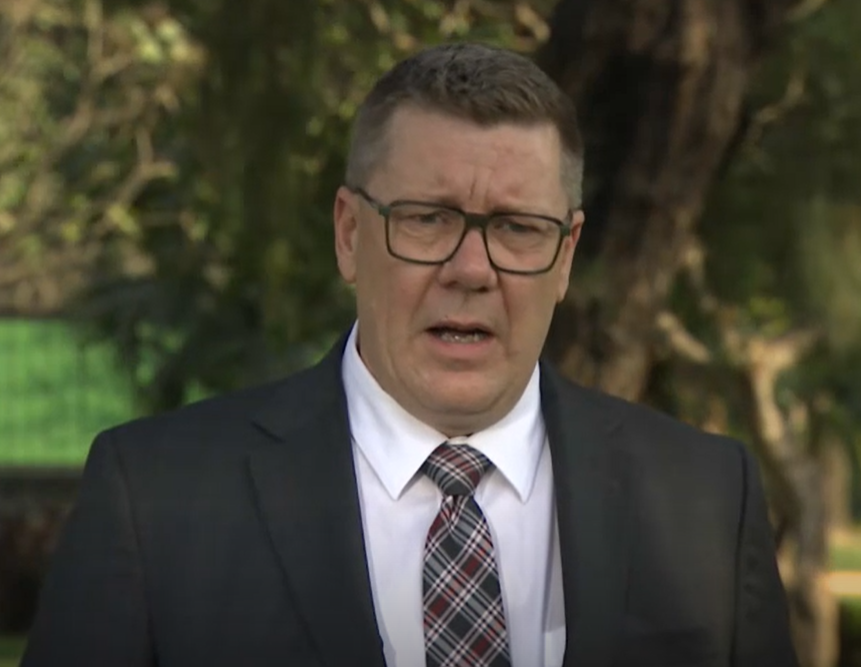
Photo: Scott Moe, Sask Party screenshot (MBC file photo)
By: Brett McKay
Local Journalism Initiative Reporter
Investigative Journalism Foundation
Several Saskatchewan municipalities and First Nations made political contributions to the province’s governing party in 2025, according to finance disclosures from Elections Saskatchewan.
The Saskatchewan Party reported receiving more than 400 corporate contributions last year. While these donations were primarily made by businesses and industry associations, the list of donees also includes the City of Prince Albert and the Rural Municipalities of Cymri No. 36 and Estevan No. 5, which each donated around $350 to the party.
Records show the City of Regina donated $321 to the Saskatchewan NDP last year. The city has also previously given to the Saskatchewan Party, including a donation of $1,250 in 2022 and $550 in 2023.
The Saskatchewan Party also received a donation of $1,157 from Big River First Nation, a Cree community in central Saskatchewan. Contributions data show Big River First Nation has made multiple donations to the party in recent years, including $3,380 in 2023 and $2,180 in 2022. Between 2016 and 2025, the Nation gave more than $11,600 to the Saskatchewan Party.
Flying Dust First Nation gave around $760 to the Saskatchewan Party in 2025, bringing its total contributions to the party over the last 10 years to about $4,400.
The Métis Nation – Saskatchewan has also regularly made donations to the party, including smaller donations of $334 and $432 in 2025 and 2024, respectively, and a larger contribution of $3,380 in 2023.
Thunderchild First Nation, an independent Cree First Nations band government in Turtleford, Sask., doesn’t appear to have made any political contributions to a political party before last year, when it gave $320 to the Saskatchewan Party.
A previous investigation by the IJF and CTV Regina found that more than two dozen municipalities had used taxpayer funds to donate roughly $46,000 to the Saskatchewan Party between 2006 and 2022. These donations ranged in size from a few hundred to a few thousand dollars and included tickets for provincial party fundraisers that councillors expensed back to their municipalities.
The net proceeds of a ticket to a fundraising function are considered political contributions under Saskatchewan’s Political Contributions Tax Credit Act and Election Act.
The City of Prince Albert’s chief financial officer George Marshall told the IJF that each year the city budgets to send representatives to the Premier’s Dinner.While a portion of the cost is classified as a donation, “the primary purpose is to provide an opportunity to hear directly from the premier on matters relevant to Prince Albert, such as the economy and public safety,” he said.
“This participation is undertaken on a non‑partisan basis, regardless of which party forms government,” Marshall said.
A spokesperson for the City of Regina told the IJF the “expense relates to the purchase of tickets by council members to attend the NDP’s 2025 Fall Leader’s Reception.”