Photo: supplied by etick.ca
By: Danielle Dufour
For most of us ticks are creeping, crawly nuisances. They crawl on animals and humans and occasionally latch on and burry their heads to feast on our blood.
Emily Jenkins, a professor of veterinary microbiology at the Western College of Veterinary Medicine at the University of Saskatchewan said that we are in the peak season for ticks.
Ticks are not just in grassy rural areas but also in urban areas.
In Saskatchewan, we have three different kinds of ticks.
Dr. Jenkins said the ticks we are seeing are typically our homegrown ticks called the American Dog tick, which make up for 96 per cent of the ticks that we hear about on people or pets.
There is also the Rocky Mountain wood tick which is active just a bit earlier in the season.
The third one is the winter tick that we see on moose or livestock usually in January or February.
“We really worry about the ones that are potentially invading, and that is the big one, the black legged tick or the Lyme carrying tick,” said Dr. Jenkins. “It’s increasingly showing up on people and pets in Saskatachewan over the last decade.”
These ticks are also carriers of other bacteria that aren’t good for people or animals.
“We have lots of birds that fly up here every year in migratory routes, and they probably bring the stick with them from the south,” said Dr. Jenkins. “Manitoba has established populations of the black legged tick and they’re moving west and north.”
Dr. Jenkins said it’s only a matter of time before we are host to our own populations of the Lyme carrying tick.
“We are monitoring that very carefully,” said Dr. Jenkins.
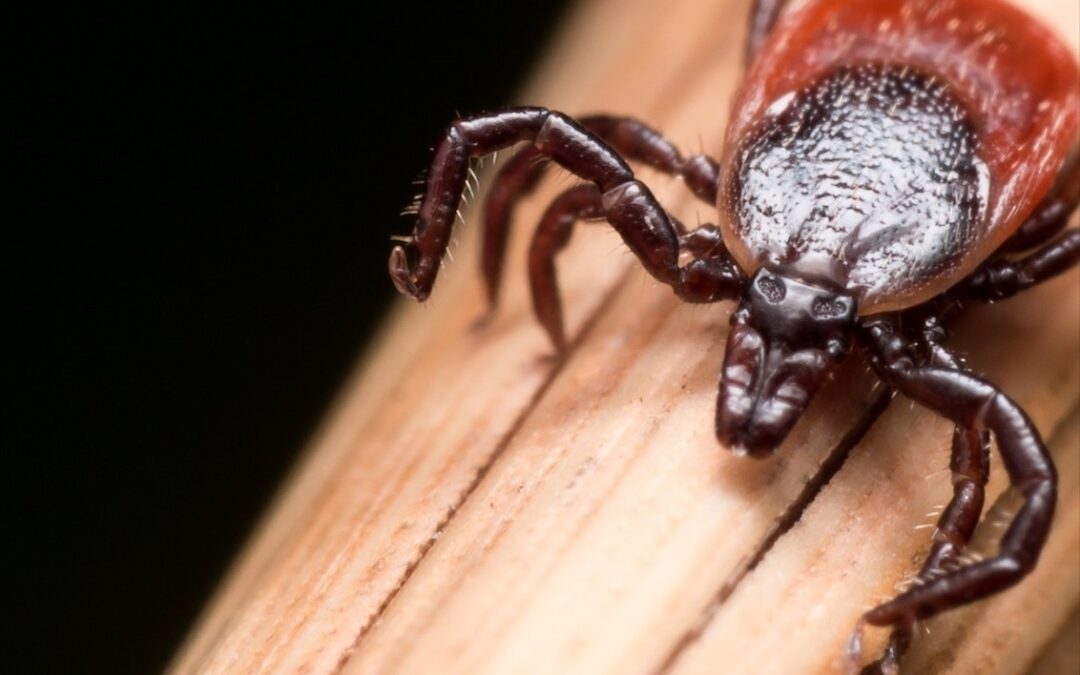
Adult ticks are big enough to see with the naked eye so you can identify certain characteristics to tell ticks apart.
Dr. Jenkins suggests individuals utilize the eTick.ca website or app where you can upload a digital picture and receive an identification about the tick back within 48 hours.
Many individuals have paranoia over seeing a tick and Dr. Jenkins said, “It’s never something you should ignore; you definitely want to do a tick check soon after you come back from tick habitat.”
Unless you plan on staying indoors, you will be exposed to ticks.
“We definitely want people to get out and walk their dogs and enjoy this spring,” said Dr. Jenkins.
She recommends doing regular tick checks on both you and your pet, wear long sleeves and tuck your pants into your socks and spray with a repellent.
If you do find a tick bite, don’t panic.
Dr. Jenkins suggests the best way to remove it is with tweezers by grabbing it as close to the skin as you can, gently and firmly pull back until the tick detaches. Make sure you take the whole tick and submit a picture of it on the eTick app.
For more information about ticks, visit: https://www.etick.ca/en