At a spring culture camp in northern Saskatchewan, the smell of woodsmoke drifts through the trees as fish is smoked over an open fire and birch water boils steadily in large pots. In Grandmother’s Bay, tradition isn’t something remembered, it’s something practiced, shared, and a part of everyday life.
During the spring camp Sally Roberts wears two hats: the camp boss and knowledge keeper.
Roberts coordinates daily activities and guides participants through traditional Woodland Cree practices.
Participants learn a wide range of skills: preparing fish, plucking and singeing ducks, cooking bannock on a stick over a fire, and understanding the full process of harvesting and preparing food from the land. These are not demonstrations; they are hands-on experiences meant to be carried forward.
“We teach what needs to be done,” Roberts explains, “so the younger generation—and anyone who wants to learn—can understand our ways.”
Without active teaching, traditional skills and language risk fading away. The camp is a place where knowledge is actively transferred and taught.
By teaching youth and welcoming learners of all backgrounds, the camp helps ensure that Woodland Cree traditions continue into the future.
For generations, the Woodland Cree relied on the land for sustenance and that connection remains a core part of the camp’s teachings.
Participants learn about seasonal foods like wild meats, Indian carrots, reeds, and tree sap. These foods are not only nourishing but also rich in natural vitamins and cultural significance.
“Those are the things that are dying,” Roberts says. “People don’t do that as much as they used to.”
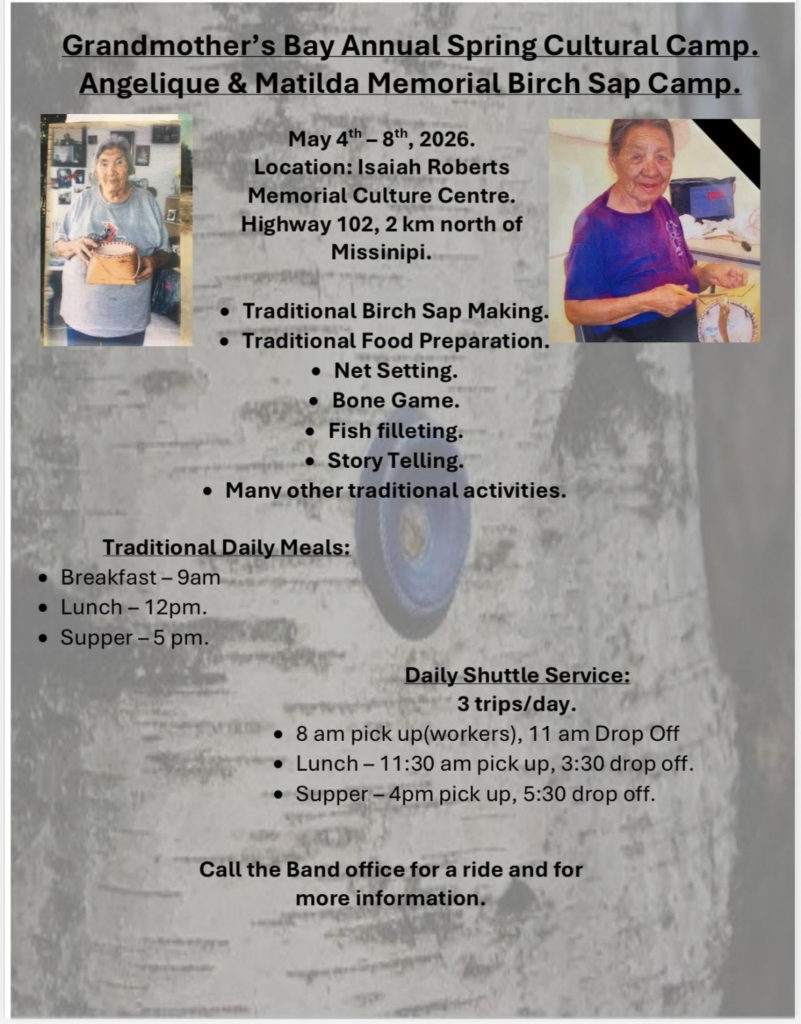
Springtime marks “sap camp,” when birch trees are tapped for their nutrient-rich sap.
Camp members carefully select and tap trees, checking daily to see when the sap begins to flow. Once collected, the sap is strained and boiled for hours until it thickens into syrup.
Traditionally, ingredients like moose hooves, beaver tails, or duck parts are added to enhance texture and flavor, thanks to their natural gelatin.
But the sap itself is valued even before it becomes syrup.
“When you drink that sap, just the water, it gives you energy. It’s just like drinking Gatorade. It just gives you that boost.” Roberts explains.
Before tapping any tree, an offering is made—a gesture of respect and gratitude.
Trees are tapped carefully so they remain healthy and continue producing sap for years to come.
The method involves a cut and the use of birch bark to guide the sap into containers. It’s a technique passed down through generations.
This approach teaches participants not only how to harvest resources, but how to do so responsibly.
Language plays a vital role at the camp. Elders speak only Cree at the camp, and there are translators to help students understand.
Roberts says Cree carries something English cannot fully capture—especially humor.
“What we say in English is not as funny as when we say it in Cree,” she says followed with a laugh.
The camp offers a fully immersive experience and if participants want they can join in setting fishing nets early in the morning, preparing and smoking fish, or going out on hunts.
Every stage of the process—from harvesting to cooking—is open to learners.
This hands-on approach ensures that knowledge is practiced, repeated, and understood in context.
She points to the young people training at the camp, as well as schools that bring students to learn directly from elders.
Through camps like this, Woodland Cree traditions are not only preserved—they are strengthened.
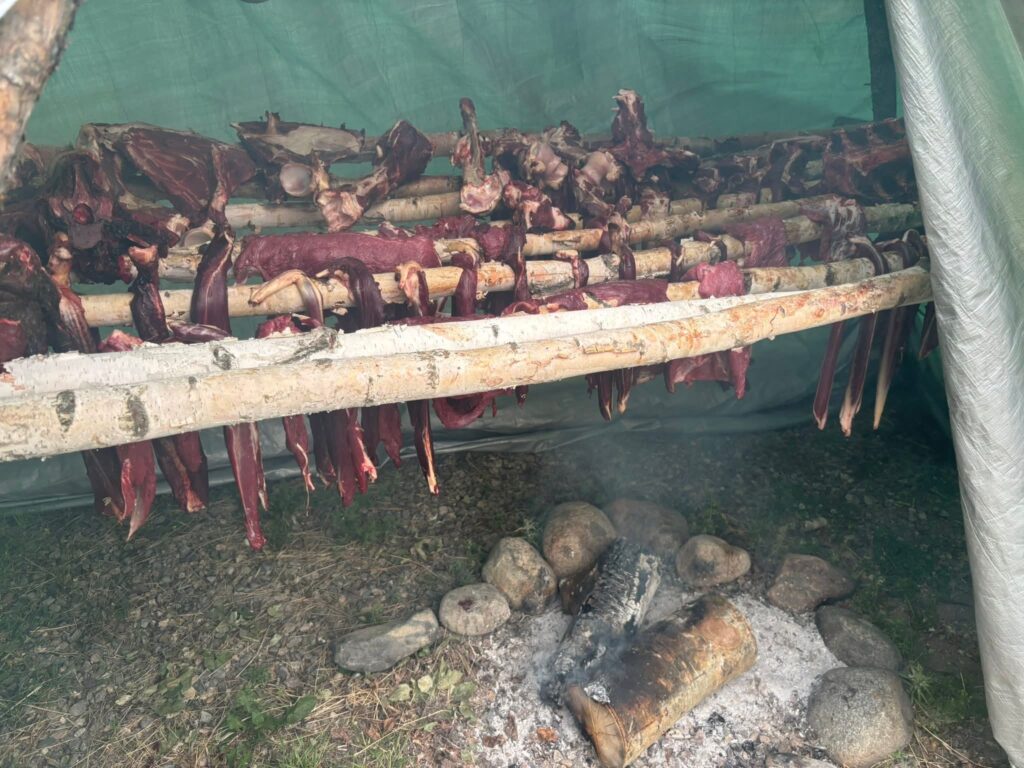
Photo: smoking moose meat at the Grandmothers Bay 2026 annual Spring Culture Camp/ photo by Abel Charles
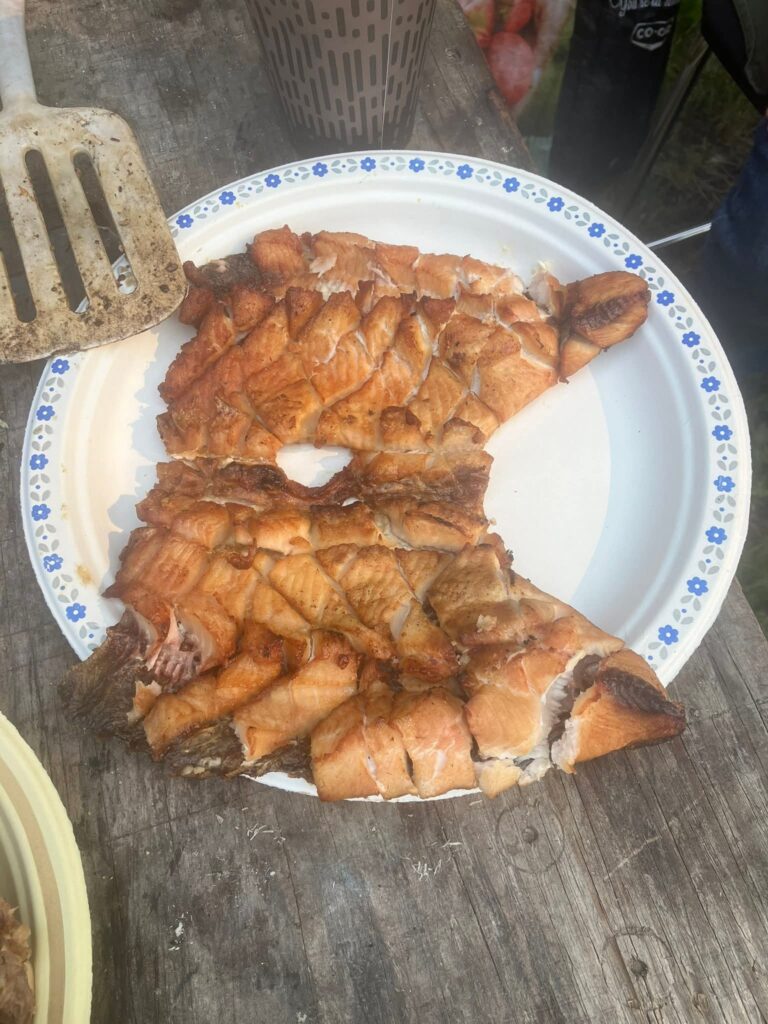
Smoked white fish at the Grandmothers Bay 2026 Spring Culture Camp / Photo by Abel Charles
(Prepared with files from Abel Charles)