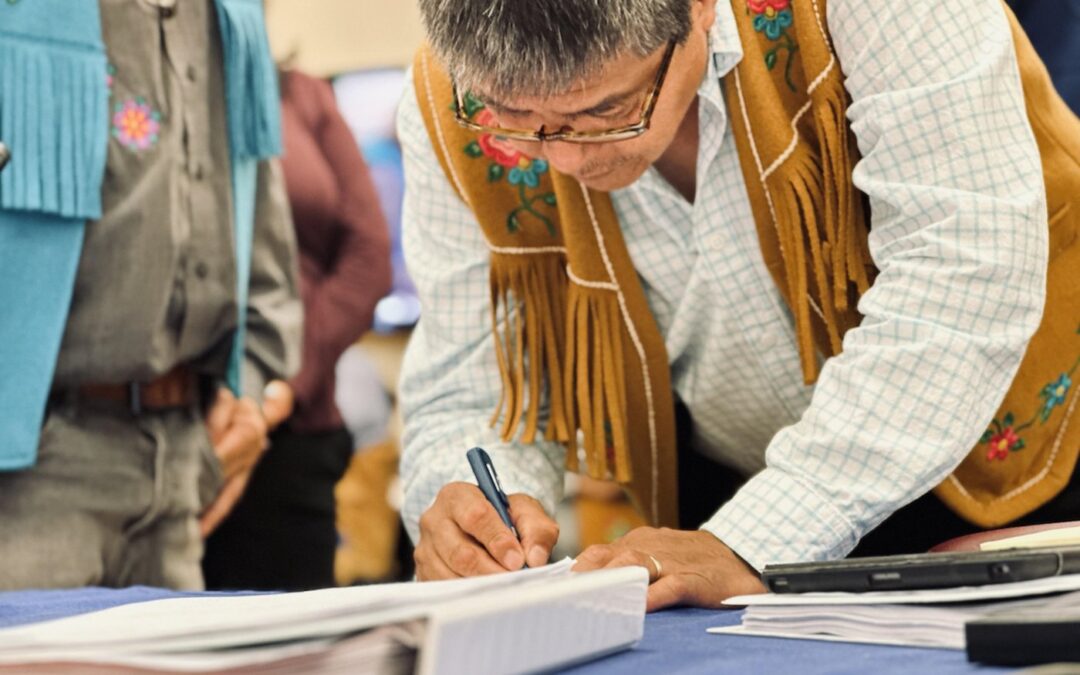
Photo: The Dene Nation demands for an independent investigation into RCMP surveillance of Indigenous groups and calls for collaborative policy reform. George Mackenzie at the 54th Dene National Assembly in Dettah. Photo courtesy of Cassandra Blondin-Burt. / NNSL file photo, courtesy of Cassandra Blondin-Burt
The Dene Nation wants all police surveillance of Indigenous peoples to cease.
In an April 20 statement, the Dene Nation expresses solidarity with Manitoba chiefs and the Assembly of First Nations, who began the call for action after learning of a secret RCMP surveillance program that targeted Indigenous groups and rights activists.
‘We demand an immediate end to these practices and a comprehensive investigation into their extent and impact,’ says the Dene Nation.
The organization’s statement comes roughly a month after CBC broke the story of the RCMP Indigenous surveillance campaigns that operated during the 1960s and 1970s.
At least six CBC articles detail evidence of RCMP spies, paid informants, physical surveillance, covert photography and filming, movement tracking and media monitoring. These campaigns were carried out by what was called the ‘Racial Intelligence Section’ of the RCMP’s Security Service.
The Dene Nation stated that it’s dedicated to promoting justice and equality for Indigenous communities across Canada. The organization’s statement emphasizes concerns surrounding rights violations and systemic discrimination highlighted by the recent media reporting and seeks “transparency, accountability and reform.”
It comes with four demands: immediate cessation of surveillance targeting Indigenous communities without clear, justified, and transparent legal grounds; an independent investigation into the extent and nature of the surveillance; federal policy reform that is collaborative with the Indigenous leaders of Canada; and the implementation of United Nations Declaration on the Rights of Indigenous Peoples (UNDRIP) criteria.
In an interview following the release of the Dene Nation’s statement, Dene National Chief George Mackenzie explained the organization’s demand for immediate cessation of RCMP surveillance activities.
“What happened in the past, we had no idea this was happening, and who’s to say it’s not happening now,” he said. “There’s so much activity in the political world today, around development, Arctic security, everything, and who’s to say that this is not happening. So we’re not taking no chances.”
Mackenzie called for a formal apology from the RCMP, as well as an apology from the federal government, noting that these actions were not taken by the police force alone.
“A formal apology needs to happen, from the RCMP department and also from the Government of Canada. They were behind this in the ‘70s,” he said.
In closing his written statement, Mackenzie said, “We will not stand idly by while our communities face unjust surveillance. We call on the federal government and the RCMP to take immediate action to address these concerns and work towards rebuilding trust with Indigenous communities.”
On March 25, RCMP Commissioner Mike Duheme issued a statement from Ottawa expressing “sincere regret” and “deep personal commitment to Indigenous communities and Indigenous leaders across Canada.”
Duheme committed to hosting a joint meeting involving the RCMP, Elders, Indigenous leadership and federal Public Safety Minister Gary Anandasangaree.