
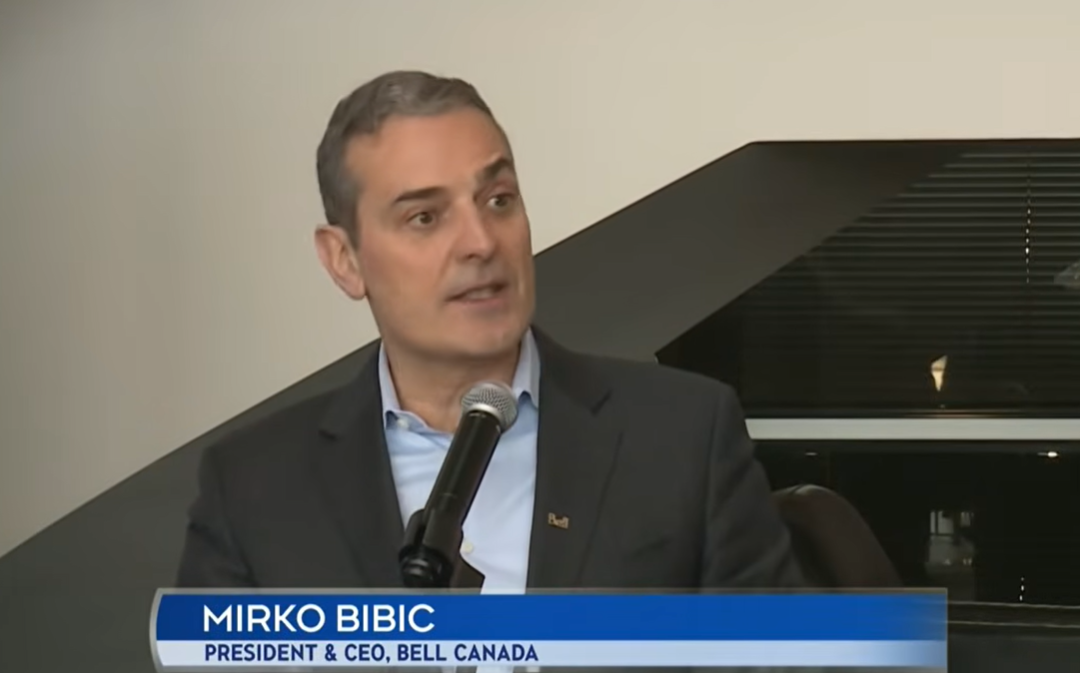
Photo: Screenshot from CTV News announcement with Bell president & CEO Mirko Bibic
By Brett McKay
Local Journalism Initiative Reporter
Investigative Journalism Foundation
Bell Canada said on March 16 it is making its largest-ever investment in Saskatchewan through the construction of a 90,000 square foot data centre near Regina. In the months before the announcement, Bell launched its largest lobbying effort in the province to date, according to Saskatchewan’s lobbyist registry.
The telecom company is planning to start construction this spring on what it says will be Canada’s biggest AI data centre, located in the Rural Municipality of Sherwood, according to a news release.
Documents from the Office of the Registrar of Lobbyists show that in October, Bell began lobbying government officials about data-centre related programs and policies. Along with ongoing negotiations with SaskTel about various telecom services, Bell updated its lobbyist registration to include discussions about “technological innovations, including AI, with an aim to convey how policies affect investments in innovation and research.”
At the same time the company added AI to its list of issues it wanted to meet with officials about, Bell also more than doubled the number of lobbyists it had registered in the province.
Records show that as of April 23, 2025, Bell had five in-house lobbyists registered in Saskatchewan. In October, the number of Bell’s in-house lobbyists had grown to 11, including the president of Bell AI Fabric, Dan Rink.
The company also added Saskatchewan’s Crown Investments Corporation and members of the government’s executive council, including Premier Scott Moe, as targets of its lobbying.
AI Fabric is Bell’s initiative to build sovereign data centre infrastructure in Canada. The first data centres in the AI Fabric network, a “supercluster” of six facilities in British Columbia, were announced last year. The Regina centre is expected to be fully operational by the end of 2027.
Saskatchewan released its Saskatchewan First Energy Security Strategy and Supply Plan in October, which focuses on growing electricity production through existing coal and natural gas plants and exploring large nuclear power technologies and small modular reactor projects. The government’s plan aims to use electrical energy as a means of economic growth by increasing demand within the province, including by attracting “data centres and related knowledge economy businesses that demand reliable baseload power.”