
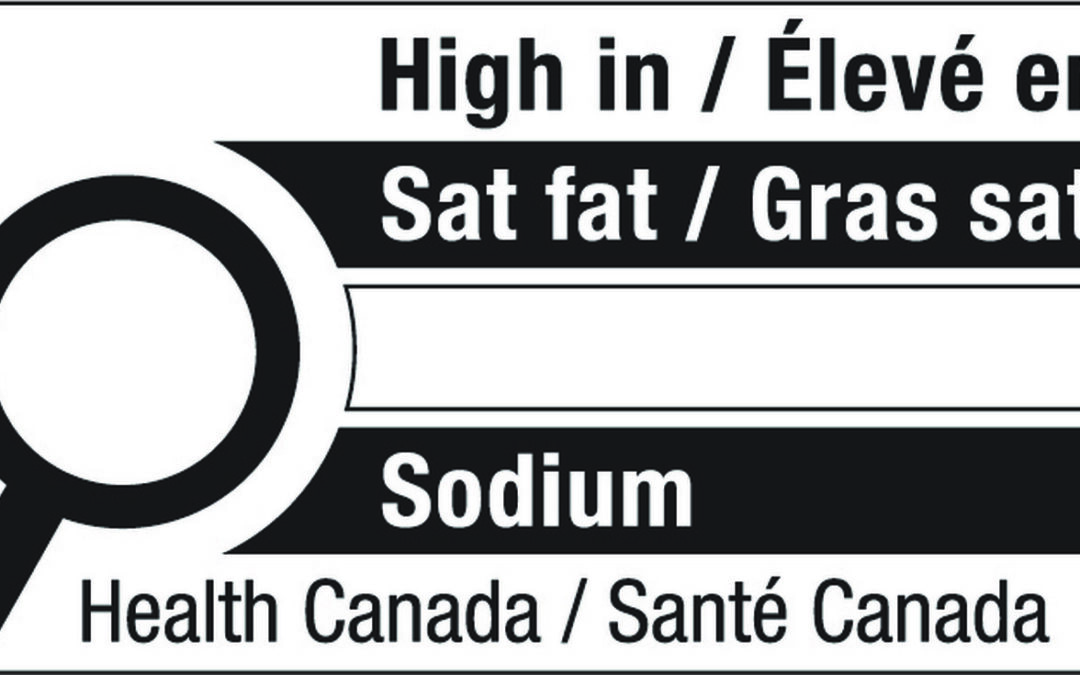
Photo: Government of Canada now requires a front-of-package nutrition symbol on foods high in saturated fat, sugars or sodium, a move Prairie Mountain Health says will help shoppers more easily identify and compare less healthy packaged foods. / Supplied photo
By Steven Sukkau
Local Journalism Initiative Reporter
Winnipeg Sun
Manitobans are likely noticing a new black-and-white symbol on many packaged foods as part of a federal effort to make key nutrition information easier to spot at a glance.
The Government of Canada is requiring a front-of-package nutrition symbol on prepackaged foods that are high in saturated fat, sugars or sodium. Health officials say regularly consuming high amounts of those nutrients can increase the risk of stroke, obesity, heart disease, Type 2 diabetes, high blood pressure and some cancers.
The symbol features a magnifying glass and clearly indicates whether a product is high in saturated fat, sugars, sodium or a combination of the three. It also includes the words “Health Canada / Santé Canada,” signaling that it is government-mandated.
According to Health Canada, the label is intended to help shoppers make quicker, more informed choices and to support health professionals when teaching about nutrition.
The symbol is mandatory on prepackaged foods that meet or exceed set thresholds for the targeted nutrients, though several categories are exempt. These include fruits and vegetables without added fat, sugar or salt, plain milk and yogurt, raw single-ingredient meats and poultry, very small packages and certain products used primarily as seasonings, such as butter, sugar, salt and honey.
Caroline Le Clair, a registered dietitian with the Interlake-Eastern Regional Health Authority, said having clear information on the front of packages can be helpful but she cautions against oversimplifying food choices.
“I think it’s good information for people to know that it is on the front, like, okay, this does have lots of sugar, this does have lots of salt,” she said.
At the same time, Le Clair noted that many consumers already understand that heavily processed foods tend to contain higher amounts of added sodium or sugar.
“When food doesn’t look like it’s from the land, it’s been processed, which means some of the nutrients are missing, and sometimes we add things to help it last longer on the shelf,” she said.
She added that people often begin to scrutinize food labels more closely after being diagnosed with a chronic condition that requires dietary changes.
Le Clair also emphasized the importance of avoiding moral judgments about food, particularly when speaking with children or families experiencing food insecurity.
“We don’t really talk about ‘healthy’ and ‘unhealthy’ foods, or ‘good’ and ‘bad’ foods, because it starts to put moral judgment on food,” she said. “There are times where all foods can fit.”
For some households, she said, foods considered high in sodium or sugar may be the only affordable or accessible options.
“If someone is eating something that might be considered high in sodium, and you say, ‘Oh, that’s not healthy, you shouldn’t be eating that,’ that might be the only food they have available,” Le Clair said. “It’s better that they’re eating something than not.”
She pointed to pizza as an example of a food that often gets a negative reputation but can still provide a mix of carbohydrates, protein and vegetables.
“It’s really about trying to change that thought process around food,” she said.