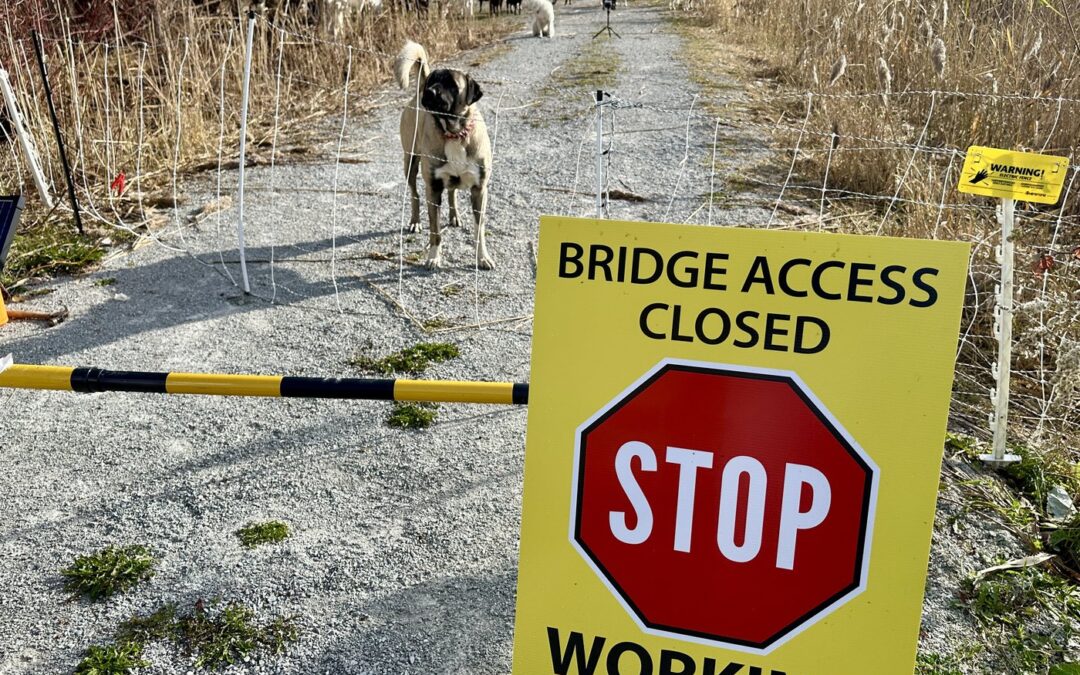
Photo: Goats at Work is a company based in Coldwater working with the Chippewas of Rama First Nation to solve the problem of invasive phragmites in the community.
By: Danielle Pitman,
Local Journalism Initiative Reporter
OrilliaMatters.com
Invasive phragmites have been a problem in Simcoe County and around North America for decades.
As groups work tirelessly at removing the plants manually, or with specialized wetland equipment or pesticides, there’s another group in Simcoe County quietly getting the job done naturally: goats.
Growing densely and up to 15 feet tall, invasive phragmites choke out other plants, drawing up most of the nutrients and water.
In Rama, invasive phragmites are out-competing native medicinal plants like red osier dogwood, which is used to treat fever and poison ivy or is used in ceremonies.
What the community has been most concerned about is the phragmites’ proximity to the water, says Shannon Snache, lands and membership manager, facilities and operations with the Chippewas of Rama First Nation.
She was involved in the community engagement process when deciding how to tackle the problem.
“The community really focused on our creek system. There’s a lot of encroachment from the phragmites, like coming out from the creeks and going into the creeks, kind of destroying habitat and just making it very unsightly,” she says.
The area around Hubs Rock Trail was not only overrun with phragmites, but other invasive species, too. Luckily, goats eat it all; garlic mustard, common buckthorn, purple loosestrife, dog-strangling vine and the phragmites.
“Just the maturity of these specific plants is interesting because it’s really gotten out of hand,” says Dan Spence, shepherd and founder of Goats at Work, a weed control company based out of Coldwater.
The project in Rama is unique because of the density of both phragmites and sumac, he says.
Fortunately, the 60 goats grazing in the area are enjoying the taste of these plants this year. It’s called seasonal palatability. Spence says the goats are eating up the phragmites, poison ivy and sumac with little coaxing.
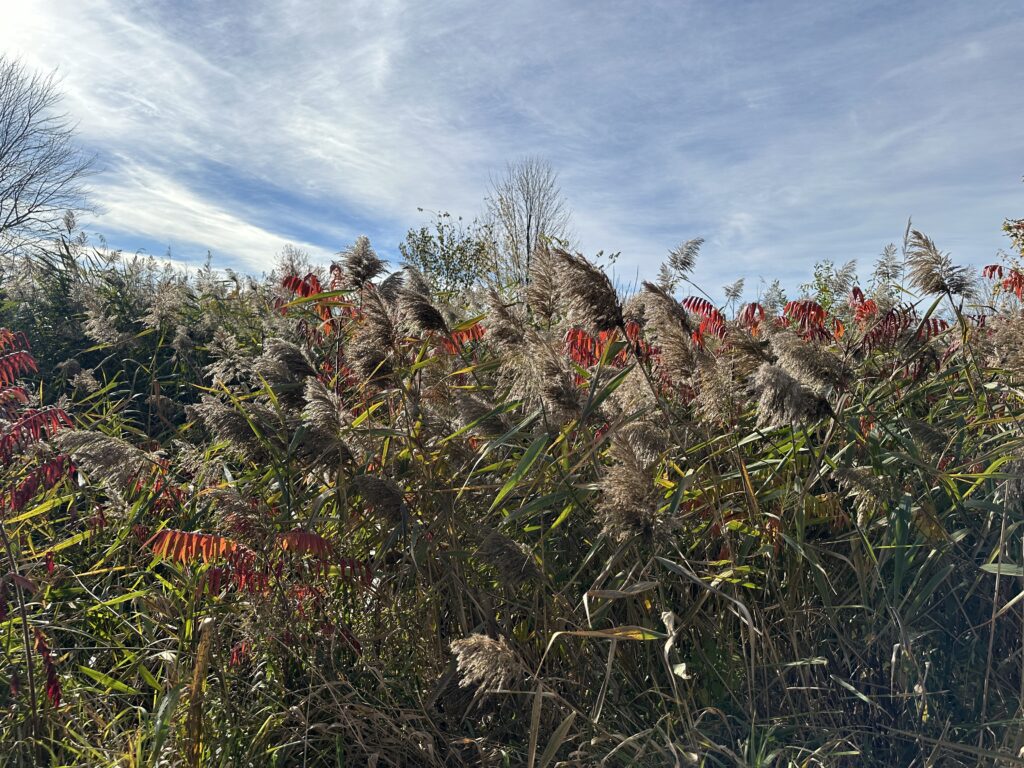
Invasive phragmites and sumac can be seen along the trailside at Hubs Rock Trail in Rama.
At about three weeks into the project, the herd of goats have munched their way through about three acres of land.
This is the average rate of progress. For Spence, it was an interesting project to gauge the herd’s capacity for success.
“To be able to come in and have the goats be as effective as they have been, be the solution to that problem, has been rewarding for us,” he says, knowing that the Chippewas of Rama have been seeking a solution for several years.
In 2024 Rama secured $6,500 through the province’s Invasive Phragmites Control Fund. With that, Snache says they were able to create a plan and began mapping out the most dense areas of growth.
Last year they received $10,000 in funding and created a dedicated group called the Phrag Fighters. About 13 community members joined forces to manually remove the invasive plants and work on future strategies.
At the end of the 2025 season, the Phrag Fighters decided on investing in a Truxor. The amphibious vehicle would be able to remove phragmites from a two- kilometre stretch along the creeks with the $10,000 budget Rama set aside for the effort this year.
But by late summer, a new solution arose. That’s where Spence comes in.
After discussing the project with him and consulting with the chief and council, Snache says they decided on the more “natural solution.”
For $6,000 the Truxor would have removed two kilometres of phragmites along the creeks within a day. It also would have involved less things to manage, Snache says, referencing community safety and the safety of the animals at work.
However, for the same budget, the goats embody a harmonious solution through the lens of land stewardship. They clear invasive species from four acres of land without introducing chemicals or machinery.
They even help fertilize the land reclaimed for native species.
“One of the very cool things is the goats aren’t eating one of the medicines that we have,” Snache says about the dogwood plant.
The other challenge with his particular project was communicating with and educating the public.
“We have our security bylaw department supporting with regular visual inspections of the area, just to make sure that things are going well, that signage is being maintained and people are staying back from the area,” says Snache.
Spence agrees, though he was impressed by the class of Grade 4 students who recently showed up with “a ton of questions.”
It’s important for the public to understand the goats and the trained dogs are working. It’s not like a petty zoo, which many people associate with these animals, and human interactions can confuse them.
The other unique challenge with the scale of the project in Rama, Spence says, is predation.
“Goats can fall prey to anything with teeth, basically,” he says, noting bears, coyotes and even raccoons.
Security measures are in place such as signage, electric fencing and cameras. Plus, the presence of three trained guard dogs is not a common necessity. Some projects don’t require any.
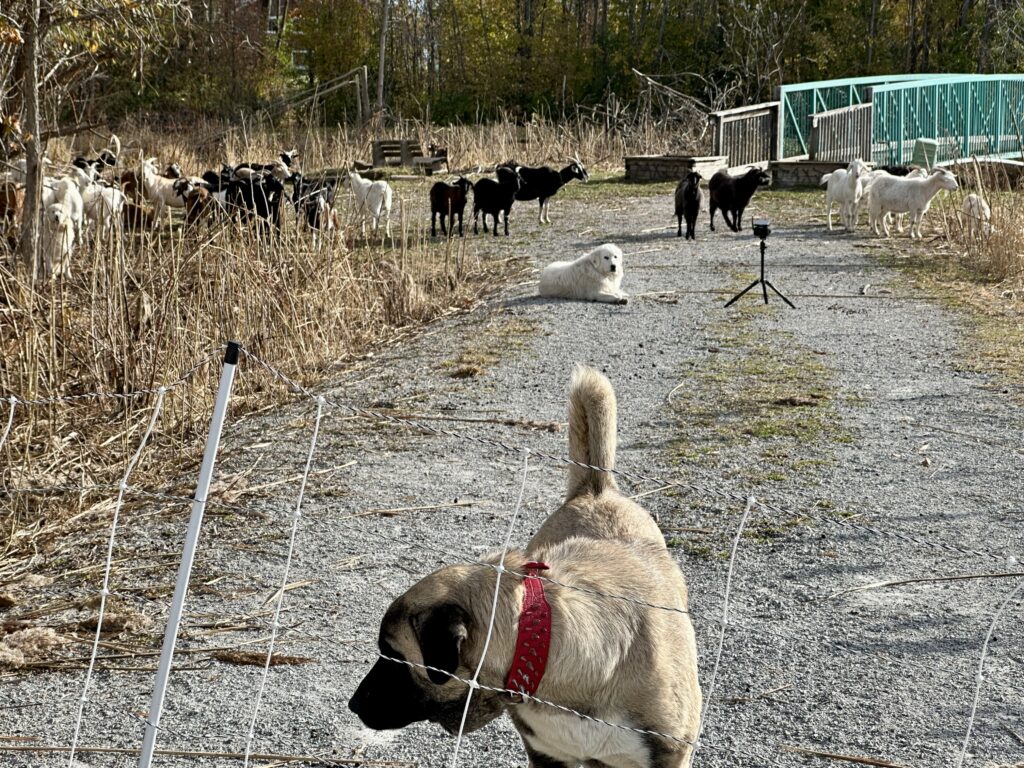
Stacey the guard dog ensures nobody gets too close to the “goats at work.”
“The team at Rama First Nation has been amazing with their security crew, like coming by frequently and giving us updates,” says Spence.
What Snache was pleasantly surprised with once the project was underway, is “the respect you gain” for everyone involved in the undertaking.
“The time that Dan has had to have put into his crew … they know their job,” she says.
Although it’s hard to predict how long a job might take, as weather and agrarian factors come into play, Spence says this one is about working within budget.
“We definitely would welcome another visit next year to take on … the whole area, if that was the goal,” he says.