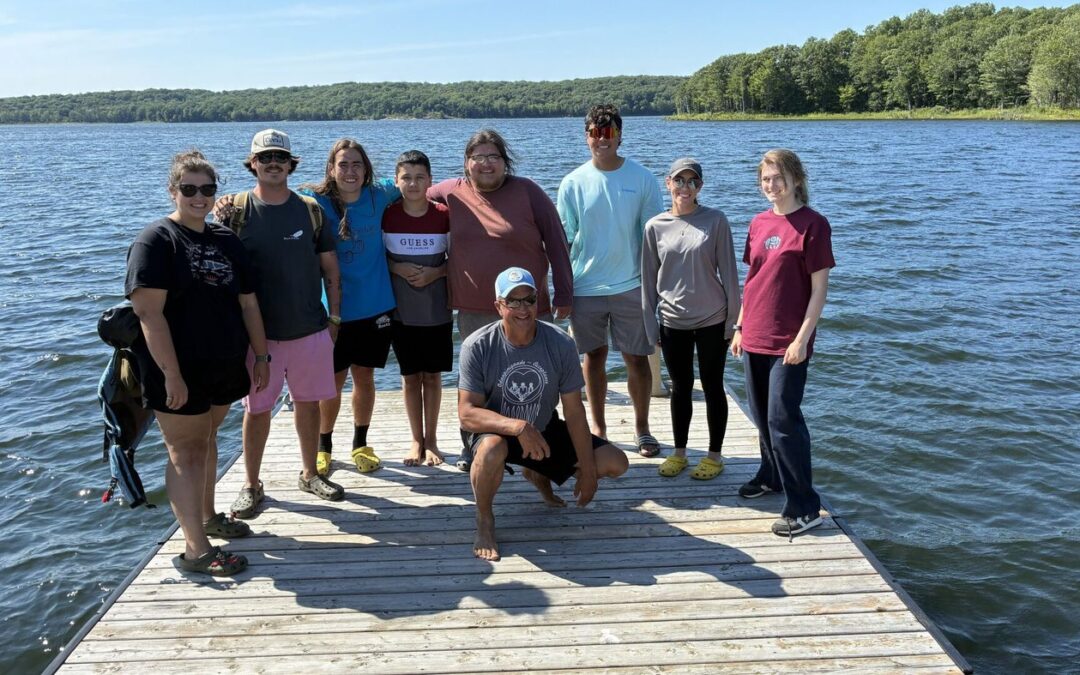
Photo: Group photo of Wasauksing Manoomin Youth and Survey Tour on Wasauksing August 2026
By Shania Tabobondung is a
Local Journalism Initiative reporter
ParrySound.com.
Wasauksing First Nation partnered with the Anishinabek/Ontario Fisheries Resource Centre (A/OFRC) this summer to assess the health and potential of manoomin (wild rice) habitats in the community.
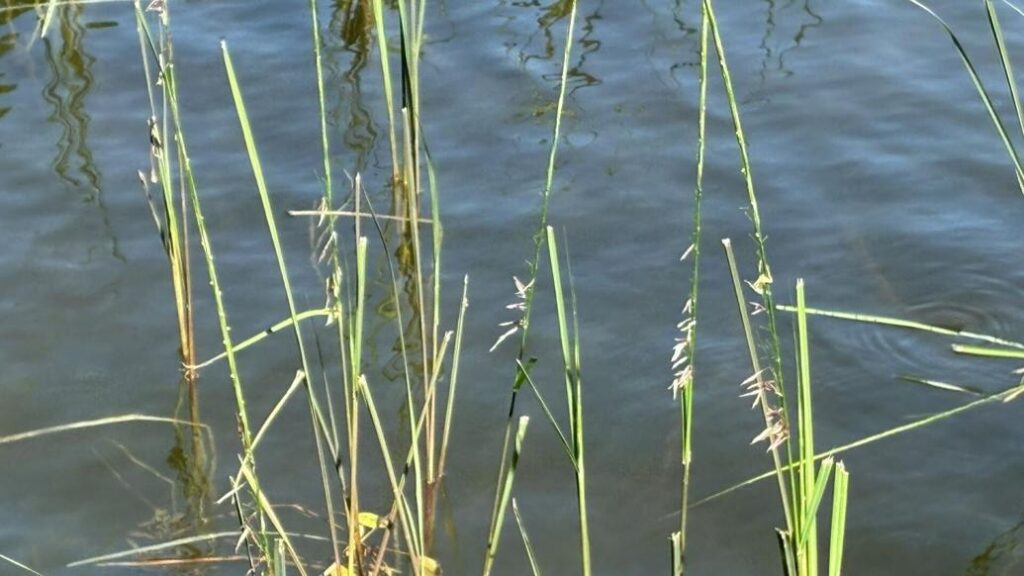
Close up shot of manoomin (wild rice). Credit: Shania Tabobondung/Metroland
The aim of the project is to follow the community’s lead in restoring a food source that is central to Anishinaabe culture, food sovereignty and identity.
Community memory
In spring 2026, Wasauksing submitted a proposal to A/OFRC to support the revival of manoomin beds through scientific expertise and state-of-the-art tools while remaining grounded in the community’s own local knowledge.
For Wasauksing’s Lands and Resources Office, success means more than ecological recovery — it also means “restoring personal and community well-being and self-determination; being able to manage and harvest traditional foods, strengthening our Nation’s food sovereignty.”
The project aims to support the reclamation of cultural practices and traditional knowledge surrounding manoomin, while deepening community connection to land, water, and cultural identity.
Through A/OFRC, Wasauksing has visited communities like Alderville to learn from Elders like Jeff Beaver, whose community has been running a wild rice reintroduction project since the 1990s.
Gabrielle Perugini, A/OFRC’s lead fisheries biologist, said much of what they have learned as an organization and what makes these sort of restoration projects possible comes from knowledge keepers like Jeff Beaver from Alderville First Nation.
Land-based learning
Youth from the community spent a week alongside the A/OFRC team exploring local waters, learning the history of manoomin in their territory and getting hands-on experience with the monitoring and surveying of identified sites.
“There were lots of smiles and laughing, lots of knowledge transfer and storytelling while we were out in the canoes checking in on the sites,” said Perugini.
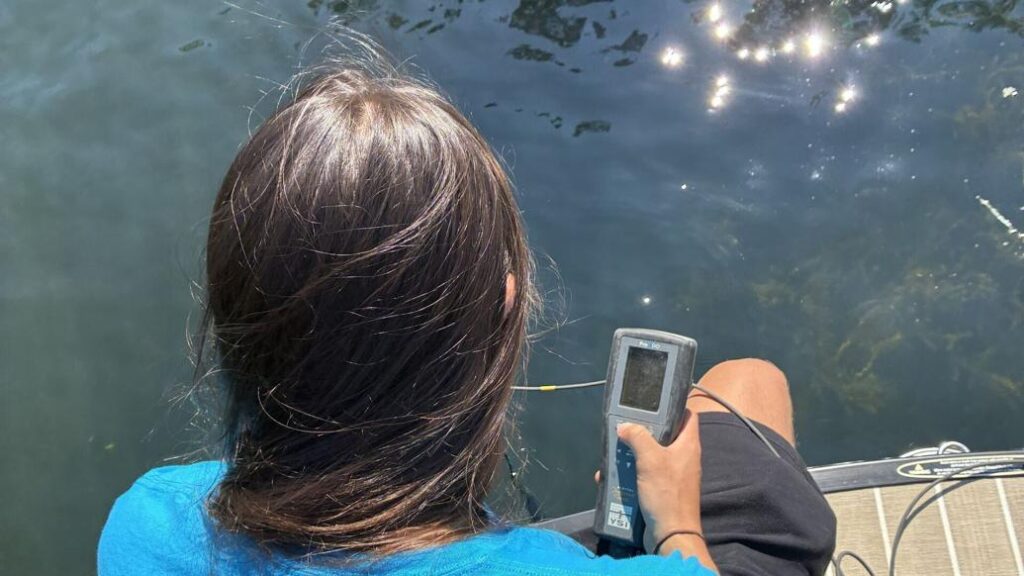
Monitoring turbidity and water quality at manoomin sites. Credit: Shania Tabobondung/Metroland
The fieldwork encouraged the youth to be part of the restoration efforts by learning how to use equipment to measure water quality at potential manoomin sites. They measured and recorded pH, turbidity, sediment composition, and water levels.
They also learned to identify and document optimal growing conditions: slow-moving, clear water; lakes with inflow and outflow; depths between 0.5 and three feet; minimal water level fluctuations; and silty sediment.
“I think it’s important not only from the stewardship side of things, but crucial for their spiritual connection to the land,” Perugini said of the youth’s involvement.
“If you get the youth involved, they start to develop a personal relationship with the manoomin, and having some personal stake in the matter fuels their stewardship. People will protect what they love and value. The hope is that it spreads to more youth and, in the blink of an eye, you have manoomin guardians at the ready.”
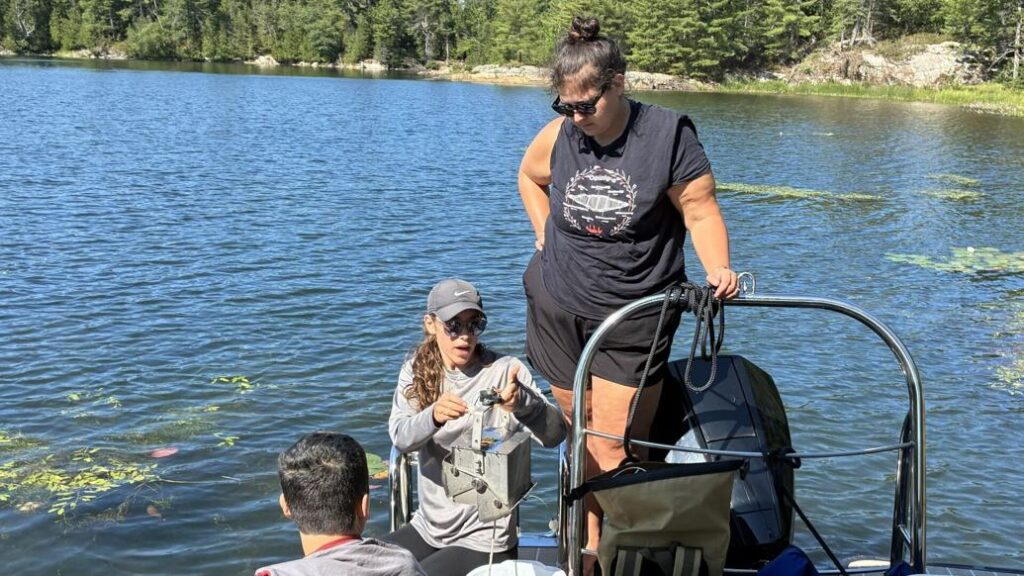
Gabrielle Perugini from A/OFRC teaching youth how to take soil samples. Credit: Shania Tabobondung/Metroland
What comes next
While it is too early for a final report — A/OFRC still needs to compile and analyze the data — the early assessments were encouraging. Existing manoomin beds and habitats were found to be not beyond recovery, and the surveys affirmed the community’s memory of where wild rice once grew.
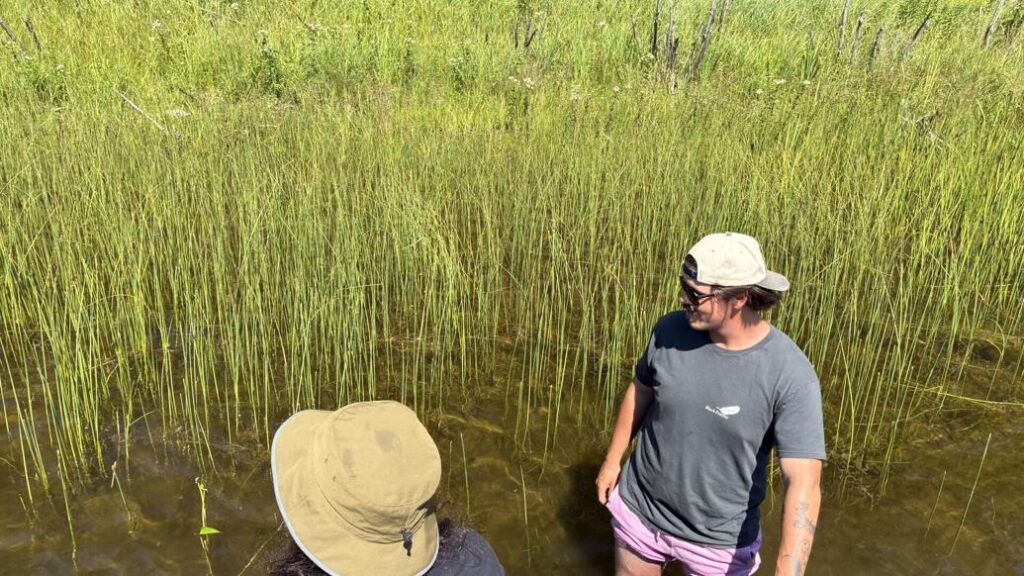
A manoomin habitat located around Wasauksing First Nation. Credit: Shania Tabobondung/Metroland
The final survey report will be released to Wasauksing once A/OFRC has had a chance to thoroughly review and format the data after the busy summer season. The report will be kept confidential for community members and will include information on suitable wild rice habitats across various locations, insights into community participation, and plans for long-term monitoring and sustainability.
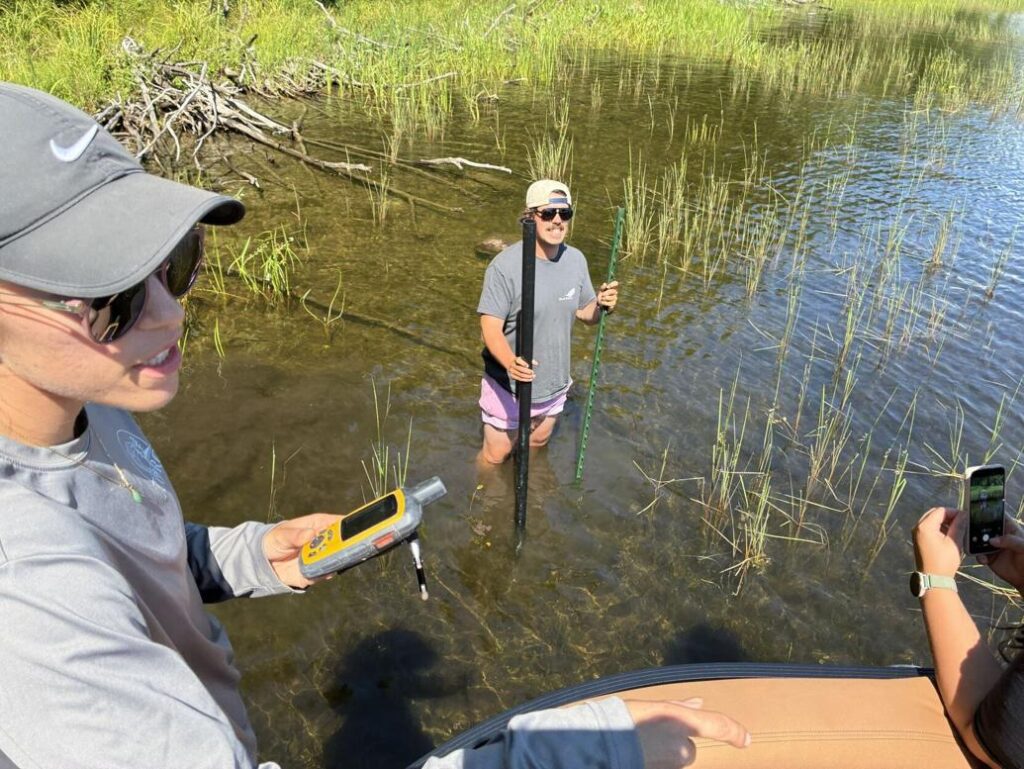
Surveying the water level of a manoomin habitat near Wasauksing First Nation. Credit: Shania Tabobondung/Metroland
A project update poster is expected soon, and both organizations plan to present the work at the Wasauksing Lands and Resources Open House this spring.
“Manoomin restoration goes beyond stewardship,” Perugini said. “It encourages community connectedness, strengthens food security, and fortifies spiritual and cultural connections.”
For the youth who spent August surveying Wasauksing’s waters, this is just the beginning. They’ve seen what’s possible — that something lost can be brought home — and they’ve become part of a legacy that will extend far beyond their own lifetimes.
“Youth bring passion with them, and it is contagious. They will be the ones with the option to continue to keep and build on that legacy,” said Neil Canvin, the natural resources co-ordinator with Wasauksing’s Lands and Resources Office.
Community involvement
Once restoration is underway, Wasauksing plans to bring the whole community into the process.
“Our desire is that, for next year and future years, we will host community events that will involve community members in the harvesting and planting processes for wild rice at the identified sites,” said Canvin.
The community also plans to host workshops on the cultural dances that precede manoomin harvest and the traditional methods of processing wild rice for consumption.
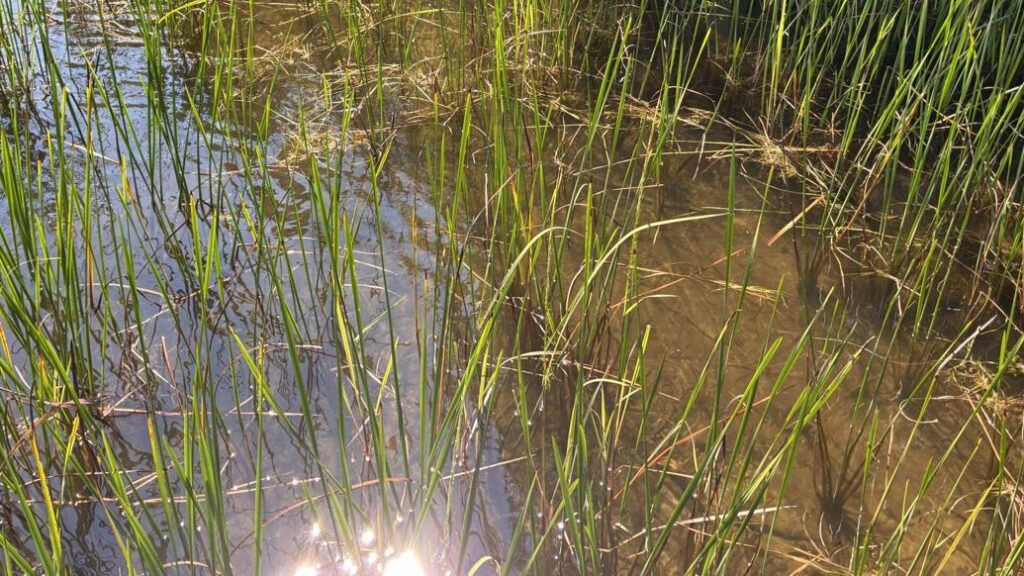
Manoomin (wild rice) habitat. Credit: Shania Tabobondung/Metroland
About A/OFRC
The Anishinabek/Ontario Fisheries Resource Centre is a not-for-profit organization established in 1995 through the Anishinabek Conservation and Fishing Agreement. It serves Anishinabek communities as an independent source of fisheries information, evaluating stresses on fish and their habitats and promoting sustainable management.
A/OFRC has conducted fisheries research for more than 30 years and has been involved in at least three manoomin projects since 2011 — recognizing wild rice restoration as integral to healthy aquatic ecosystems.
“Manoomin beds provide important nursery habitat for juvenile fish, shelter and grazing for waterfowl and mammals, and stabilize sediment — supporting the overall health of the ecosystem,” Perugini said.
Community members with questions, suggestions or feedback can contact Neil Canvin or Gabrielle Perugini at gperugini@aofrc.org.
CORRECTION (OCT. 5/2:28PM): This story was edited to correct the name of the Lands and Resources Office.