
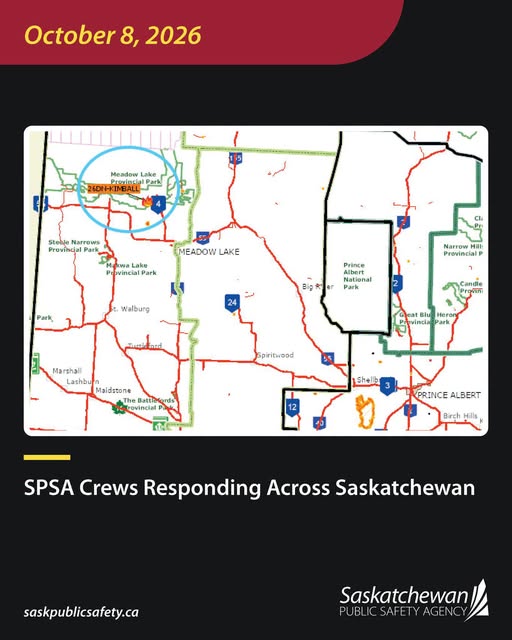
Photo: SPSA respond to Kimball Fire / Photo Credit SPSA Facebook Page
By: Nicole Goldsworthy,
Local Journalism Initiative Reporter,
SASKTODAY.ca
A human-caused wildfire near Kimball Lake that grew to 64 hectares has now been contained after an intensive response from Saskatchewan Public Safety Agency (SPSA) crews.
The 26DN-Kimball fire, first reported on Oct. 7, reached 64 hectares before firefighters and heavy equipment operators brought the blaze under control. As of Oct. 9, the fire was listed as contained on the SPSA’s active wildfire map.
According to the SPSA, the fire was accidentally started by parks staff.
“There is no threat to any homes or infrastructure in the area,” said Jeff DeDekker, manager of communications and media with the SPSA. “Crews are making good progress on containing this fire.”
When the wildfire was listed as not contained on Oct. 8, crews were working along the fire perimeter using a helicopter, heavy equipment and water trucks. Efforts focused on extinguishing hot spots near the perimeter and pulling apart burning slash piles.
The SPSA said the response included Type 1 and Type 3 wildfire crews, heavy equipment constructing fireguards and a helicopter. No additional resources were requested and no local fire departments were deployed to the incident.
The fire drew concern from residents, campers and cabin owners in the Kimball Lake area. In a social media post on the evening of Oct. 8, the Kimball Lake Store reported that water trucks and three bulldozers were still operating on the fire, but conditions appeared to be improving.
“The fire was headed south to the Waterhen River, not west to the store,” the post stated, expressing optimism that local businesses, campgrounds and cabins would remain safe.
The wildfire occurred during what has been a relatively quiet fire season across Saskatchewan.
As of Oct. 9, the province had recorded 354 wildfires in 2026, compared with 517 at the same time in 2025 and a five-year average of 532.
DeDekker attributed the reduced wildfire activity largely to frequent precipitation throughout the summer, particularly during June and July.
Despite the lower number of fires this year, the SPSA warns the risk of wildfire remains present as Saskatchewan moves further into fall.
“It is unusual, but it has been occurring more frequently the last few years,” DeDekker said of wildfires of this size occurring in early October.
He noted that as vegetation enters dormancy, an abundance of dry, fine fuels can support fast-moving wildfires. While cooler temperatures, shorter days and more humid nights typically help limit fire growth, forecasts are calling for a warmer-than-normal fall, which could prolong fire risk.
Only four active wildfires were listed in Saskatchewan on Oct. 9. The SPSA continues to remind residents that human-caused wildfires are preventable and encourages the public to follow fire restrictions and use caution during outdoor activities.