By Chantel Downes
Local Journalism Initiative Reporter
Lakeland This Week
Lakeland Catholic School Division (LCSD) and Northern Lights Public Schools (NLPS) are taking different approaches to Orange Shirt Day and the National Day for Truth and Reconciliation, but both emphasize that reconciliation must extend beyond a single day.
“At Lakeland Catholic, truth and reconciliation is an ongoing commitment woven into learning throughout the school year,” said Carol Rainey, director of inclusive education and student wellness for LCSD.
Rainey said the annual observances provide an opportunity to honour residential school survivors, remember the children who never returned home, and learn from the cultures, knowledge and experiences of Indigenous peoples.
“Through listening, learning and shared experiences, Lakeland Catholic is committed to building relationships rooted in respect, understanding and a genuine willingness to continue learning from Indigenous communities,” said Rainey
Earlier in September, 50 LCSD students attended From Roots We Rise: A Youth Gathering 2026 in Edmonton. The National Centre for Truth and Reconciliation event connected students with residential school Survivors, Indigenous artists, performers, athletes, and community representatives.
During the gathering, students visited the Red Scroll Memorial, a 50-metre banner bearing the names of 2,800 Indigenous children who died and never returned home. The event also featured storytelling, music, dance and performances celebrating Indigenous cultures.
Across LCSD, schools will recognize Orange Shirt Day through activities including prayers, liturgies, honour walks, land-based learning, Indigenous art and student reflection. Students will also spend time with Elders, Knowledge Keepers and other community members.
“Holy Cross Elementary will welcome an Elder and representatives from Cold Lake First Nations, while École Notre Dame High School students will join the Lakeland Society for Truth and Reconciliation’s Orange Shirt Day walk. Schools throughout the division have planned additional opportunities rooted in their own students and communities,” Rainey said.
LCSD staff will also participate in division-wide professional learning with Jason Bigcharles on Sept. 25. Additional professional development will continue during the winter and spring.
“This learning will support staff in deepening their understanding of Indigenous perspectives, truth and reconciliation, and the responsibilities of educators to build respectful, informed, and relationship-based learning environments. It is part of our commitment to ongoing learning rather than treating reconciliation as a single event or annual observance,” Rainey said.
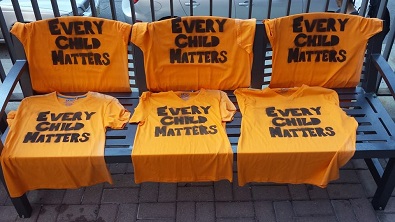
When teaching students about residential schools, LCSD educators adapt discussions carefully and connect the subject to the principle that ‘Every Child Matters.’
“Learning about residential schools is approached with care and sensitivity. At the heart of this learning is the message of ‘Every Child Matters,’ . . . Every child is valued, every story deserves to be heard, and every person is deserving of dignity, compassion and respect,” Rainey said.
NLPS students and staff will not attend school on Sept. 30, allowing them to reflect privately or participate in community events marking the National Day for Truth and Reconciliation.
“There will be no school for students and staff to provide everyone with the opportunity to reflect on the significance of this day in a way that is meaningful for them, and to participate in events that are taking place in our communities,” said Nicole Garner, communications and public relations manager for NLPS.
Because Sept. 30 is also Orange Shirt Day, NLPS schools will hold activities earlier, either on the preceding Monday or Tuesday or during the previous week as part of Truth and Reconciliation Week.
Individual schools will determine how they mark the occasion based on students’ ages and connections to the provincial curriculum.
“Some schools will focus on classroom activities, while others may do school-wide assemblies or presentations,” Garner said.
NLPS uses age-appropriate instruction to teach students about residential schools and incorporates First Nations, Métis and Inuit histories, perspectives and ways of knowing into subjects such as social studies, language arts, science and art.
The division also recognizes Métis Week and National Indigenous Peoples Day, along with Orange Shirt Day, to encourage discussions that continue throughout the year. Schools regularly invite Elders, Knowledge Keepers and Indigenous guests to share stories, languages, teachings and cultural practices with students.
Recognizing that lessons about the residential school system can prompt difficult emotional responses, schools provide support and maintain communication with students and families who may require additional care.
“Reconciliation is viewed as an ongoing journey for the entire school community, where parents, community elders, and staff work together to foster an inclusive, empathetic environment for every child,” Garner said.