
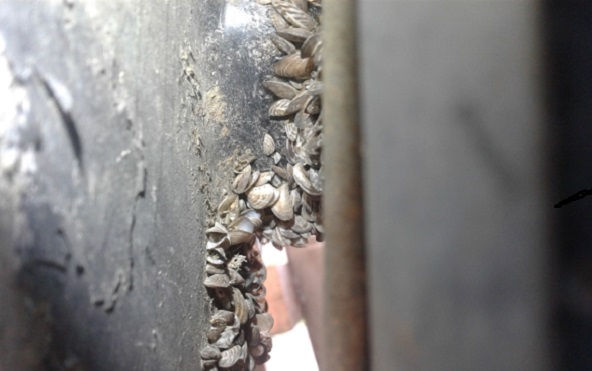
Photo: zebra mussels
By: Bastien MacLean
Local Journalism Initiative Reporter
Kamsack Times
Zebra mussels, an invasive aquatic species, has been detected in the Lake of the Prairies
A number of positive detections of their larval stage, called veligers, were found, forcing Saskatchewan and Manitoba to issue containment orders for the lake on July 3.
Zebra mussels are a species of freshwater mussel native to Europe that arrived in North America in the 1980s. Originally introduced to the Great Lakes, they have spread and are continuing to move westward. Zebra mussel females can release up to one million eggs per breeding season. They can also survive for up to 18 days out of water, such as on the hull of a boat.
“Why we’re so concerned about zebra mussels,” said Matt Tyree, Director of Fisheries at the Saskatchewan Ministry of Environment, “is just because of the level of impact they can have when introduced into a new water body.
“Invasive mussels in particular have a pretty significant socio-economic and environmental cost associated with their establishment.”
The negative effect zebra mussels pose on the freshwater bodies they are introduced to includes competition with native mussels for food sources, like plankton, as well as creating conditions for an increased risk of toxic algae blooms and pathogenic bacteria, among other consequences.
“These mussels tend to attach themselves to any hard surface, and then they become a maintenance headache for industry and anybody who is wanting to use that water body,” Tyree said.
“At the end of the day, it’s really important watercraft owners are aware of the risk that their activities pose for moving aquatic invasive species, like invasive mussels, and we’re just asking that everybody ensures that they’re cleaning, draining and drying their boat prior to moving their boat to another water body.”
While the discovery of zebra mussels in the Lake of the Prairies reinforces that aquatic invasive species remain an ongoing threat to Saskatchewan waters, it also highlights the importance of early detection and prevention efforts to help limit their spread, advised Sask. Environment.
In response to the confirmation of these mussels, containment orders have been issued by both the provinces of Saskatchewan and Manitoba, requiring all watercraft and equipment used at Lake of the Prairies to be decontaminated before being moved to any other waterbody. Decontamination ensures watercraft or equipment from Lake of the Prairies are not unintentionally spreading invasive zebra mussels elsewhere, Sask. Environment said.
The containment order applies to the entirety of Lake of the Prairies, as well as the Assiniboine River from the Highway 357 crossing west of Togo to the confluence of Lake of the Prairies.
Aquatic invasive species can be unintentionally transported between waterbodies on boats, trailers and water-related equipment. Once established, many invasive species can be extremely difficult or impossible to eliminate and may cause significant environmental, recreational and economic impacts.
Throughout the summer and early fall, watercraft inspectors and conservation officers operate inspection stations and roadside check stops.
If you are transporting a watercraft, including boats, jet skis, kayaks, canoes or paddleboards, and see an open inspection station, you must stop – it is the law.
What can you expect during your inspection?
Sask. Environment officers will ask where the watercraft was last used and conduct a visual inspection of the boat, trailer and equipment. Think of it as a check-up before your next launch. Officers look for standing water, aquatic plants, mud and invasive species that could be transported to another waterbody. For watercraft that have been properly cleaned, drained and dried, the inspection process typically takes only a few minutes.
Boaters can further reduce the risk of spreading aquatic invasive species by following the Clean, Drain and Dry guidelines after every use. A few minutes spent preparing your watercraft and stopping for an inspection can help protect Saskatchewan’s lakes and rivers from the spread of aquatic invasive species, advised Sask. Environment.
If you plan to move watercraft or equipment that has recently been used within the Lake of the Prairies containment order area and require decontamination, contact the inspection and decontamination program at aiswatercraftinspection@gov.sk.ca to schedule a decontamination.
Written with files from SaskToday