BY: Danielle Dufour
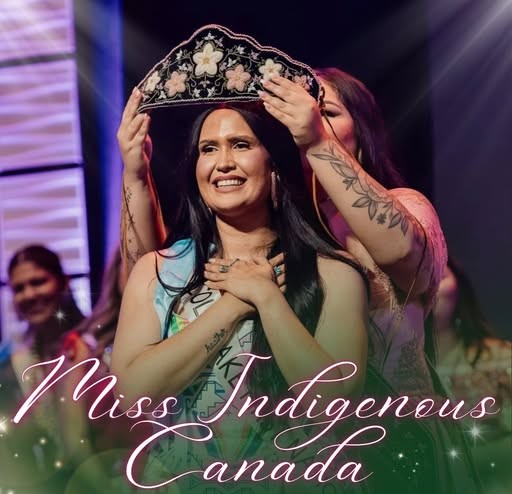
The newly crowned Miss Indigenous Canada is Brooke Metchewais from Cold Lake First Nations.
“I’m very grateful to be in this position,” said Metchewais.
The group of participants began their week of the competition from July 20-25 at Six Nations of the Grand River.
“I’ve always thought of applying for Miss Indigenous Canada,” said Metchewais. “I think my mom was the biggest driver of it all and she really wanted me to go for it.”
Earlier this year she applied and found out she was chosen as a delegate out of 125 applicants.
“It’s just been a whirlwind,” said Metchewais. “It’s honestly been the most enjoyable experience and it’s bittersweet being on the end of it because having that journey and sharing that experience with 19 other incredible youth has been the best.”
She holds a bachelor’s degree in Sport & Fitness Leadership and now lives in Chilliwack working in Indigenous Health Services, where she advances culturally safe practices and strengthens relationships with Indigenous communities.
While also serving as a Board member for Child & Family Services, she advocates for the well-being of Indigenous children and families.
“There’s a lot of changes that I do want to make. I work in Indigenous health services where I oversee the general practitioners, nurse practitioners, care aides and support workers,” said Metchewais. “I want to continue that work and I want to continue to decolonize spaces where we play a big part in the table to when it comes to funding, when it comes to recognizing gaps and how we can walk alongside communities.”
The pageant emphasises community leadership requiring each participant to launch a community project, and Metchewais project was focussed on changes in resources and accessibility for urban Indigenous youth in the Fraser Valley region.
“The youth that are in care could be reconnecting to their nation and where they come from, learning the language, learning the family lineage,” said Metchewais.
She is eager to get started in her work as Miss Indigenous Canada and wants to build accessible cultural programs for them, offering supports and resources.
“I really just want to put all my effort in there because they deserve to see themselves reflected in leadership having that strong presence of a role model to get connected back to their community and learn their ways and protocols, and that’s really important with our pride and our teaching.”