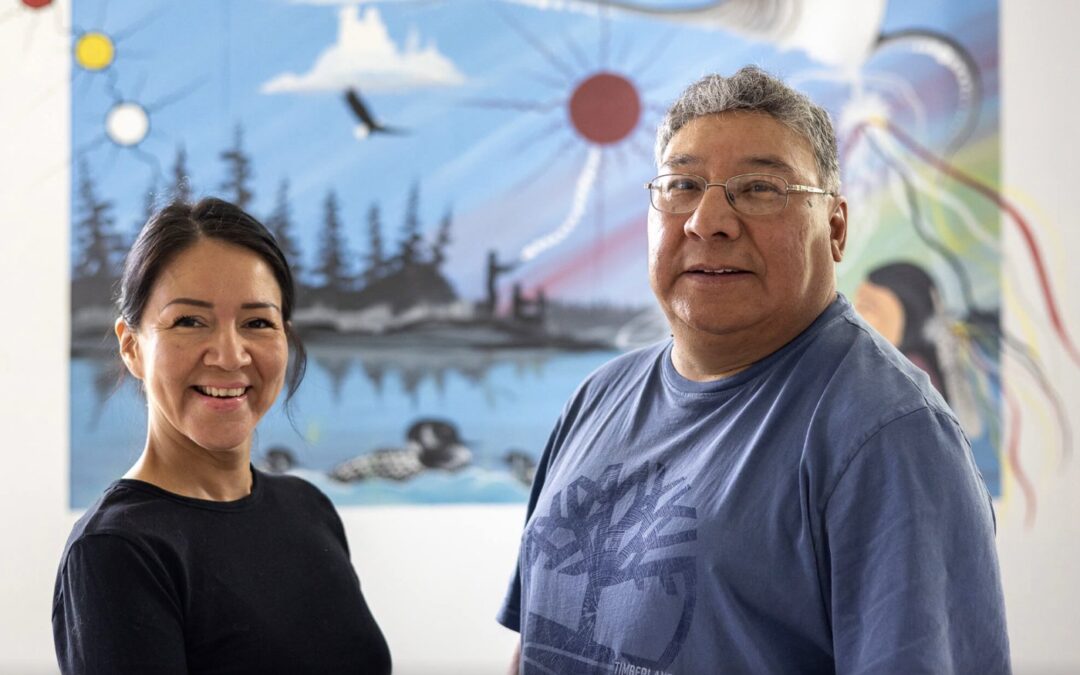
Photo: Selkirk Mental Health Centre is expanding culturally safe Indigenous mental health supports that combine clinical care with traditional healing, ceremony and cultural connection. Pictured, Indigenous Health Resource Workers Roxanne Dyck and Barry Beardy. Photo courtesy Shared Health.
By: Steven Sukkau
Local Journalism Initiative Reporter
Winnipeg Sun
The growing demand for Indigenous-specific mental health supports has prompted continued expansion of culturally based programming at Selkirk Mental Health Centre, where staff say healing is strengthened when traditional Indigenous practices are integrated with clinical care.
Ryan Thomas, manager of Indigenous Health Services for Mental Health and Addictions with Shared Health, said more Indigenous people accessing mental health services are presenting with increasingly complex needs, often while living with the lasting effects of intergenerational trauma, grief, substance use disorders, social isolation and housing insecurity.
“The need for Indigenous-specific mental health supports has grown significantly in recent years,” Thomas said.
He said there is also greater recognition that recovery is most effective when it addresses the whole person.
“For many Indigenous patients, healing includes not only evidence-based clinical treatment, but also culture, identity, family, community, spirituality and connection to the land,” Thomas said. “As more people seek care that honours both Indigenous ways of knowing and evidence-based mental health practice, the need for culturally safe, Indigenous-specific supports continues to grow.”
According to Shared Health, Indigenous people account for about 18 per cent of Manitoba’s population but represent a significantly higher proportion of patients admitted to the 252-bed Selkirk Mental Health Centre. Officials say the disparity reflects the ongoing impacts of colonization and anti-Indigenous racism on mental health and well-being.
The centre’s Indigenous Health Services department works alongside clinical teams to provide patients with access to Elders, Indigenous Health Resource Workers, traditional medicines, ceremonies and cultural programming.
The team currently consists of Elder Bruce Lavallee and Indigenous Health Resource Workers Roxanne Dyck and Barry Beardy.
Programming includes sweat lodges, smudging ceremonies, sharing circles and traditional arts such as beading, leatherwork, wood burning, dream catcher making and soapstone carving. Staff also help patients who are unfamiliar with traditional teachings learn cultural protocols and participate in ceremonies.
“A lot of patients benefit from making contact with their Indigenous culture while they’re here, so we do our best to fill them in on some of the things they’re curious about or haven’t experienced,” Lavallee said.
Beardy said creative activities help build relationships with patients while strengthening cultural identity.
“As an artist, it means a lot to me to be able to share my talent with others,” he said. “I’m able to connect with patients through my art.”
The program takes a distinctions-based approach, offering culturally relevant programming for First Nations, Métis and Inuit patients whenever possible.
Dyck said the Indigenous Health Services space also provides patients with opportunities to build social connections.
“I think they get a social aspect, because everyone is welcome here — not just from one specific area of the Centre, and not just Indigenous people,” she said. “Patients have said it’s so much calmer here, and they like the energy. It’s more relaxed for them, and I think they appreciate that as well.”
Thomas said creating welcoming and culturally safe environments is essential because many patients are accessing care during some of the most difficult periods of their lives.
“They deserve to feel safe, respected and valued from the moment they enter our services,” he said.
He said culturally safe care recognizes both the historical and present-day experiences that shape many Indigenous peoples’ relationships with the healthcare system while acknowledging the resilience and strengths that support healing.
“Creating welcoming environments means ensuring patients have opportunities to access Elders, Indigenous Health Resource Workers, traditional medicines, ceremony, cultural spaces and supports that reflect who they are,” Thomas said.
Shared Health recently appointed Thomas to lead Indigenous Health Services for Mental Health and Addictions and is expanding supports through a new Provincial Indigenous Health Liaison program.
The liaison role is intended to connect patients with Indigenous Health Services throughout their hospital stay, improve communication between clinical teams and Indigenous care providers, and strengthen discharge planning.
“There are a lot of opportunities to enhance communication between clinical staff and the Indigenous Health Services team, and to support patient discharge planning,” Thomas said. “Some of our patients don’t have much support after discharge, so hopefully this role can help ensure continuity of care.”
Thomas said Indigenous Health Services will continue evolving through stronger partnerships with Indigenous communities, expanded cultural supports, increased Indigenous leadership and education for healthcare providers.
“Our long-term vision is that every Indigenous person accessing Mental Health and Addictions services experiences care that is culturally safe, respectful, and supports recovery in a way that reflects their own values, identity and goals,” he said.
“Healing happens through relationships. When clinical care and Indigenous ways of knowing come together with respect, we create stronger opportunities for recovery. Every person deserves care that recognizes not only the challenges they face, but also their strengths, identity and capacity to heal.”