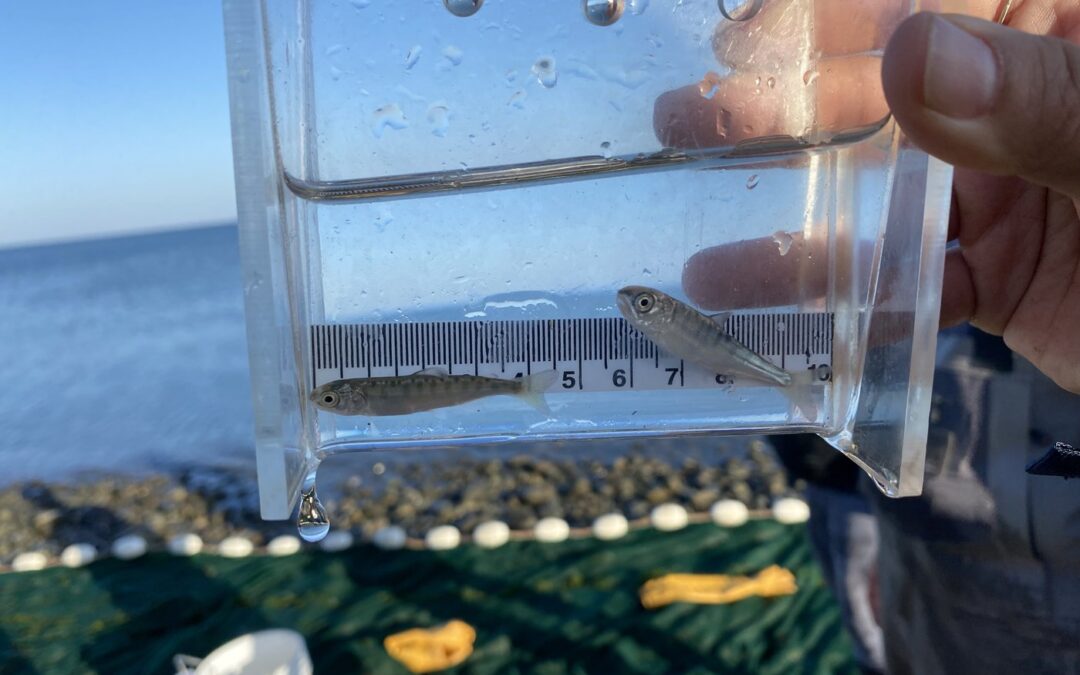
Photo: To monitor movement, researchers captured juvenile Chinook and chum north of the causeway and fitted them with tiny acoustic tags.
By: Radha Agarwal
Local Journalism Initiative Reporter
Delta Optimist
Scientists have completed the first year of a three-year study tracking juvenile salmon movements around the Delta Port Causeway ahead of construction of the proposed Roberts Bank Terminal 2 project.
The study, led by Tsawwassen First Nation (TFN) in partnership with Musqueam and Fisheries and Oceans Canada, aims to understand how juvenile salmon utilize the Roberts Bank estuary during critical stages of their development.
“We have lots of great habitat out there, some beautiful salt marsh and eelgrass beds, which the salmon use to hide in foraging,” said TFN biologist Kelly Scott. “Chinook and the chum salmon leave the rivers very quickly. So they have to get all their nutrients to get big and strong before they go out to the ocean from the estuary.”
Generally, more young salmon are found north of the causeway than south of it. The research will help determine whether the structure physically limits fish movement or whether other environmental factors explain the distribution.
Scott noted the estuary has already been heavily degraded by climate change, sea-level rise, infrastructure, and habitat destruction.
“So we want to make sure that the salmon have access to enough habitat where they can, one, be sheltered from predators, and two, be able to feed on invertebrates and other things before they go out to the ocean,” she said.
To monitor movement, researchers captured juvenile Chinook and chum north of the causeway and fitted them with acoustic tags the size of a grain of rice.
After 24 to 48 hours in observation tanks, the fish were released back into the estuary and tracked using hydrophones.
Preliminary data show the fish are staying very close to port infrastructure, possibly deterred by a barrier, such as higher salinity, farther out. However, hydrophones detected some movement toward the south side of the causeway too.
TFN has advocated for a breach in the main causeway to create a direct pathway for fish movement.
The Port Authority has not agreed to a full breach; instead, it has proposed a Marine Terminal Passage Bridge between the existing port and the future RBT2 infrastructure.
While preliminary tracking suggests that fish may already be moving through the planned passage area, researchers do not yet know whether the mitigation will be sufficient. Full findings will be established in two years.
An independent expert review panel previously concluded that habitat loss and changes to estuaries from the terminal’s expansion will negatively impact Chinook salmon and southern resident killer whales. Construction will place further stress on a Fraser estuary that has already lost more than 70 per cent of its floodplain habitat.
Anticipated to begin construction in 2028, RBT2 is a proposed three-berth marine container terminal in Delta. According to Infrastructure BC, it will add 320 acres of new industrial waterfront land. It will increase Canada’s West Coast container capacity by more than 30 per cent and enable the trade of more than $100 billion in goods annually.
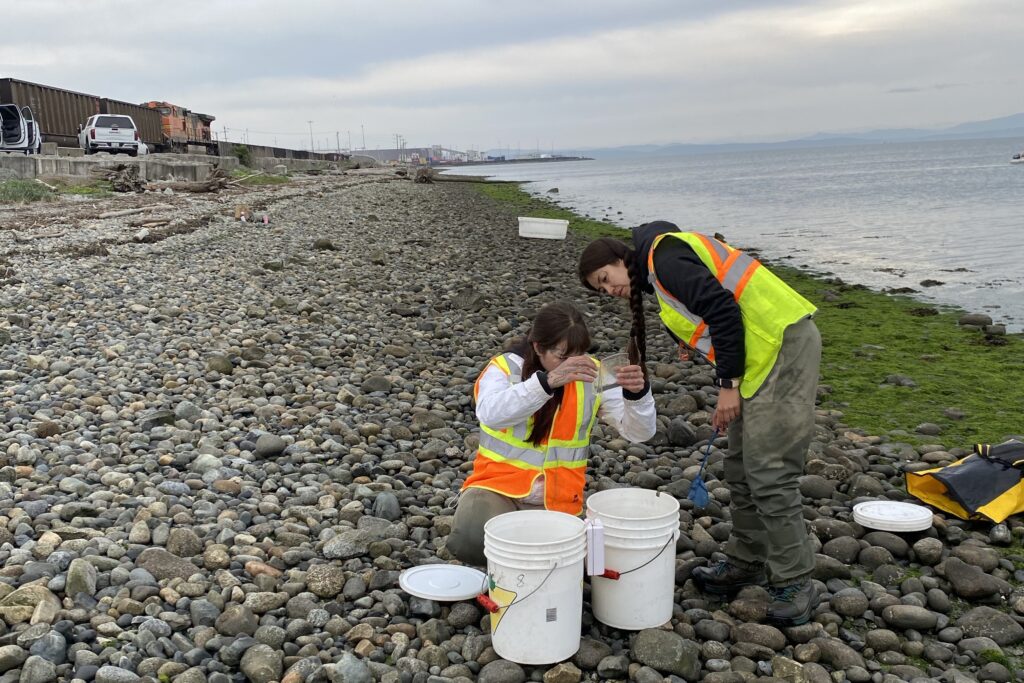
The study, led by Tsawwassen First Nation (TFN) in partnership with Musqueam and Fisheries and Oceans Canada, aims to understand how juvenile salmon utilize the Roberts Bank estuary during critical stages of their development.