

Photo: Helicopters are supporting initial attack crews on each incident.
By: Nicole Goldsworthy
Local Journalism Initiative Reporter
SaskToday.ca
Multiple lightning-caused wildfires have been confirmed across northern and western Saskatchewan following widespread thunderstorms over the past two days, prompting a rapid response from Saskatchewan Public Safety Agency (SPSA) crews.
In its 5 p.m. wildfire update on June 25, the SPSA reported several new wildfire starts in the Northern and Western Response Areas, with helicopters and initial attack crews deployed to contain many of the fires.
Five new wildfires were confirmed in the Northern Response Area.
The Wood, Hunter, Carey and Church fires remain not contained, ranging in size from 0.5 to one hectare. Helicopters are supporting initial attack crews on each incident.
The Wapa Fire, also not contained, is estimated at 0.7 hectares and is burning within a Representative Area Network, a protected landscape managed for ecological values.
In the Western Response Area, crews are responding to the Durocher Fire, a one-hectare lightning-caused wildfire, while the ERFN04 Fire, also one hectare, remains under assessment as investigators work to determine its cause.
The SPSA also provided updates on several previously reported fires.
The Arm Fire, caused by lightning, remains under assessment at 137 hectares. Detection flights found no open flames, although some smoke continues to be visible.
The Border Fire remains not contained at approximately 3,000 hectares, including 2,180 hectares on the Saskatchewan side of the provincial boundary. Firefighters continue protecting values in areas of concern, supported by air tankers and helicopters.
Several fires have now been contained, including the Tikan Fire at 81 hectares, Drope Fire at 23.7 hectares, Duck Fire at 465 hectares, Lobstick Fire at 18,923 hectares and Olsen Fire at 0.3 hectares. Crews remain on site extinguishing hotspots and conducting patrols.
The Cayford Fire, which burned 12,879 hectares, has now been declared out.
Across Saskatchewan, the SPSA reported 22 wildfires remain under assessment, along with one fire focused on protecting values.
Residents are encouraged to monitor the SPSA’s active wildfire map for the latest fire locations, sizes and response information.
Meanwhile, Environment and Climate Change Canada has issued a heat warning for parts of Saskatchewan beginning June 26.
Daytime highs of about 29 C and overnight lows near 14 C are expected to persist into the middle of next week, increasing the risk of heat-related illness.
Environment Canada urges residents to stay hydrated, limit outdoor activity during the hottest parts of the day, check on older adults and other vulnerable people, and never leave children or pets inside parked vehicles.
Anyone experiencing signs of heat stroke — including confusion, loss of consciousness or hot, red skin — should call 911 immediately.
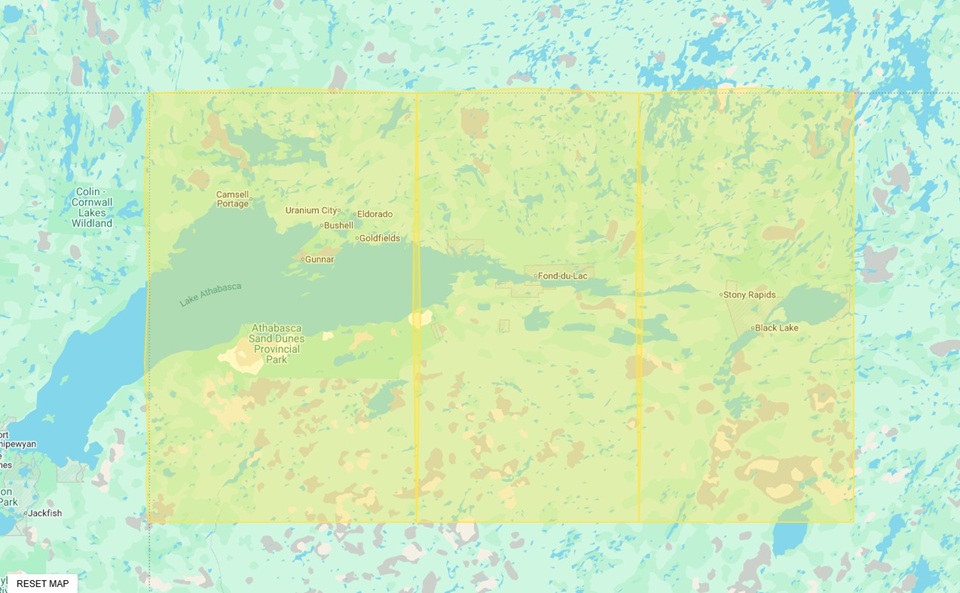
Heat warnings are issued when very high temperature or humidity conditions are expected to pose an elevated risk of heat illnesses.