
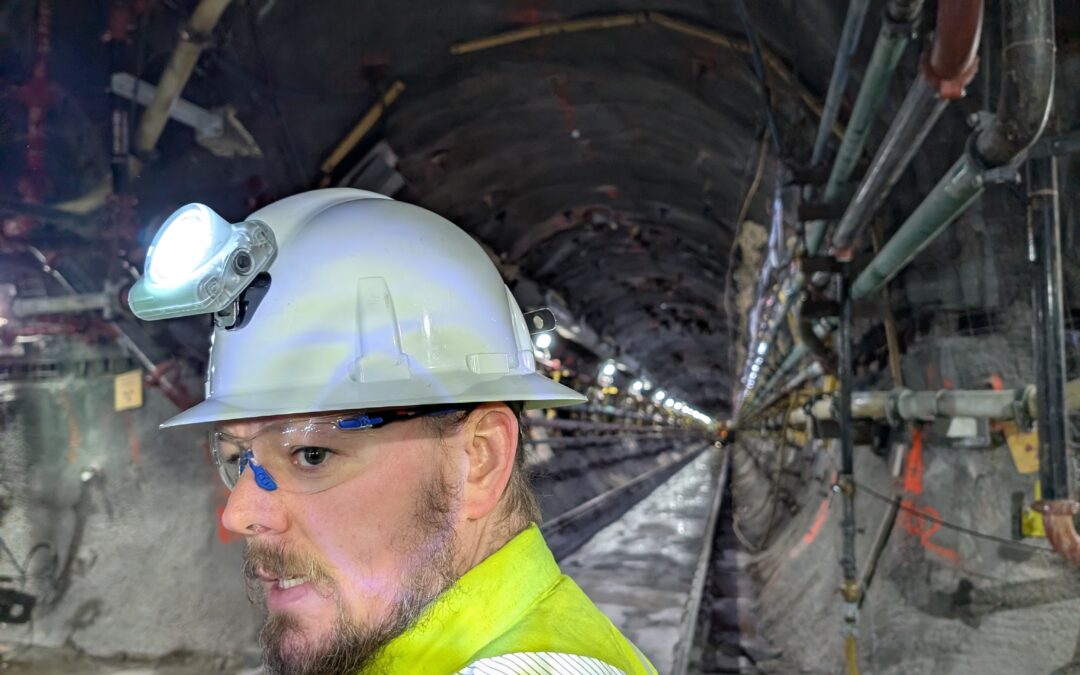
More than 700 kilometres north of Saskatoon, Cameco’s Cigar Lake Mine continues to stand apart as one of the most unique mining operations on the planet.
During a media tour on Monday, Cigar Lake General Manager Kirk Lamont described the operation as a “boutique mine” — a term he used to reflect the mine’s specialized nature and the high-grade uranium deposit it extracts. (Lamont is pictured above leading a media tour through the Cigar Lake mine. Photo by Joel Willick)
“I reference it to the idea of a boutique hotel — something that’s small, fancy and specialized,” Lamont told MBC News. “The ore body is what really makes it special. It’s the highest-grade uranium deposit on the planet, a very small mine with specialized equipment and specialized technical people… It’s like a one-of-a-kind place.”
The uranium deposit was discovered in 1983, but it took more than two decades of engineering, planning and technological development before mining could begin.
Production officially started in 2014.
Today, the underground operation sits approximately 480 metres below the surface and produces about 18 million pounds of uranium annually. According to Cameco, that amount of uranium is enough to power 34 one-thousand-megawatt nuclear reactors for a year and is 42 percent of all of Canada’s power grid for a year as well.
The mine uses custom-designed technology, including its Jet Boring System, to safely extract ore from an ore body Lamont says has no equal anywhere in the world.
“We are literally the only people in the world that do what we do here,” he said. “This is the only place in the world with an ore body like this.”
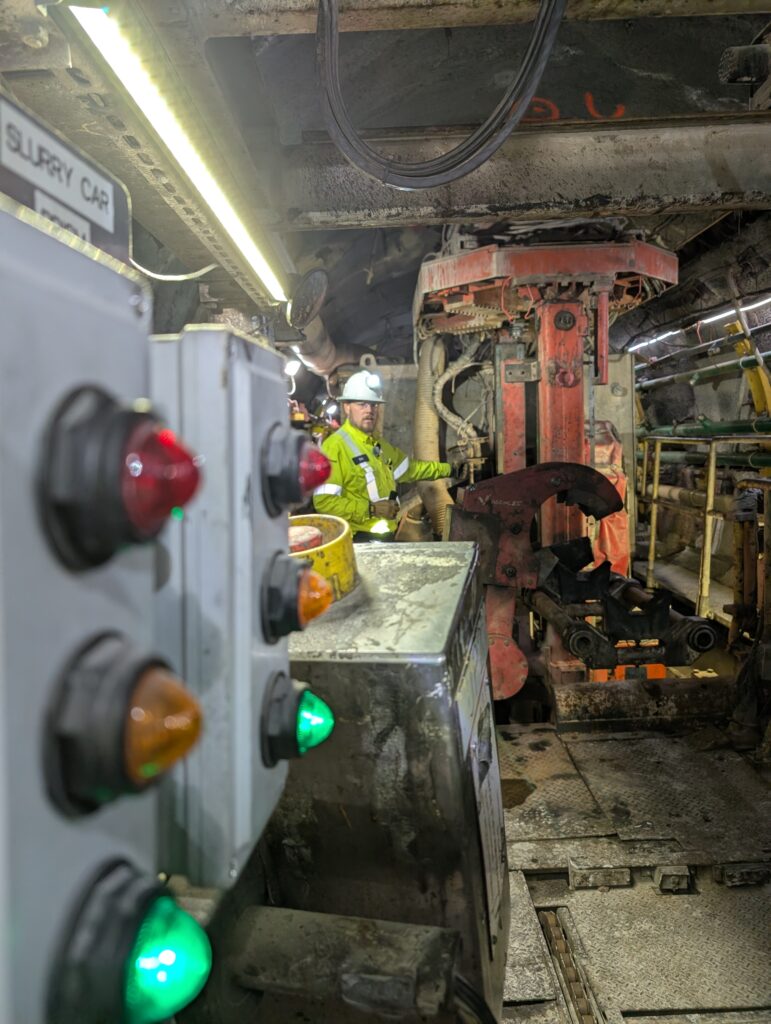
(Lamont walks media representavies through the Jet Boring System. Photo by Joel Willick)
Since startup, Cigar Lake has produced approximately 177 million pounds of uranium and still has another 172 million pounds remaining to be mined. Cameco is also planning a future expansion that could begin production around 2030.
The mine’s economic impact on northern Saskatchewan continues to grow. Nearly 46 per cent of the workforce identifies as Indigenous, while approximately 45 per cent of workers and contractors are northern residents.
Cameco also recently celebrated surpassing $5 billion in spending with northern contractors and businesses.
The uranium company does project that the Cigar Lake mine will have exhausted the ore deposits sometime around 2035 at which point it will enter decommissioning.
Looking ahead, Lamont says the uranium deposits in the north are abundant and uranium mining will still remain a cornerstone of Saskatchewan’s economy and the province’s role in supplying low-carbon energy around the world.
“We know the Cigar Lakes and MacArthur Rivers of Saskatchewan’s North are not one-offs,” he said. “There’s lots of uranium up here. The trick is finding it, mining it and getting it out of the ground. I think the future is bright.”