
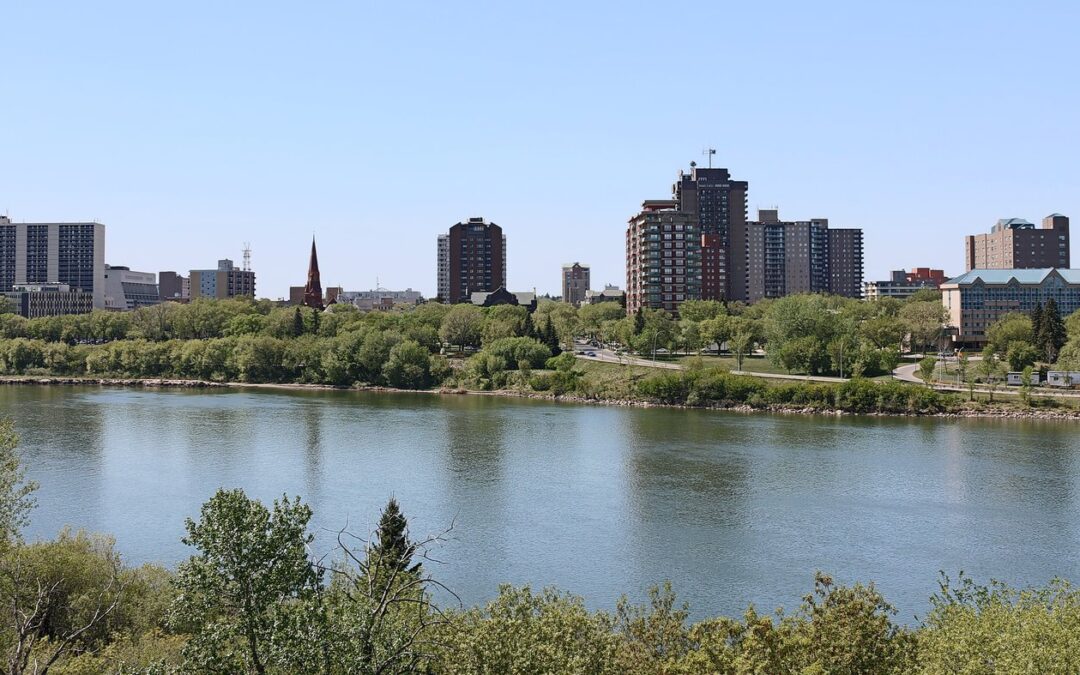
Photo: Saskatoon is lowering allowable industrial ammonia discharge limits into the South Saskatchewan River, with a new surcharge system for high-volume polluters taking effect in 2028. / Photo by Robert Linsdell / Flickr (CC BY 2.0)
By: Sonal Gupta
Local Journalism Initiative Reporter
Canada’s National Observer
Saskatoon will cut industrial ammonia discharge limits in half by 2028 and charge high polluters extra to meet stricter federal river standards. The move will shift cleanup costs from households to factories after rising levels strained the city’s wastewater plant.
City officials say ammonia levels flowing into the wastewater plant have increased by about 65 per cent in recent years. While ammonia is a normal byproduct of human waste, the scale and concentration coming from certain industries has made it more difficult and expensive to treat.
“The biggest chunk of ammonia that the wastewater treatment plant in Saskatoon sees is coming from a limited number of industrial wastewater users,” Russ Munro, director of water and wastewater treatment at the city, told Canada’s National Observer.
The process of removing ammonia relies on bacteria that convert it to nitrogen gas, and those microbes need large amounts of oxygen to function, which means high electricity usage to power the plant’s aeration systems. That energy demand is one of the biggest cost drivers for the utility, and it rises as ammonia concentrations increase, Munro said.
At a recent public meeting, Mike Sadowski, manager of Saskatoon’s wastewater treatment plant, said it cost the city $726,000 in 2024 to remove total Kjeldahl nitrogen — an industry measure of nitrogen in wastewater that includes ammonia and other compounds that can turn into ammonia.
Nitrogen, like ammonia, can act as a fertilizer in waterways. Too much of it causes algal blooms — thick layers of algae that block sunlight and deplete oxygen when they decay, and can harm or kill fish and degrade river ecosystems.
This cost is currently shared by all ratepayers, Sadowski said.
Even though the treatment plant meets its permit limits year‑round, the city has set stricter environmental targets to protect aquatic life. Ammonia levels can still occasionally exceed those targets in winter when cold temperatures slow the bacteria that remove it.
The city now plans to lower the allowable ammonia concentration in industrial discharge from 100 milligrams per litre to 50 milligrams per litre and introduce a surcharge for companies that exceed that threshold.
The change, expected in 2028, is designed to push industries to either invest in their own on-site treatment infrastructure or pay a surcharge to cover the city’s costs for handling the additional ammonia.
“Our residential customers are effectively subsidizing our industrial customers with respect to the ammonia side of things,” Munro said.
The push for tighter limits comes as federal wastewater standards are becoming more stringent and frequently enforced by provincial regulators, Munro said.
During the public meeting, it was noted that the city was at risk of facing potential fines or penalties from the Saskatchewan Water Security Agency.
Munro said the city’s plan is modelled after surcharge systems already used by other Canadian cities to recover the cost of treating high-strength industrial waste. City staff reviewed policies in Vancouver, Calgary, Edmonton, Toronto and Ottawa before settling on an approach. Ammonia limits in those cities range from 20 to 100 milligrams per litre, with 50 milligrams being the most common standard.
The city has set a 2028 deadline to give companies time to comply. Officials have been in regular contact with affected industries and have seen little push back so far, Munro said.
He added the changes are unlikely to produce noticeable differences in water bills in the near term. The exact impact on rates won’t be known until the city evaluates industrial compliance and potential energy savings in 2028.
River health
John P. Giesy, an ecotoxicologist and retired University of Saskatchewan professor who has consulted on Saskatoon’s wastewater systems, said the region is already facing drought as population and industry put pressure on limited water supplies. Recycling water and reducing nitrogen at the source are the most effective solutions, he said. “The city is growing fast in Saskatoon,” Giesy said. “Where will we get water in the future? I have no idea.”
In the Prairies, excess nitrogen can fuel eutrophication — a process where nutrients trigger algal blooms that release toxins linked to liver cancer and create low-oxygen “dead zones” that kill fish. “There are certain fish that are very tolerant, and the only way to kill them is with a hammer or with ammonia,” he said.
Helen Baulch, professor in the School of Environment and Sustainability at the University of Saskatchewan and a member of the Global Institute for Water Security, said the key questions are how strict the new effluent limits will be, how much treated wastewater will still enter the river and how much water moves through the system.
“Without knowing the final effluent limit and how flows will change, it is difficult to say exactly how much cleaner the river will become,” she added.
Even if industries cut back on their discharges, the South Saskatchewan River is affected by many factors beyond the city’s wastewater plant, including upstream dams, agriculture, thermal effluent from other facilities and the growing impact of climate change on flows and water temperature, she said. The river will still face pressure from water scarcity, changing flushing patterns and year‑to‑year flow variability.
Munro said despite higher ammonia levels, the river is not currently at risk. Monitoring has shown no signs of eutrophication. Both current and upcoming discharge limits are designed to be highly protective, making sure the water has no negative impact on the river once it leaves the treatment system, he said.
The precise long-term reduction in ammonia levels and the ultimate impact on industrial wastewater flows remain unclear, as they depend on whether factories choose to invest in on-site treatment or rely on the city’s expanded surcharge program.
Munro said Saskatoon is looking at ways to ease pressure on its drinking water supply by expanding the use of treated wastewater, known as “purple water,” for industrial use. While not safe for consumption, the lower-grade water could be used for irrigation and industrial processes, helping conserve potable supplies.
The river valley is one of Saskatoon’s greatest gifts, a place where many people paddle, fish and relax on summer days, Baulch said. She noted the river is healthier than many other aquatic ecosystems in the province, even when it’s not perfect.
“It’s a really key ecosystem here, it’s moved so much water across the region and touches so many people’s lives. It’s key to industry, it’s key to drinking water, all those things,” she said.
Sonal Gupta / Local Journalism Initiative / Canada’s National Observer.