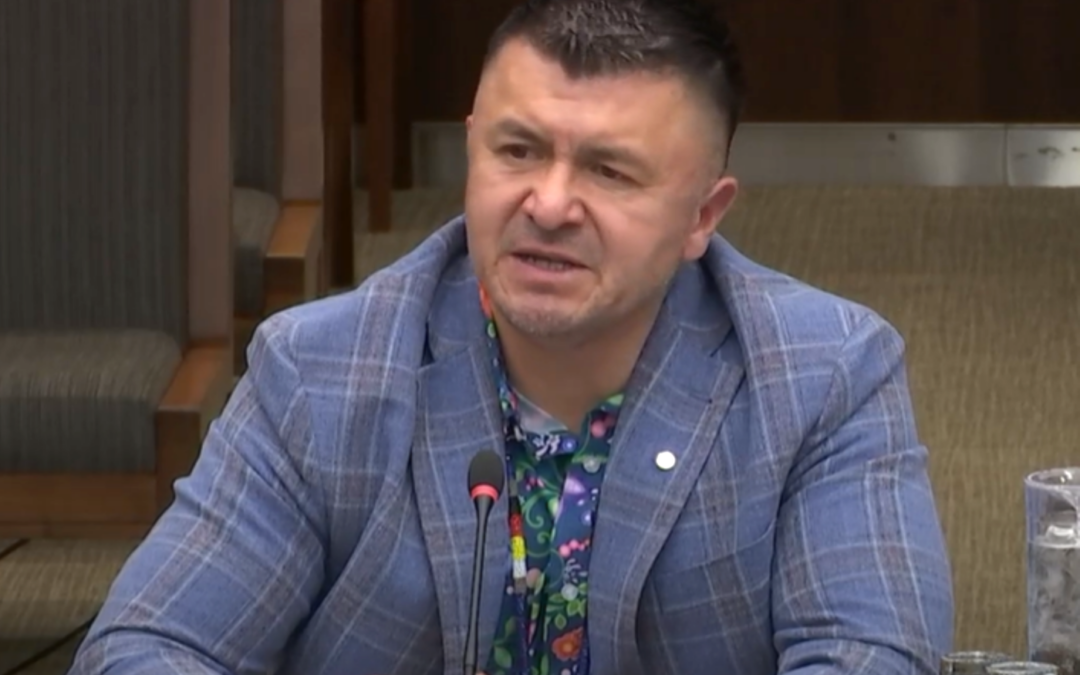
Photo: Eskasoni First Nation Chief Leroy Denny, co-chair of the Assembly of Nova Scotia Mi’kmaw Chiefs, says all Canadians have the right to protest and told the provincial government they cannot control how people choose to exercise their rights. Cape Breton Post file photo
By Rosemary Godin
Local Journalism Initiative Reporter
Cape Breton Post
The Assembly of Nova Scotia Mi’kmaq Chiefs is calling for a moratorium on raids on cannabis dispensaries located in First Nation communities and is asking for open dialogue with the provincial government.
The move comes after events on April 2 that saw traffic impeded by protesters in some communities in Cape Breton and off-island after an early-morning raid in Potlotek First Nation. Before the RCMP could leave Potlotek, residents had blocked in several police vehicles. As a result, the RCMP retrieved their guns from the vehicles and walked out of the community to waiting cars that drove some of the officers away.
They chose to leave their vehicles sitting overnight and damage was done to them.
Potlotek Chief Wilbert Marshall says the raid has had a traumatizing effect on youth and elders in the community.
Charges related to the raid were laid against two men – one the owner of the shop and the other a young staff member. An investigation is ongoing into the vandalism done to the vehicles.
TENSIONS RISING
Tensions between First Nations and the provincial government have been high since last fall when Premier Tim Houston and Attorney General Scott Armstrong issued an order to law enforcement agencies and personnel to enforce the Cannabis Law more vigorously. The government even added to and strengthened the laws.
The sale and use of cannabis became federally legal in 2018. At that time, each province was allowed to make their own regulations. In Nova Scotia, the government chose to be the licensing agency for the sale of cannabis through its Nova Scotia Liquor Corporation (NSLC). All retail stores and distributors must be licensed by the NSLC to be considered legal by the provincial government. The government collects taxes on sales.
Only a couple of stores throughout the province that are not NSLC outlets have been given a license.
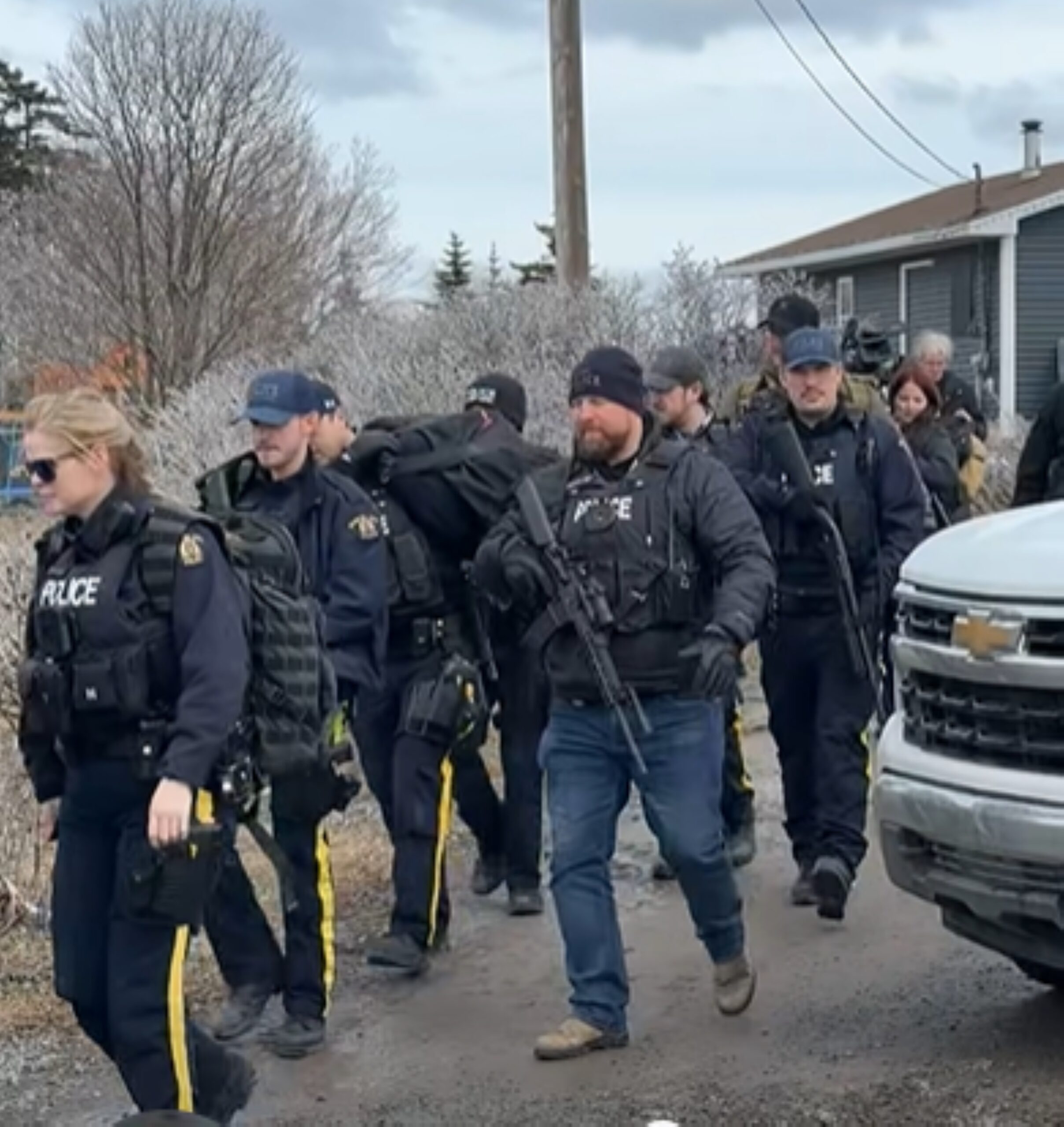
RCMP are seen walking out of Potlotek First Nation on April 2 after their vehicles were blocked in by band members protesting a raid on a cannabis dispensary and arrests of two people. The band chief Wilbert Marshall says his people are traumatized by the events of that day. The Assembly of Nova Scotia Mi’kmaw Chiefs is asking for a moratorium on cannabis raids. Photo by Screenshot /Cape Breton Post
Last week, Houston said the provincial government has offered First Nations the opportunity to run regulated on-reserve dispensaries whose profits would stay in the communities.
“To be clear, government supports regulated dispensaries in First Nations communities where profits go into programs and supports that benefit the whole community, not just a handful of individuals operating outside the law,” Houston said in a statement.
However, on-reserve dispensaries can prove they already support their communities in direct ways. Many sponsor sports teams and donate generously to local events and fund raisers.
One Potlotek elder, Margaret Johnson, said last week that government demands to fill out forms to receive funding is far too clumsy and time-consuming. The Mi’kmaq want to work within traditional and straightforward ways of supporting others.
The Mi’kmaq claim treaties have given them the right to make decisions about how their land is used.
‘THE LAW IS CLEAR’
Houston has said: “The law is clear. There is no recognized treaty right to sell cannabis.”
The Mi’kmaq Nation in Nova Scotia says it has been asking for some time to talk with the government about their treaty rights and ways the two parties can work together to come up with respectful ways that the sale and use of cannabis is done safely. Many of the First Nation communities are in various stages of writing their own regulations with safety in mind.
The government fears that product coming into First Nation communities is not as rigorously checked and controlled as the cannabis sold out of an NSLC outlet.
People come in from outside the communities to purchase cannabis at First Nation shops and it adds to the economics of the local population.
In a press release Thursday, the Assembly of Chiefs rejected Houston’s response to the events in Potlotek and elsewhere that he said was an unlawful obstruction of the roadways.
“All Canadians have the constitutional right to protest, which is protected under the Canadian Charter of Rights and Freedoms,” said Eskasoni Chief Leroy Denny, co-chair of the assembly. “While Premier Houston may not agree with the mechanism communities chose, he cannot control how individuals choose to exercise their rights.”
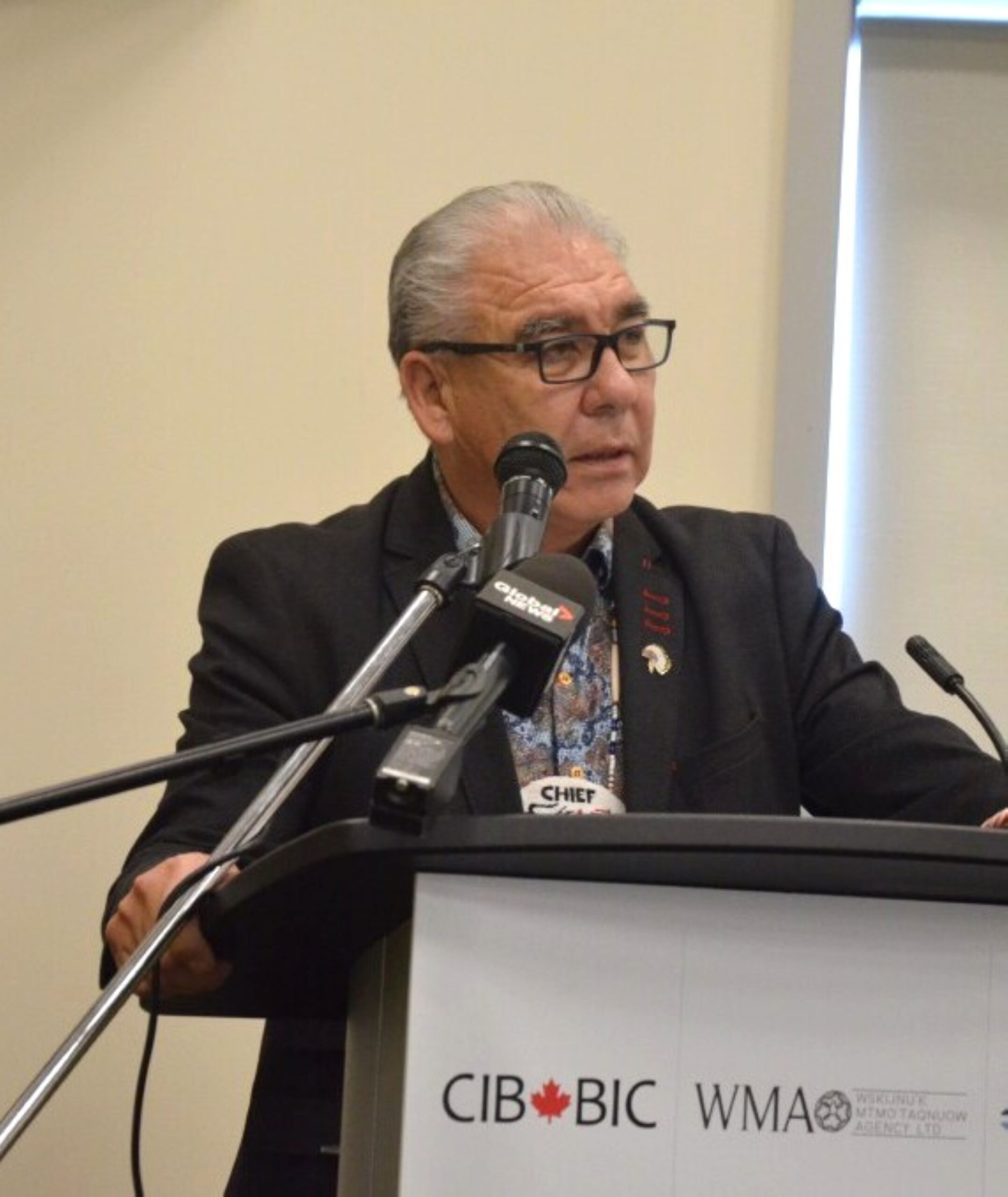
The Mi’kmaq Nation in Nova Scotia has been asking to speak with the provincial government about the sale of cannabis on their lands for a long time, but to no avail, says Chief Sidney Peters, co-chair of the Assembly of Nova Scotia Mikmaw Chiefs. Contributed
‘LONG OFFERED SOLUTIONS’
The assembly said that since 2017, it has asked to work with both the federal and provincial governments on how legislation of cannabis would be enacted in Mi’kmaq communities. But it said the governments have “neglected” to include the Mi’kmaq in their discussions.
The chiefs say that in contrast to what both Houston and Armstrong claimed last week, no one has reached out to the assembly to meet and have not responded to any requests that were submitted.
“We have long offered solutions to the provincial government on how Mi’kmaq could exercise our right to self-govern and still be transparent with them on how we intended to manage the sale of cannabis in our communities, but Nova Scotia has not been open to having any conversations with Mi’kmaw leadership,” said Glooscap Chief Sidney Peters, co-chair of the assembly.
In its press release, the assembly said it remains firm that the Mi’kmaq will continue to assert their right to self-govern, which includes jurisdiction over economic development, community safety and the regulation of what happens on their lands.
“We demand a moratorium be put on any other raids in our communities until we have had an opportunity to have real nation-to-nation conversations with Nova Scotia on the issues at hand. We will continue to leave the door open for dialogue with Premier Houston. He just needs to act on our repeated offers to meet,” Peters said.
Rosemary Godin is the Local Journalism Initiative Reporter for the Cape Breton Post, a position funded by the federal government.