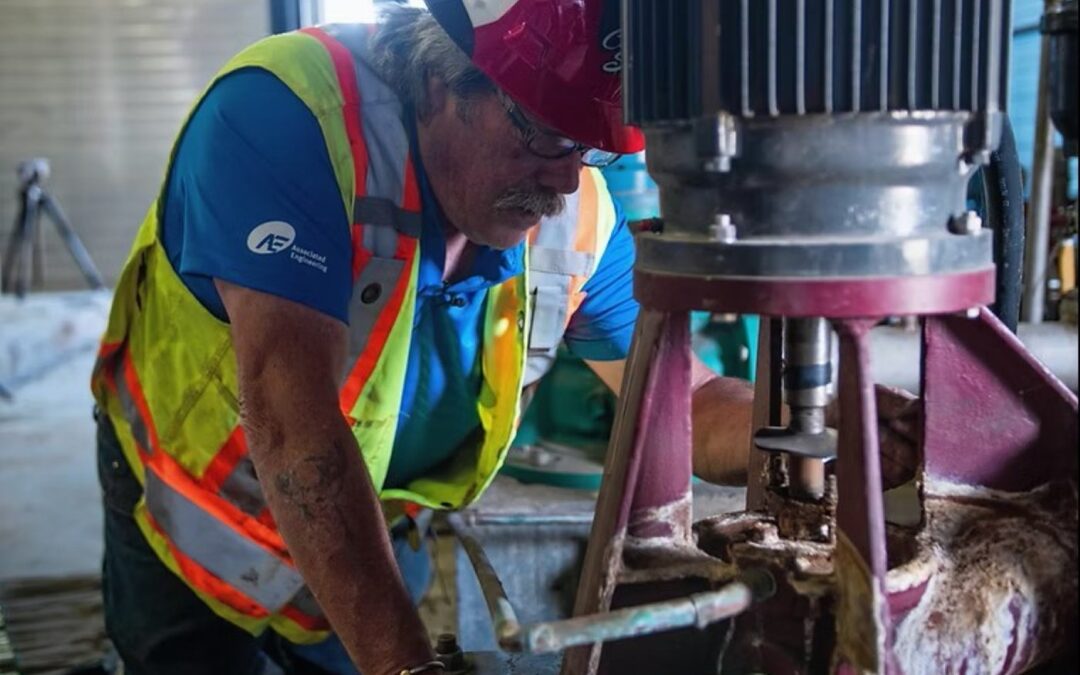
Photo: Water operators in Indigenous communities face burnout-level challenges, often for far less pay than their municipal counterparts receive. Water Movement
By George Lee
Local Journalism Initiative Reporter
The Macleod Gazette
A lack of good water infrastructure persists as a health and welfare threat for Indigenous communities across Canada, as two days underscoring the issue surfaced last week in the Alberta legislature.
National Indigenous Water Operator Day was March 21 in Canada, followed by World Water Day on March 22. Both earned a mention from Scott Cyr, the UCP member representing Bonnyville-Cold Lake-St. Paul.
“As we often say, water is life, and those who protect it deserve our highest respect and support,” Cyr said in a member statement last Wednesday.
“While much of their work goes unseen … water operators provide an essential service and the foundation of health and safety in Indigenous communities every single day, and this government will always support them.”
The Assembly of First Nations asserted in a 2024 report that most of its member nations “face an appallingly insufficient water supply.”
The $350-Billion Gap
Called Closing the Infrastructure Gap by 2030, the AFN report labelled the water situation “a major impediment to economic development” on First Nations land.
It calculated that nearly $60 billion is needed to address a gap in community infrastructure among its 630-plus member nations.
The all-in infrastructure gap is close to $35 billion. About $38 billion of that is in Alberta.
“Without proper access to water, these communities cannot build the most basic multi-residential or commercial developments, since they lack the appropriate infrastructure to provide facility fire sprinkler systems, electricity or proper sanitary waste management,” said the report.
In its 2026 budget, the province has more than doubled the First Nations Water Tie-in Program, which connects First Nations to existing regional water commissions to improve drinking water access.
The budget tabled Feb. 26 will, if approved, allocate over $15 million to the program for 2026-27, up from $7.5 million in the 2025-26 budget.
Funding under Water for Life, a long-standing provincial strategy and capital cost-sharing program, is estimated at $97.6 million for the coming fiscal year, up from $51.3 million in 2025-2026.
Where there aren’t federal-provincial jurisdictional issues, Indigenous communities can benefit from Water for Life grants.
Unseen Struggles, Stalled Legislation
No registry exists to estimate the number of water operators in Indigenous communities across Canada or Alberta. But there is a national, operator-led organization dedicated to them and the challenges they face.
Called Water Movement, it aims to end all water advisories in Canada’s Indigenous communities and improve the lot of operators, too.
A recent Water Movement survey of more than 200 Indigenous water operators in Canada identified low salaries as a persistent problem. Operators in Indigenous communities sometimes work for pay that’s at least 40 per cent lower than that of their municipal counterparts.
Also noted in the survey were overwork and burnout, a lack of access to effective training, and the over-engineering of water systems that renders them too complex for local needs and too expensive to maintain.
Indigenous Services Canada data updated this month pegs the number of active, long-term drinking water advisories at 40 on public systems serving reserves, affecting 38 communities.
Although none of those advisories are in effect in Alberta, that doesn’t reflect the situation for people without access to centralized federal systems.
Many residents of Métis settlements, for example, rely on water of inconsistent quality they get from wells. Sometimes water is trucked in from plants and then stored in cisterns, where it can become contaminated.
A 2021 University of Calgary case study of non-reserve Indigenous communities near Grande Cache found that nearly all interviewed residents served by wells still purchased bottled water for drinking and cooking.
Reasons were water hardness, unsafe iron levels and a lack of local testing capacity or governance.
Meanwhile, Canada’s First Nations Clean Water Act died on the order paper in early 2025 after Parliament was prorogued.
Bill C-61, much debated and criticized in many quarters, proposed minimum standards for the quality and quantity of water available on First Nations, and linked them to a funding framework.
It also would have asserted First Nations’ jurisdiction over their water and created protection zones for water near or flowing onto their land.