
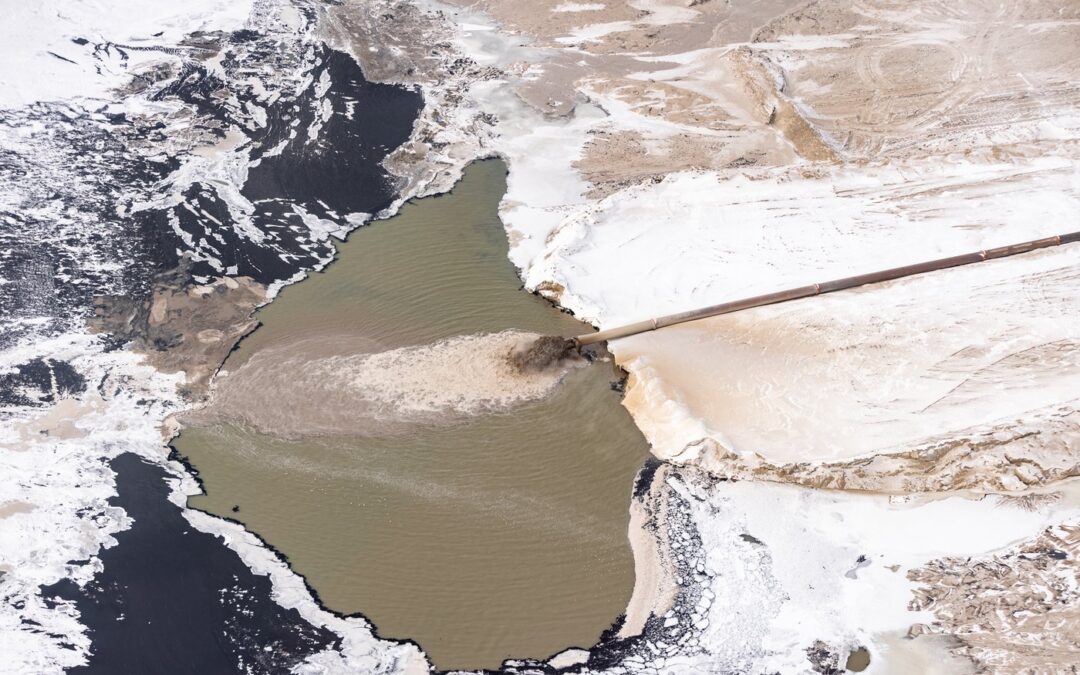
Photo: A tailings pond is pictured at Imperial Oil’s Kearl Lake oilsands operation north of Fort McMurray on Feb 25, 2023. / Photo courtesy: Nicholas Vardy / Athabasca Chipewyan First Nation.
By Sonal Gupta
Local Journalism Initiative Reporter
Canada’s National Observer
Alberta’s energy regulator is pushing for the dismissal of parts of a First Nation’s lawsuit over toxic tailings spills at Imperial Oil’s Kearl oilsands mine in the province’s north.
According to court filings obtained by Canada’s National Observer, the Alberta Energy Regulator (AER) calls Athabasca Chipewyan First Nation’s claims “overly vague and general,” contending that it wrongly targets the regulator instead of the site’s operator, Imperial Oil, while also challenging the province’s oilsands oversight system.
The First Nation and its advocates are countering the claim by denouncing the regulator’s efforts as a “delay tactic.”
“They’re trying to see if we will go away, but we’re not gonna go away, and neither is this case,” said Athabasca Chipewyan First Nation Chief Allan Adam.
The legal battle traces back to May 2022, when Imperial Oil first found discoloured water near the Kearl site but left the downstream communities in the dark. The leak wasn’t brought to light until a second, massive release of 5.3 million litres of contaminated water in 2023.
Adam said he first learned about the leak on a late-night phone call with a former chief, who asked whether he knew anything about a tailings pond leaking. Adam said no one from the company or regulator had told him before that call, which was alarming because the community depends on the land and water around Fort Chipewyan for drinking, hunting and harvesting.
In 2024, the First Nation sued both the regulator and the provincial government, charging them with negligence, nuisance, failure to consult, breach of the Crown’s honour, breach of fiduciary duty and violation of treaty rights.
The First Nation is seeking half a billion dollars in damages and alleges the toxic runoff seeped into wetlands that drain toward Fort Chipewyan.
Adam said the Calgary-headquartered regulator is trying to drag out the case and strain the community’s resources, but said the Nation will keep fighting.
Canada’s National Observer reached out to AER for comments but received no response before the publication deadline.
Residents remain fearful following the spills. Adam said he’s inundated with calls from community members who are suffering anxiety attacks as families worry about contamination and have given up harvesting due to cancer fears. Around 60 of the community’s 1,200 members are currently diagnosed with cancer, with new cases and deaths both on the rise.
“When does it stop?” Adam asked.
The First Nation’s main community of Fort Chipewyan lies 141 km farther downstream from the spill. That distance, the regulator says in its filings, means the nation has no direct property claim near the leaks to sue over “nuisance,” a legal term that typically requires control of the problem land.
It calls the nation’s negligence and nuisance claims “frivolous and improper,” noting a law called the Responsible Energy Development Act shields the AER from lawsuits unless it acted in bad faith. The filing says the nation offers no specific proof of bad faith, just vague accusations despite repeated requests for details.
The regulator also labels the suit an “abuse of process” and said the nation is trying to sidestep past decisions, like a 2007 federal-provincial panel that approved Kearl after public hearings where the nation raised no formal objection, plus other later permits it never challenged at the time.
Emily Cabrera, executive director of Raven Trust, a nonprofit that supports First Nations in legal cases, says the AER’s claims show a pattern of unwillingness to partner, collaborate or engage in meaningful discussions.
“This really was to delay and complicate the litigation overall,” she said.
Cabrera said the AER is asking the First Nation to offer more details before the regulator files its own defence, even though such information normally comes out in the court process.
She added that the April 1 hearing did not lead to an immediate decision and that further hearings are expected this fall, including the possibility that the regulator could later file a “motion to strike” asking the court to throw the whole case out before a full trial.
“If that’s the broad and vague position they want to take, we will show the magnitude of the destruction that they are causing to our community,” Adam said.