
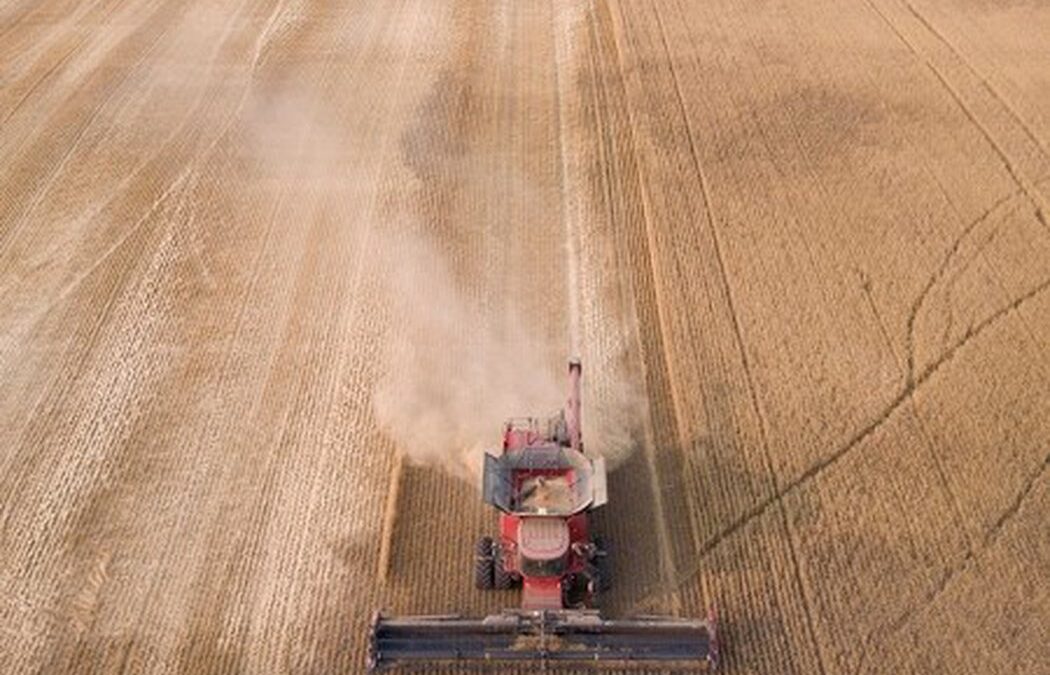
Photo: A farmer combines wheat in a field southwest of Olds. / David Boles, Local Journalism Initiative Reporter
By David Boles
Local Journalism Initiative Reporter
St. Albert Gazette
Alberta farmers say a federal move to suspend the fuel excise tax will offer only limited relief, as rising costs continue to squeeze operations ahead of the growing season.
The Liberal government announced on Tuesday, April 14, that it would cut the federal fuel excise tax, but Alberta farmers say it isn’t enough.
“It’s not a lot,” said Joseph Jenkins, who works on his family’s grain and hay farm that covers 8,000 acres in Athabasca County.
John Guelly, who farms in the Westlock area, echoed that sentiment.
“The fuel break is a help; I don’t want to disregard that. But when it comes down to it, it’s only one aspect of many impacting the farm,” said Jenkins.
Fresh off three byelections that handed his Liberal government a majority in Parliament, Prime Minister Mark Carney announced Tuesday morning that the federal fuel excise tax will be suspended starting April 20. A statement from the Prime Minister’s Office says the suspension will remain in effect until Sept. 7.
The cut will remove 10 cents a litre from regular gasoline prices and four cents a litre from diesel fuel, with the tax being completely suspended for aviation fuel.
Gas and diesel prices have rocketed in recent weeks, with gas hovering around $1.70 a litre and diesel topping $2 a litre in Alberta.
Mount Royal University political science professor Lori Williams says the cut will put pressure on the UCP government in Alberta to follow suit.
“They may be in a position where they can afford to do that if oil prices continue where they are,” said Williams.
One party already calling on the province to act is the Alberta NDP, which is urging a temporary suspension of the province’s 13-cent-a-litre fuel levy.
Speaking with reporters on Tuesday, Finance Minister Nate Horner said if oil prices stayed elevated to the degree they are now, Alberta’s fuel tax could be lifted in time.
However, Jenkins says the most important thing is that politicians understand that government policy directly affects producers.
“Policy matters. It creates inefficiencies. It costs Canadians.”
For Guelly, the problem is that the tax break doesn’t last long enough.
“Most farms like mine probably use more than half of their diesel fuel before harvest and this is being cut off before harvest.”