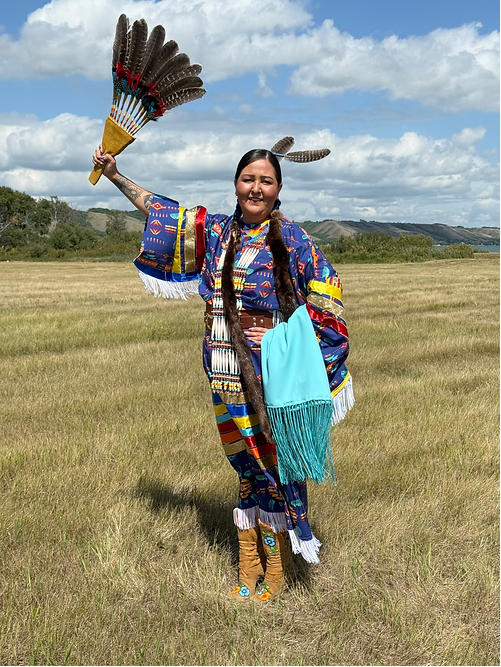
Photo: Lisa Locke – Photo supplied
By: Danielle Dufour
Saskatchewan celebrates Social Work Week, March 16-21, to recognize the contributions of social workers in helping individuals, families and communities.
“It’s also an opportunity for the public to learn about what social workers do,” said Amanda Knievel President of the Saskatchewan Association of Social Workers (SASW).
There are currently over 3100 registered social workers in Saskatchewan, and approximately 500 of them self-identify as Indigenous.
“When people are doing well, communities thrive,” said Knievel. “Social workers are really helpful … to improve services, address gaps in services, provide information on social issues.”
A large part of their role is collaborating with communities to develop new programs and services to improve conditions, create opportunities for growth, recovery and personal development.
Social workers are employed in a wide range of programs and expanded field of practice.
“We have social workers in libraries now,” said Knievel. “We have social workers as part of an emergency response team with the police.”
Social workers work in various roles in Indigenous communities.
Lisa Locke is an Indigenous Social Worker and urban member of the George Gordon First Nation. She owns Sacred Journey Therapies in Saskatoon and works in Muskeg Lake Cree Nation.
“I am a mental health therapist, and I practise in Indigenous community,” said Locke. “I work with addictions and recovery mental health challenges issues, trauma, depression, anxiety.”
Locke said she mostly works with adults and teens.
She has seen her role change during her career.
“Early in my career, I felt like I was taught to focus mainly on clinical skills, and I found myself working within systems that were often created without Indigenous worldviews and that didn’t really align with me,” said Locke.
Locke see’s her role as someone who helps bridge worlds by supporting healing while also challenging these systems that continue to impact Indigenous families and communities.
“I’ve come to understand that the professional social work itself needs a reframing,” said Locke. “It’s been historically connected to experiences of harm, surveillance, family disruption … we often have to carry that responsibility of rebuilding trusts with our people, restoring those relationships.”
The soul of the Seven Grandfather teachings is deeply connected to Locke’s practise as a social worker.
“I practise the teachings of love, respect, bravery, honestly, humility, wisdom and truth,” said Locke. “They, to me, provide that relational foundation for the work that I do.”
https://www.sacredjourneytherapies.net/
The role of a social worker has evolved over the years. Virtual counseling and communication started after COVID.
“In the past, the focus was more on the medical model, where there’s something wrong with the individual,” said Knievel. “Now, social work focuses on the individual’s environment and their strengths.”
Brad Fraser is a social worker and the Executive Director of Rocket Ship Health Co-operative.
“The Co-operative is a brand new idea of looking at mental health,” said Fraser.
Fraser noted that when you’re seeking mental health services you often go through the public system or private therapists. The Co-operative is looking to ‘flip the traditional model’.
“A bunch of us got together to look at things more from a social work standpoint,” said Fraser. “The Co-operative is a nonprofit and looks at giving membership to both practitioners, so that might be a social worker or another mental health professional.”
After COVID, Fraser made a career change to become a social worker.
“We get to work in a bunch of different professions, but importantly, we’re a professional ethics based career,” said Fraser. “We also look at the community in a way that is actually trying to help that community do better.”
Fraser notes that a lot of mental health is focused on the individual.
“Social workers have this opportunity to look beyond that, to see what type of cultural influences might be, are there any socio-economic factors,” said Fraser. “We look beyond just one individual and start to say what can we do to remove barriers.”