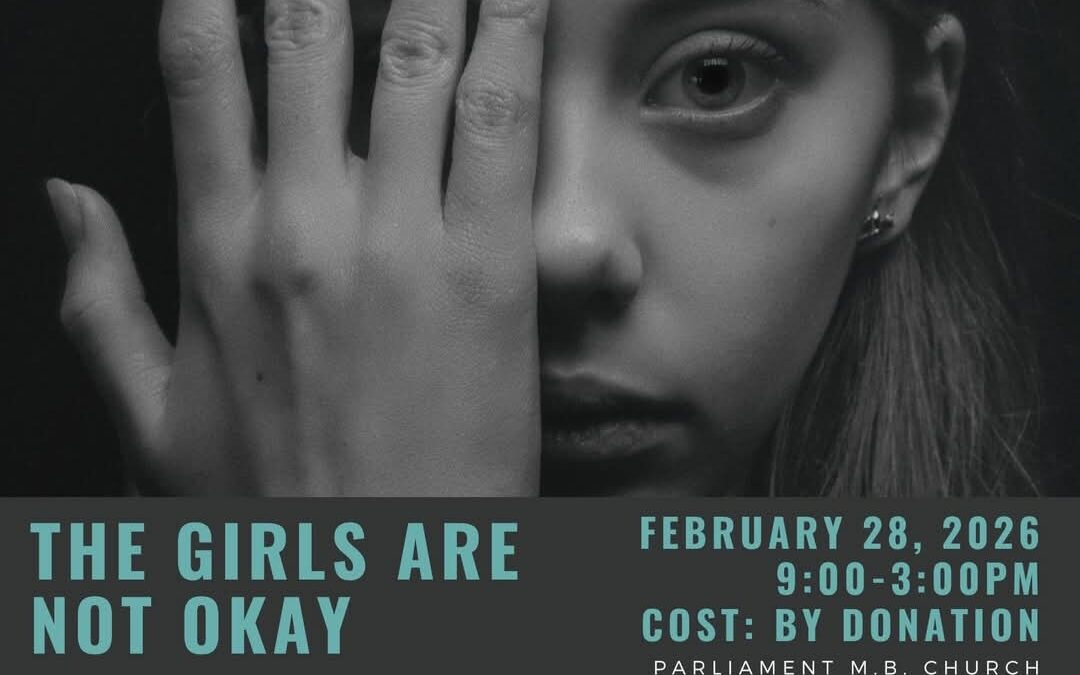
Photo: Poster for Regina event –The Girls are Not Okay
By Danielle Dufour
Young girls exposed to social media are experiencing more anxiety and depression than ever before. Having an online presence puts them at greater risk for sexual exploitation and trauma.
Jennifer Kramer, a teacher at the Regina Christian School, was one of the presenters at The Girls Are Not Ok conference held in Regina this past weekend.
“We’ve just noticed as teachers in the last number of years that our girls are struggling so much with anxiety and depression,” said Kramer. “The idea behind these presentations is just to resource parents and grandparents and educators and other people who care for girls on how best to support their girls in the struggle.”
Although this event was focussed on girls, many of the issues the girls are experiencing, boys are experiencing as well.
“I think the biggest key (challenges) are kids are experiencing is the rise in the use of social media,” said Kramer. “We don’t really understand the impact that is having on the developmental aspect of and how it is forming our kids.”
Social media refers to digital platforms that allow users to create and share content (text-based posts, photos, and videos) and online profiles to interact with other users.
In 2025, approximately 31.7 million social media users’ identities were reported in Canada, equating to 79.4 per cent of the total population.
“We often think social media is just a neutral, but everything will either form our kids into healthy adults, or it will form them away from being healthy adults,” said Kramer. “There’s enough research now that is showing that social media is the cause of much of this anxiety and depression that our kids are experiencing.”
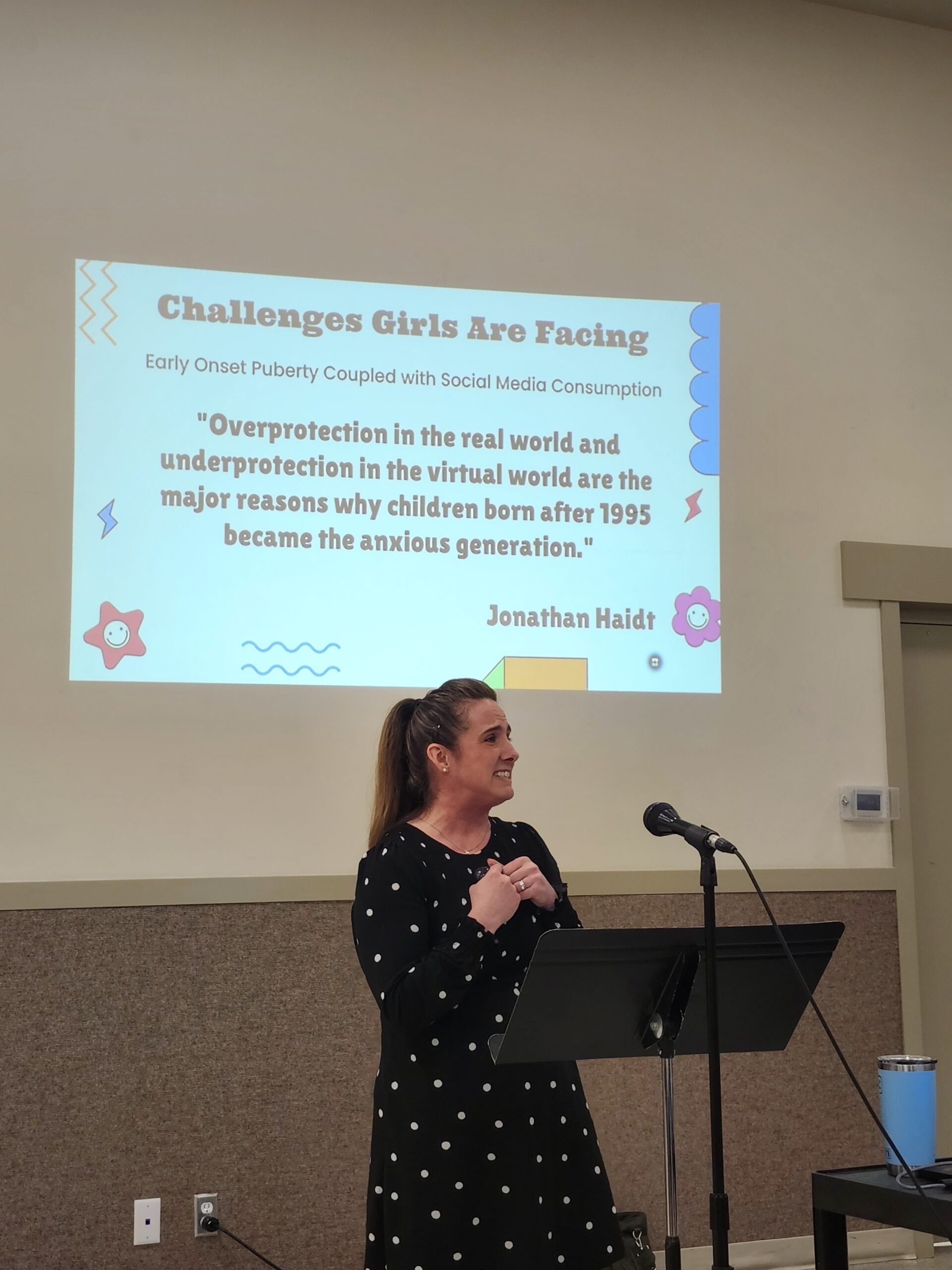
Jennifer Kramer, presented at The Girls Are Not Okay — Event to bring awareness to online safety / Photo by Danielle Dufour
As social media has become embedded into our daily lives through our human experiences and relationships, it is important to recognize the signs and symptoms that young girls may be expressing if they are dealing with anxiety or depression.
“They’ll segregate themselves from relationships that used to bring them joy,” said Kramer. “They will stop doing things that used to be fun for them.”
With the pull towards online connection and relationships, Kramer points out that “flesh and blood relationships” are fewer.
“Parents don’t usually know what those communities are or who’s a part of them, whether they are a threat to their kids or not,” said Kramer. “Sadly, many parents are only finding out too late when their kids are actually suicidal or have committed suicide.”
Kramer suggests one of the best things parents or caregivers can do is to model good social behaviour themselves.
“If we are addicted to our phones, we can’t expect our kids not to be,” said Kramer.
She also suggested encouraging intergenerational relationships where children can learn from others and teach the younger generation.
“Intergenerational relationships we know are one of the best ways to get kids connected to their greater community,” said Kramer.
Kramer also suggests that families prioritize regularly eating a meal together without the distraction of technology or social media.
“I recognize that there are things that keep us away from that … work commitments or our kids’ extracurriculars, but prioritizing time together … will enable our kids to have a point of connection, that they know they are safe, they are cared for, where they can share,” said Kramer.
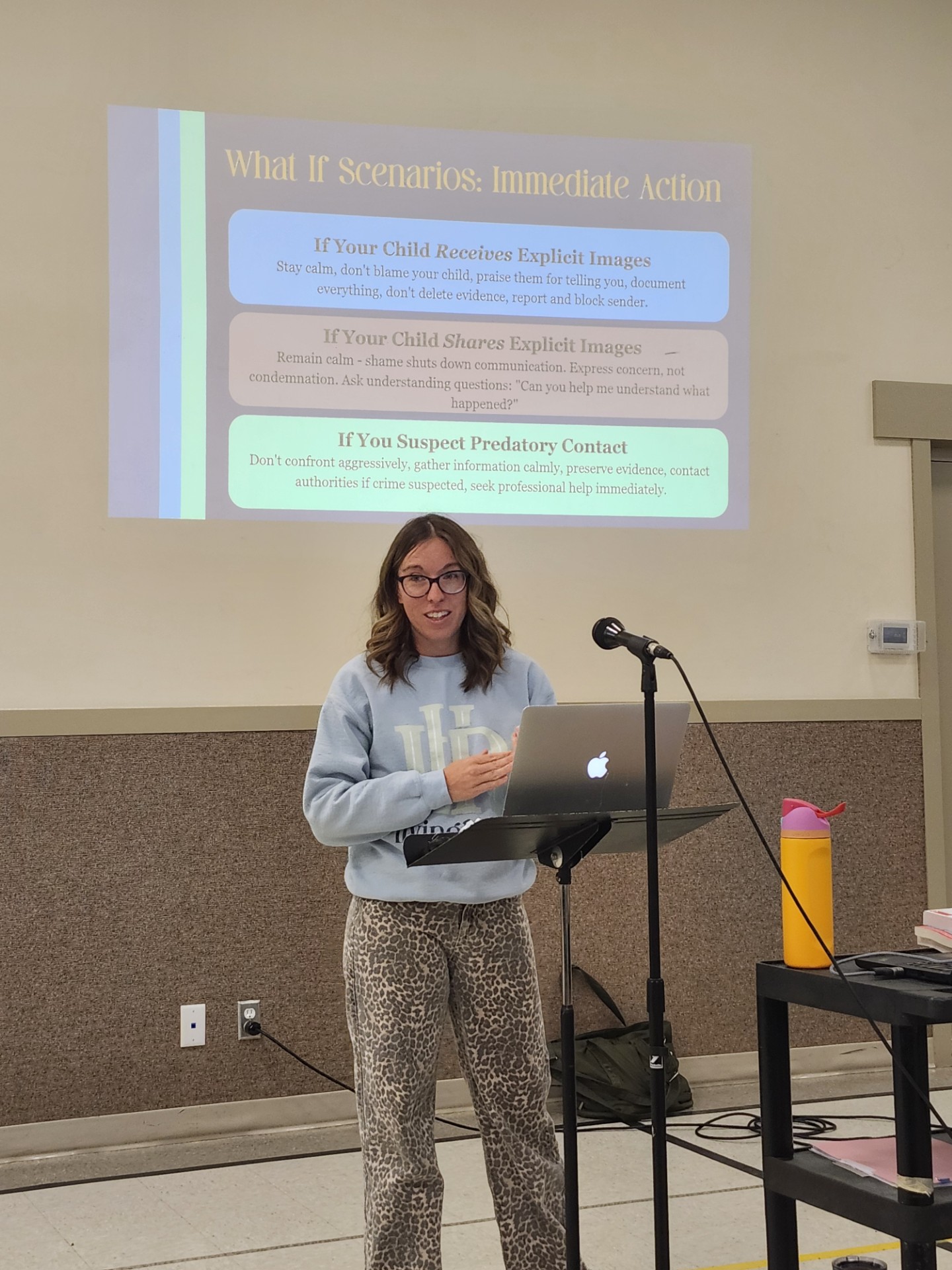
Cher Dombowsky, program director at Living Hope Ranch, speaking at The Girls Are Not Okay Conference In Regina / Photo by Danielle Dufour
Cher Dombowsky, the program director at Living Hope Ranch, said, “There’s a lot of exploitation. We say it’s not if they see harmful content, it’s when they encounter it.”
The ranch has been closed since COVID but has taken its programming into the community and made it more accessible to more girls.
Living Hope Ranch has two primary programs.
“The first is our hope network; we work with girls who’ve experienced sexual trauma,” said Dombowsky. “If we have a girl who comes to our program, we can refer her to a trauma-informed counselor within 24 to 48 hours of receiving her application.”
The program, which is donor-supported, will pay for the first 10 counselling sessions.
“We are also walking alongside her family,” said Dombowsky. “We’re giving them tools and resources so they can help understand the journey that the parents are on or that their daughter is on.”
The ranch also provides an advocacy education program where they go into churches or communities and talk about the online world and the harms that can happen through digital sexual exploitation.
In a time when ‘Likes’ on social media are the external validation that become one’s internal truth, it is harder for teen girls to manage their feelings. This makes it easier for predators to groom their victims.
Dombowsky identified five stages in the grooming process, which include target selection, building trust, evaluating and isolating, desensitization, and control and exploitation.
“They learn about them, appeal to their desire to be grown-up, exploit feelings, offer gifts of currency,” said Dombowsky. “They may ask—do your parents check your messages or say that your parents don’t understand you; send dirty jokes or sexual pictures; try to have live chats and record them; and then use shame and guilt to exploit you by saying your reputation will be ruined or something bad will happen to your family.”
Statistics Canada reports that Indigenous girls and women experience significantly higher rates of sexual exploitation, sexual assault, and overall violence compared to non-Indigenous women. This disproportionate victimization is deeply rooted in the historical and ongoing impacts of colonization, systemic racism, and social marginalization. (Statistics Canada, https://www150.statcan.gc.ca/n1/pub/85-002-x/2022001/article/00004-eng.htm)
“We have seen a disproportionate amount of Indigenous girls enter into our program,” said Dombowsky.
According to Dombowsky, harmful sexual exploitation appears in different ways.
“People sending private messages, or sliding into people’s DMs (direct messages),” said Dombowsky. “It can be pressure received from classmates to send private photos to one another, and it can just be the easy access to pornography or pornographic images that are available to our kids.”
Dombowsky pointed out that even teen-to-teen sharing can have legal recourses, and there is no application, filter, or safety measure that can offer 100 per cent protection. She suggests caregivers monitor privacy settings on devices, especially location services on applications.
“Unprocessed trauma doesn’t go away; it goes underground and shows up later in other ways,” said Dombowsky.
Dombowsky suggests that if something has happened online, caregivers keep open communication with the child.
“You never want to blame your child for what they have seen or what they have sent,” said Dombowsky. “They really, truly are the victim.”
She recommends that caregivers preserve some evidence if something has been sent to the child.
“If you suspect a predator has been engaging with your child, you want to take screenshots to preserve the evidence and get law enforcement involved, if necessary,” said Dombowsky.
Dombowsky suggests regular check-ins with the child, as professional help may be needed to continue to process what has happened to them.
For more information about Living Hope Ranch, visit: https://www.livinghoperanch.ca/.