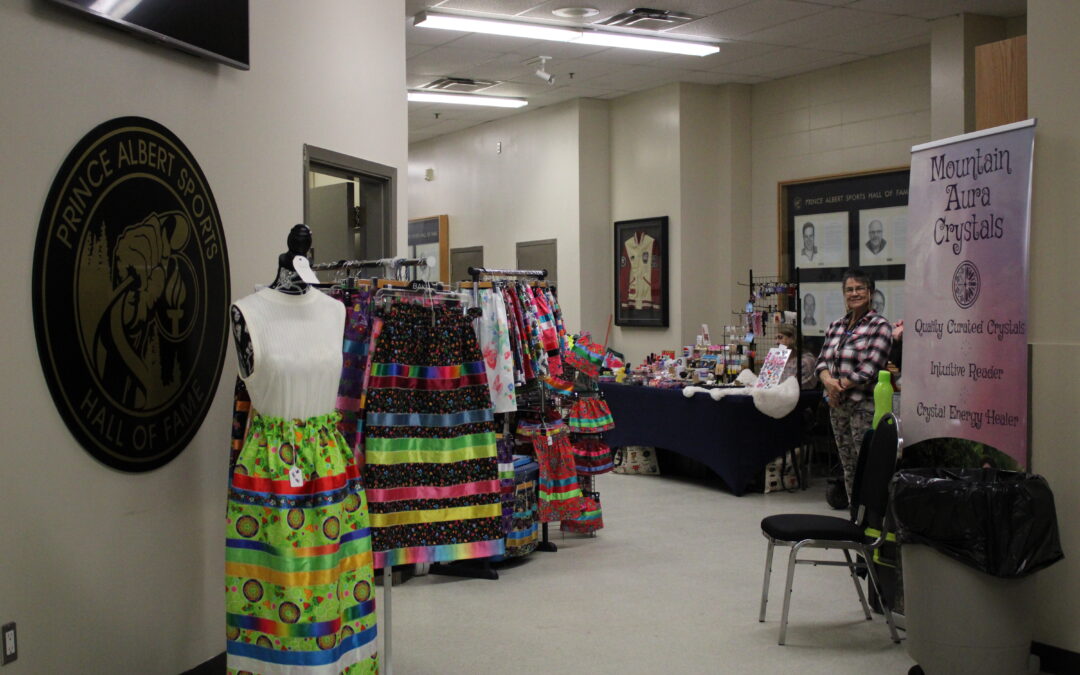
Photo: Ribbon Skirts at an event in Prince Albert
By Ed Hitchins
Local Journalism Initiative Reporter
Energeticcity.ca
To outsiders, they are a colourful symbol of clothing, crafted by the skilled hands of the Indigenous.
To Indigenous women, however, they tell a story. They are a powerful, expressive symbol of the long history of First Nations culture.
Ribbon skirts are frequently seen during Indigenous events, and on days recognizing the struggles of First Nations people, including the National Day of Truth and Reconciliation as well as Red Dress Day, remembering murdered and missing Indigenous women and girls (MMIWG).
According to the Seven Generations educational institute website, ribbon skirts are seen as a “symbol of womanhood,” one that “connects one to the earth and the grandmother moon.”
Kirsta Lindstrom is involved with community engagement with Saulteau First Nations (SFN) in Moberly Lake.
Lindstrom also organized a fashion show and market highlighting ribbon skirts back in January, to honour National Ribbon Skirt Day.
“Traditionally, the men have war bonnets,” said Lindstrom. “[Those] keep track of when they were going on a raid. Men wear their armour and war bonnets to show who they are and their position in the community.”
“When we wear a skirt, it keeps our connection to Mother Earth, because [of both] being grounded and as mothers.”
Historically, the Seven Generations website cites the ribbon skirt as when an Indigenous woman was experiencing her first menstrual cycle, she would be put into a lodge separate from her family out of respect.
She would wear a ribbon skirt with colours associated with her name or historical clan, helping make the woman recognizable to spirits who would help and support her, during both her cycle and life.
Lindstrom said initially, European settlers would trade furs for beads with Indigenous women, and eventually, ribbons as well.
Lindstrom added ribbon skirts were also used as a hiding place for small children during the days of the colonial residential school system.
“[Ancestors] started adapting the ribbon, not just as a sign of status, but as a sign of pride,” said Lindstrom. “It is almost like a woman’s armour; when she wears it, she holds herself with pride.”
“When Indian agents would come around, and they would count kids to take away to residential school, women would hide them under their skirts.”
Lindstrom says when preparing a ribbon skirt, each individual garment is unique in telling a story in its own way.
“Sometimes [skirts] represent where they come from,” said Lindstrom. “Sometimes, it is something from [a woman’s] childhood that they want to remember.”
“When you pick out your ribbons, it’s not just all about what matches the fabric. [Women are] also setting intentions for what they want to bring back into their lives and how you’re going to conduct yourself when you’re wearing this ribbon skirt. It’s very ceremonial.”
National Ribbon Skirt Day was first observed in Canada in 2023. See the Seven Generations educational institute website for more information.