
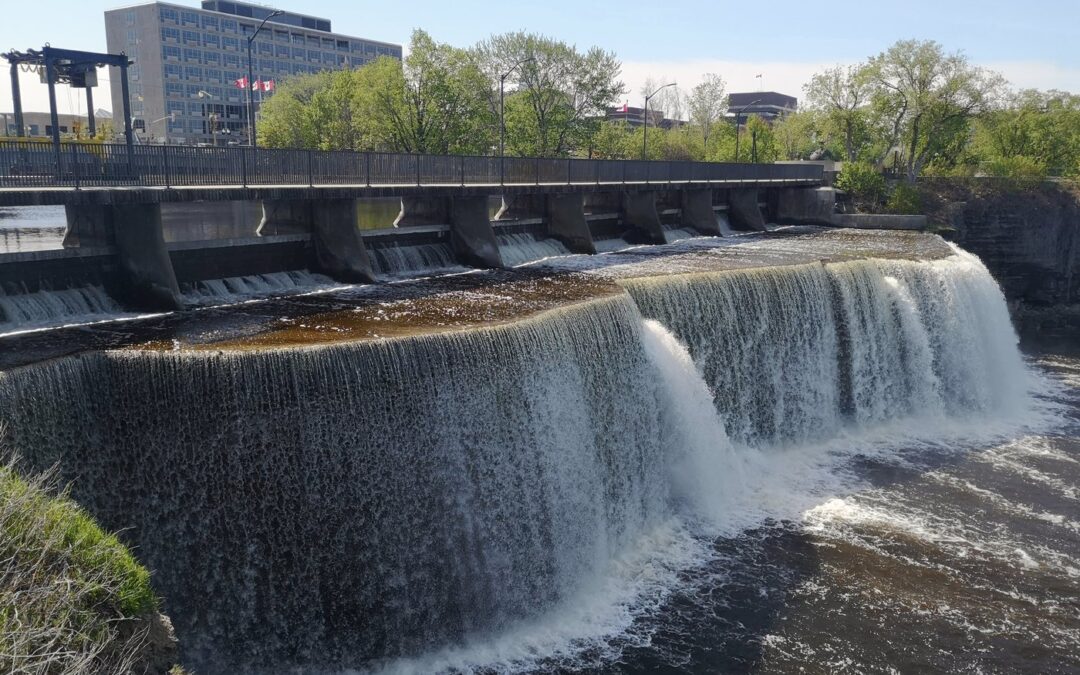
Photo: Rideau Falls in Ottawa, Ontario, is a 2.8‑megawatt hydroelectric generating station operated under the Dominion Water Power Act/Photo by Flickr (CC BY-SA 2.0)
By Sonal Gupta
Local Journalism Initiative Reporter
Canada’s National Observer
Hydroelectric dams on public lands are at growing risk of failure because the department responsible for them has no engineers, inadequate funding and no safety rules, an internal document warns.
The document, obtained by Canada’s National Observer through an Access to Information and Privacy request, calls the state of affairs “unsustainable” at the Ministry for Crown-Indigenous Relations and Northern Affairs Canada (CIRNAC), and cautions the federal government could face legal liability if any dams fail.
The federal government is responsible for water power development on Crown lands under the Dominion Water Power Act, passed in 1919.
The department operates four hydroelectric sites under the act: Rideau Falls at the mouth of Ottawa’s Rideau River; Kananaskis Falls and Horseshoe Falls, two run-of-river plants on Alberta’s Bow River and Okikendawt at Portage Dam on Ontario’s French River. The department is also involved in a proposed 1,000 MW Ontario Pumped Storage Project near Meaford, still in planning stages.
The document found that CIRNAC has no in-house engineers to review technical plans and conduct site inspections of construction and operations. It has no budget to hire outside experts and no formal dam safety framework.
There is also no director of water power, a position designated under the Act to handle key tasks, such as approving construction plans, public notices, survey permits, progress reports and annual expenditures.
Until recently, CIRNAC relied on shared services from Public Services and Procurement Canada to fill this gap, but that agency has indicated it cannot reliably continue this support.
The note describes a “legacy administrative arrangement” that created “misalignment between the Department’s mandate and operational capacity.”
The briefing also notes that hydroelectric facilities across Canada are regulated under different frameworks depending on jurisdiction, but Canada lacks an overarching program for dam safety.
The department coordinates with Indigenous Services Canada, Parks Canada and other federal agencies to manage the facilities.
While the Canadian Nuclear Safety Commission, Parks Canada and the Canadian Dam Association have safety policies or guidance, Northern Affairs has developed neither internal policies nor a framework to ensure safe operation of the facilities it regulates.
In an interview with Canada’s National Observer on Friday, Georgina Lloyd, assistant deputy minister for CIRNAC’s northern affairs organization, described the briefing note dated May 7, 2025 as “a management step” to warn senior officials that her team had identified potential risks beyond their mandate. She said the note was meant to outline the issues, flag where more oversight or coordination might be needed and propose options for addressing those challenges going forward.
CIRNAC spokesperson Maryéva Métellus said in an email to Canada’s National Observer that the department is “addressing the issues identified in the briefing note through ongoing management actions and interdepartmental collaboration.”
Métellus said CIRNAC “continues to assess operational needs and allocate resources” and is participating in a federal Red Tape Reduction Review to improve how it delivers services. The department relies on its director of environment and renewable resources (to fill the role of director of water power) and gets engineering support on a case-by-case basis from PSPC, plus external consultants as needed.
The department monitors facility safety and environmental standards through reports from dam operators and licence renewals.
The lands fall under CIRNAC’s responsibility for safety, licensing and Indigenous consultation.
None of the four hydroelectric plants sit on Indigenous-managed lands like reserves, Lloyd said. Indigenous rights-holders near the sites or downstream get consulted when facilities are licensed or renewed through the Aboriginal Treaty Rights Information System. “There are no Indigenous partners that are identifying the waterpower systems to be a concern for them today,” she added.
Lloyd said the pending relicensing process for the Meaford pumped storage project will take roughly 18 months with formal consultation periods when Indigenous partners can ask questions. CIRNAC will provide support to help First Nations bring their own experts so they can engage in technical discussions about the project.
Lloyd declined to provide details of any specific site’s emergency plan, saying the responsibility falls to facility owners and provincial authorities. “I think it would be overstepping an owner, to be honest with you — like, that’s their accountability,” Lloyd said.
She added while CIRNAC works with owners on their plans, it is not the department’s place to describe them.